
Simple Ikebana Flower Tips and Year-End Reflections
Practical ikebana tips on choosing seasonal flowers and colors for balanced arrangements, plus a gentle year-end reflection from Kyoto.
Get the HanaYou Ikebana Journal in your inbox.
Just like that, 2025 is almost over. How was your year? Did you try something new or take on any new challenges?
This year, I truly challenged myself. I joined more NYC pop-ups and local events in NYC, moved to Kyoto, launched the HanaYou Ikebana Journal and opened HanaYou's Kyoto Ikebana Studio. Over the past two months especially, HanaYou has grown beautifully here in Kyoto, and I’m so grateful that we’ve been happily busy.
In between those busy days, we’ve also enjoyed small but precious family moments and spent time with our Kyoto local friends. Little by little, we are finally getting to know this city more deeply.
When we first moved to Kyoto, we were completely focused on starting HanaYou and building new connections. Now, as December arrives, both locals and travelers are in a holiday mood, enjoying the final moments of the year. HanaYou is also feeling that gentle holiday rhythm, slowing down just a little and enjoying the season.
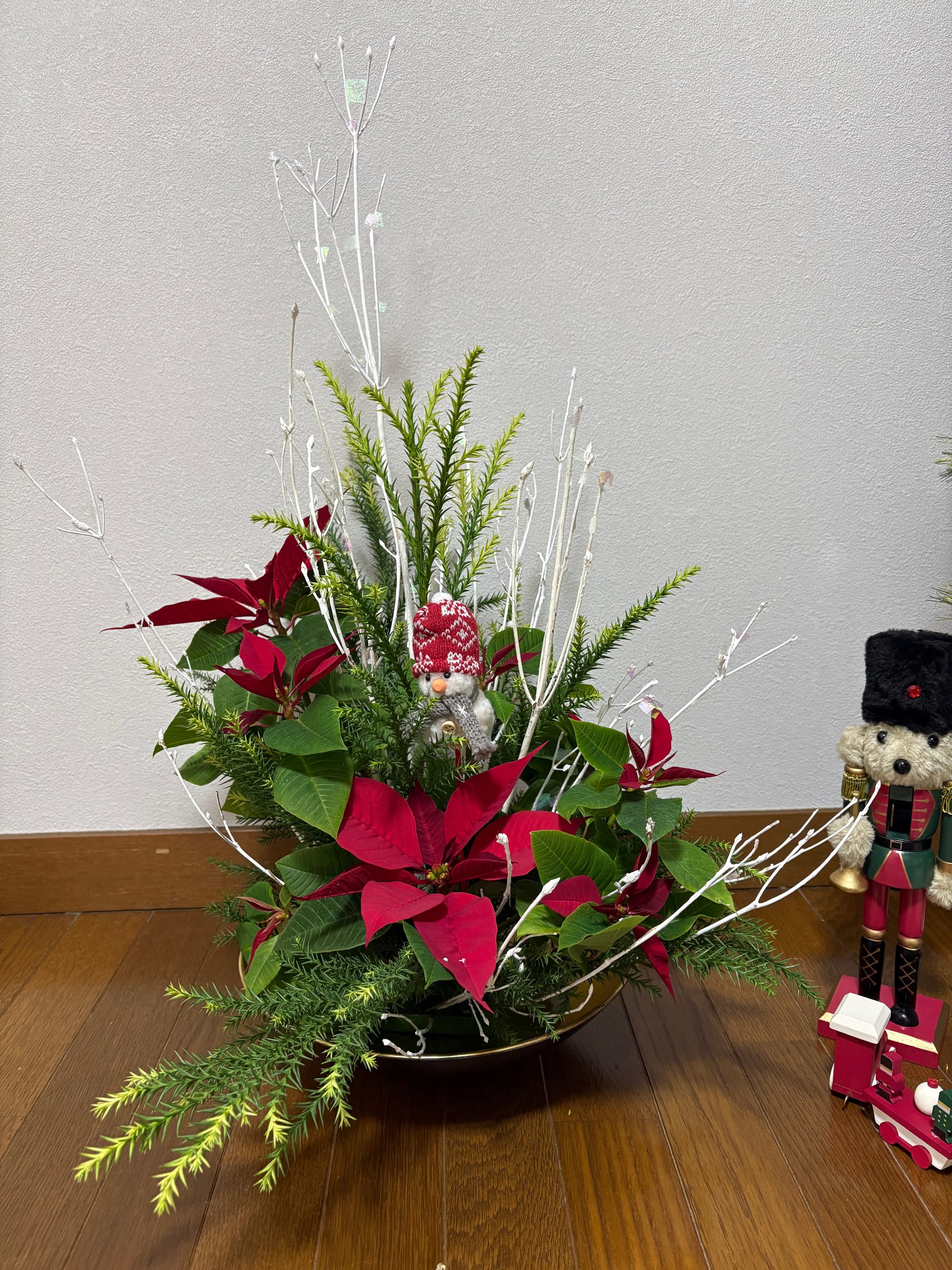
It’s time for me to wrap up this year and begin setting goals for the next one.
How about you? I hope you’re enjoying this holiday season, and I wish you a beautiful start to the New Year.
A kid's life in Japan
At the end of November, Kyoto fills with travelers from within Japan. They come from all over, and the flocks of kids visiting from schools around the country especially stick out. My image of Kyoto has always been that of a classic school trip destination in late November, when the city is full of children walking around in groups and experiencing Japan's cultural heritage first-hand.
In most places in Japan, children’s lives feel quite safe and peaceful. When I was little, I walked home with my friends after school. On weekends, I would walk to my friends’ houses without any appointment: just ring the doorbell and ask to play. That was a very typical Japanese childhood.
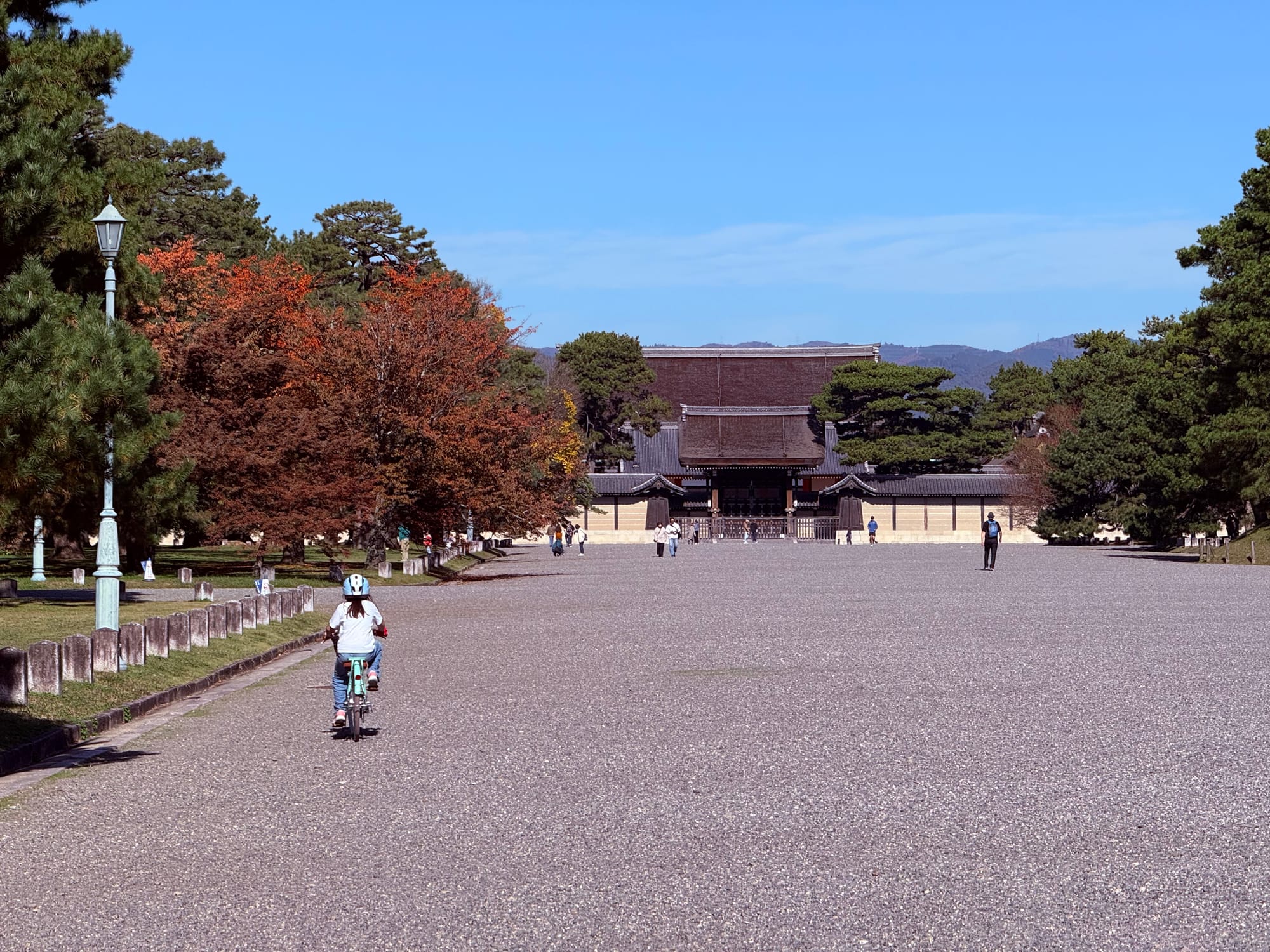
Last weekend, our neighbor’s daughter paid us a surprise visit, and she and my daughter played together by themselves around the Kamo River. We love that our kids can still play freely and safely without cell phones (but we do ask our daughter keep her AirTag with her, just in case). These days, she rides her bike to school every day, and she absolutely loves it. Her bike is the cutest color (she calls it "mint green"), and she fell in love with it at first sight.
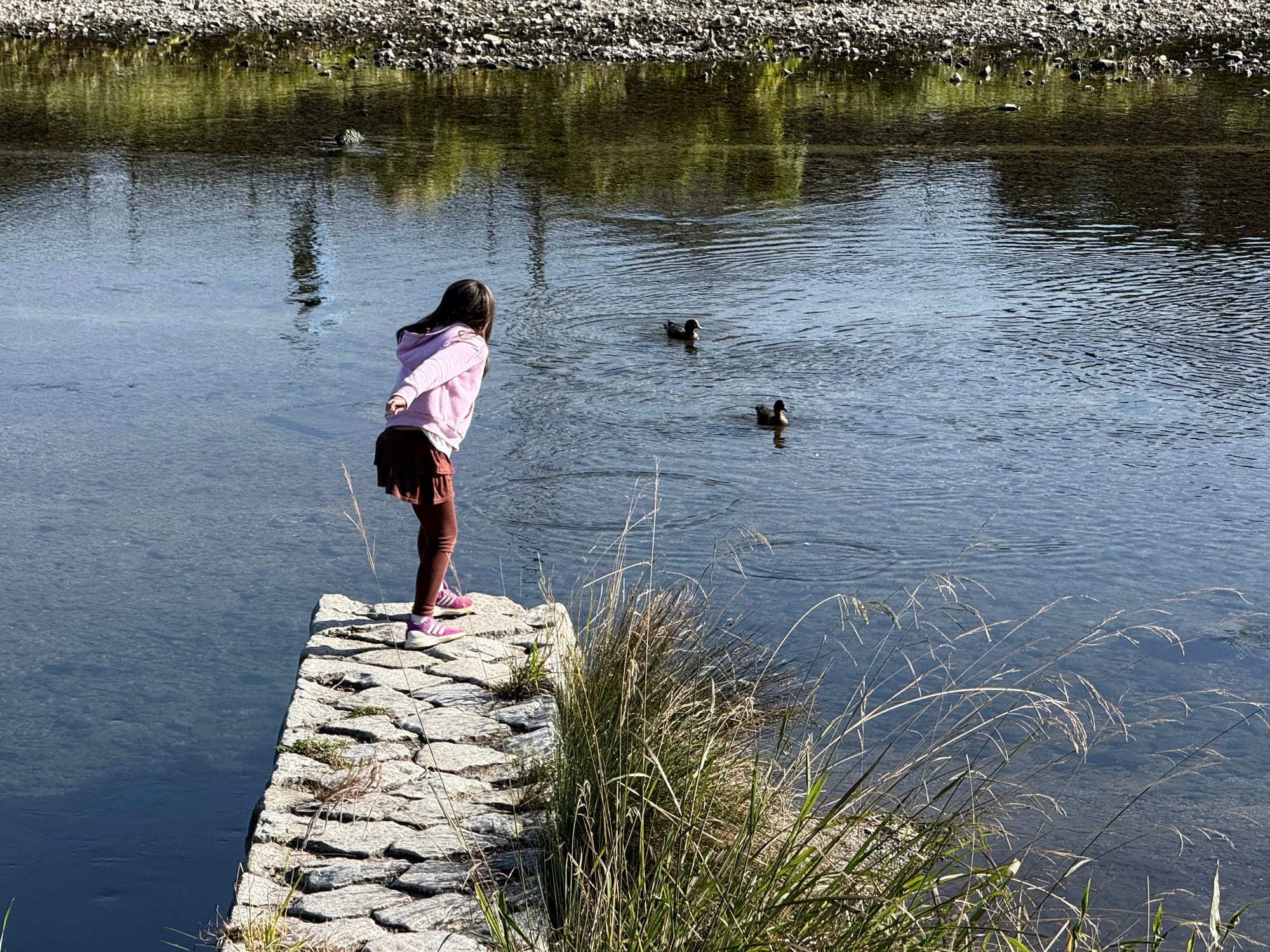
When I see my daughter in Kyoto, she truly looks like a child living live to the fullest, free to explore and grow with bit of independence. I hope this kind of childhood continues forever. And I hope children can always be children.
How to Choose Flowers for Ikebana
In my classes, I’m often asked how to choose flowers for an Ikebana arrangement. Today, I’d like to share a few simple tips to help you select flowers with confidence.
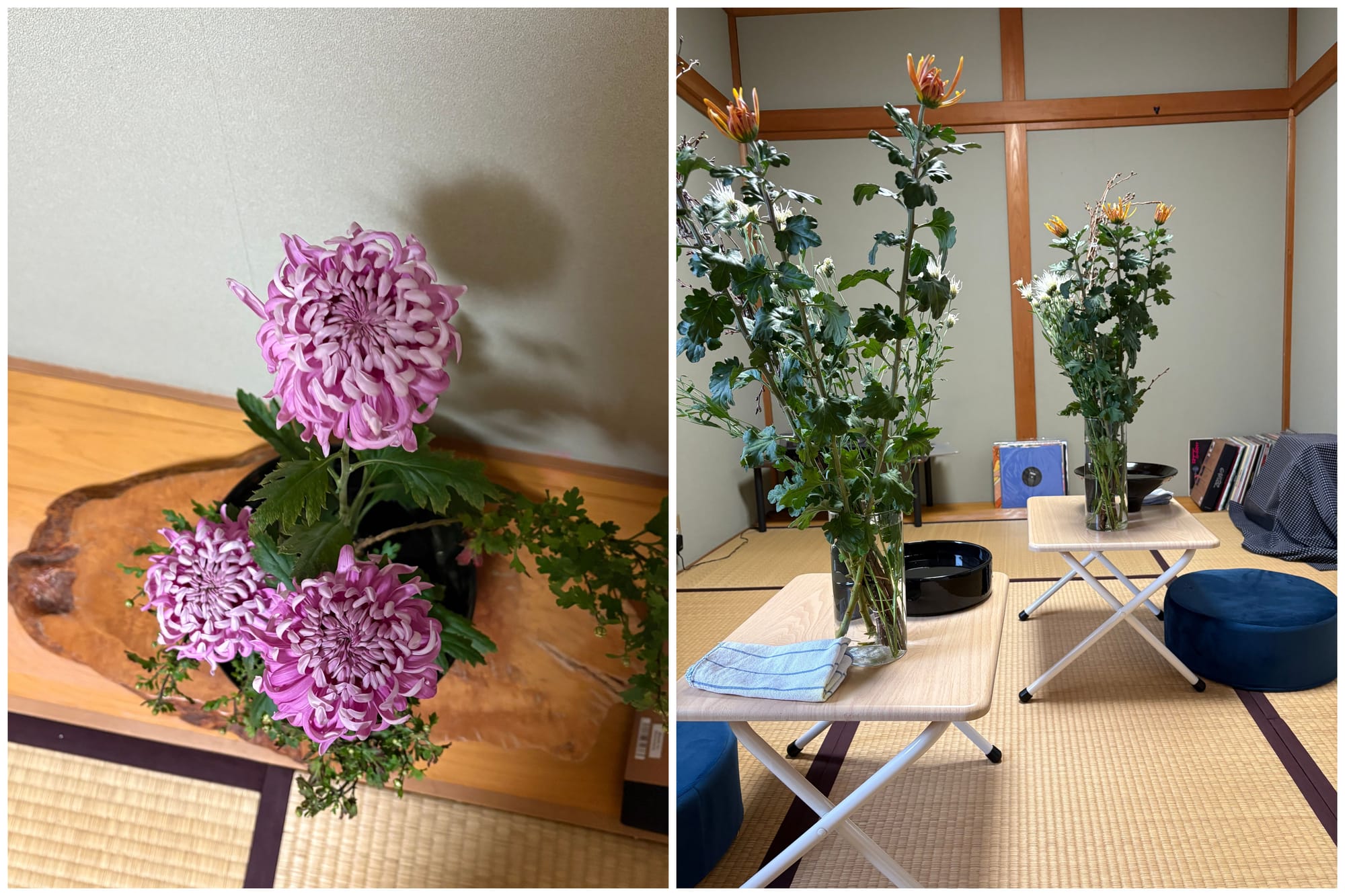
Let's look at what flowers to choose, how many, and how to approach the question of color.
1. Choose Seasonal Flowers
I always say that Ikebana is part of the atmosphere of your home. It reflects the season you are living in right now. Choosing flowers that feel out of season can create a sense of discomfort.
When your Ikebana reflects the current season, it brings a quiet sense of harmony and allows your guests to feel nature’s breath in your space.
2. Choose 2–3 Types: Flowers, Greens, or Branches
For beginners, it can be difficult to create a balanced Ikebana arrangement using only blooming flowers. A natural impulse is often to add more color and spectacle, but it can lead to arrangements that feel overwhelmed.
Instead, I recommend thinking of your arrangement like a small garden. You might have a tree (like a branch), flowers, and green foliage. When you imagine this balance, it becomes much easier to picture the Ikebana you want to create.
3. How Many Flowers Should You Buy?
If you’re not sure how many stems to buy, a simple guideline is to start with two or three of each element. This is just a rough suggestion, but since Ikebana often uses asymmetrical forms, odd numbers naturally work better.
Once you decide your main backbone line, choose your flowers based on that structure.
4. Choosing Colors
People often ask: What colors can I use in Ikebana?
The answer is any colors are possible.
That said, I usually recommend choosing only a few colors rather than too many. Since Ikebana often uses only a small number of flowers, a fully monochromatic arrangement may not always show clearly in the vase. But if you use too many strong colors, the arrangement can lose its sense of harmony.
A small, well-chosen color palette is usually the easiest way to create a beautiful and balanced Ikebana.
I hope these tips help you enjoy creating Ikebana more easily. If you ever have questions, please feel free to ask! I’m always happy to help.
This Week’s Video
Following this previous section on how to choose flowers for Ikebana, I created a short video that may help you when selecting materials and arranging at home.
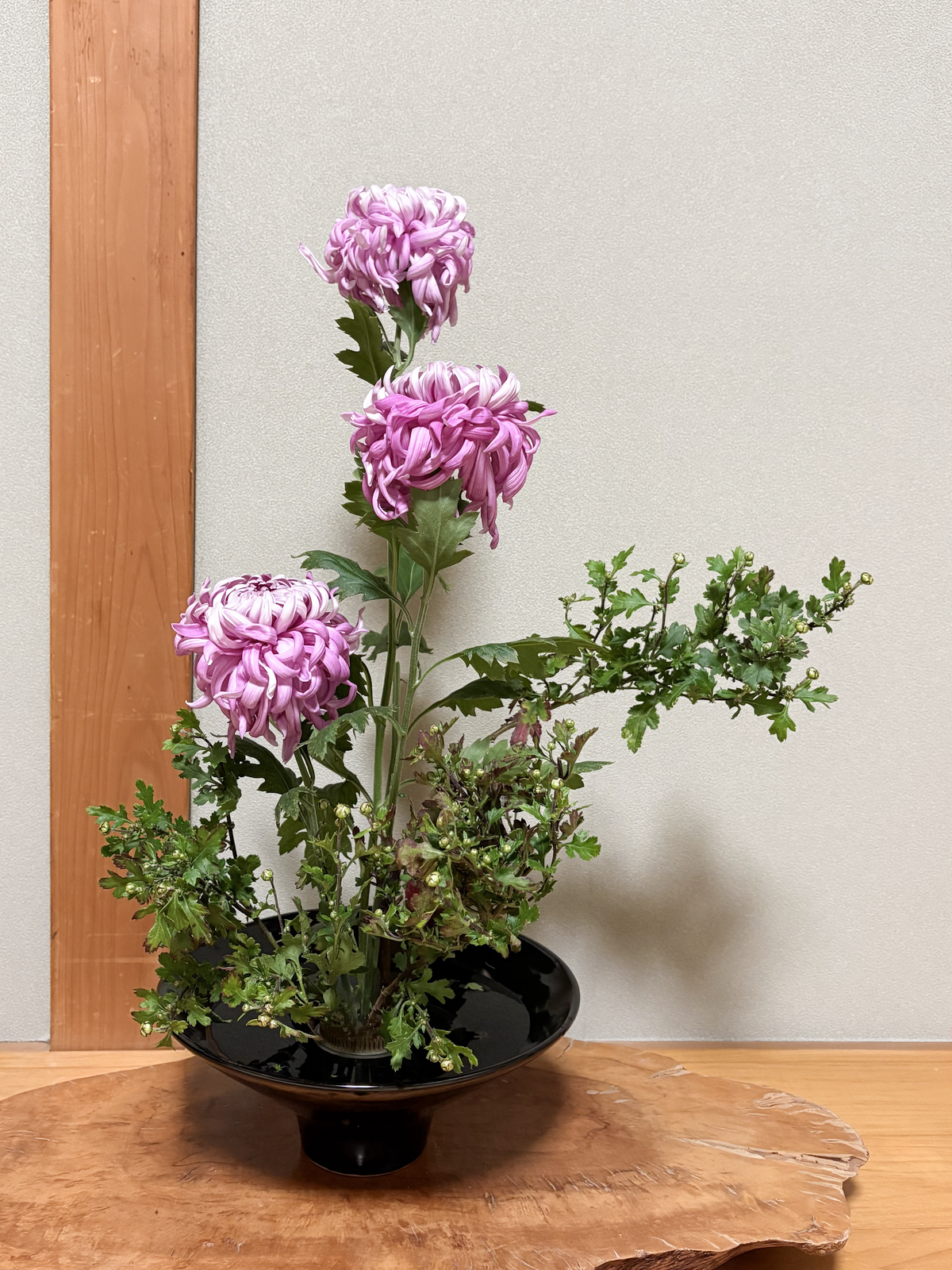
In the article, I mentioned that you don’t need to buy many flowers. For this demonstration, I used just four stems: three single chrysanthemums and one spray chrysanthemum.
Some of you may be familiar with the cultural meaning of the number four in Japan, and perhaps wondered whether it’s appropriate in Ikebana. In Japanese, the number 4 is pronounced “shi,” which has the same sound as the word for “death.” Because of this association, people often avoid using the number four in certain situations.
So, is it ever okay for an arrangement to use four stems?
Yes, it can be perfectly fine. It just depends on how you do it. Have a look at this example:
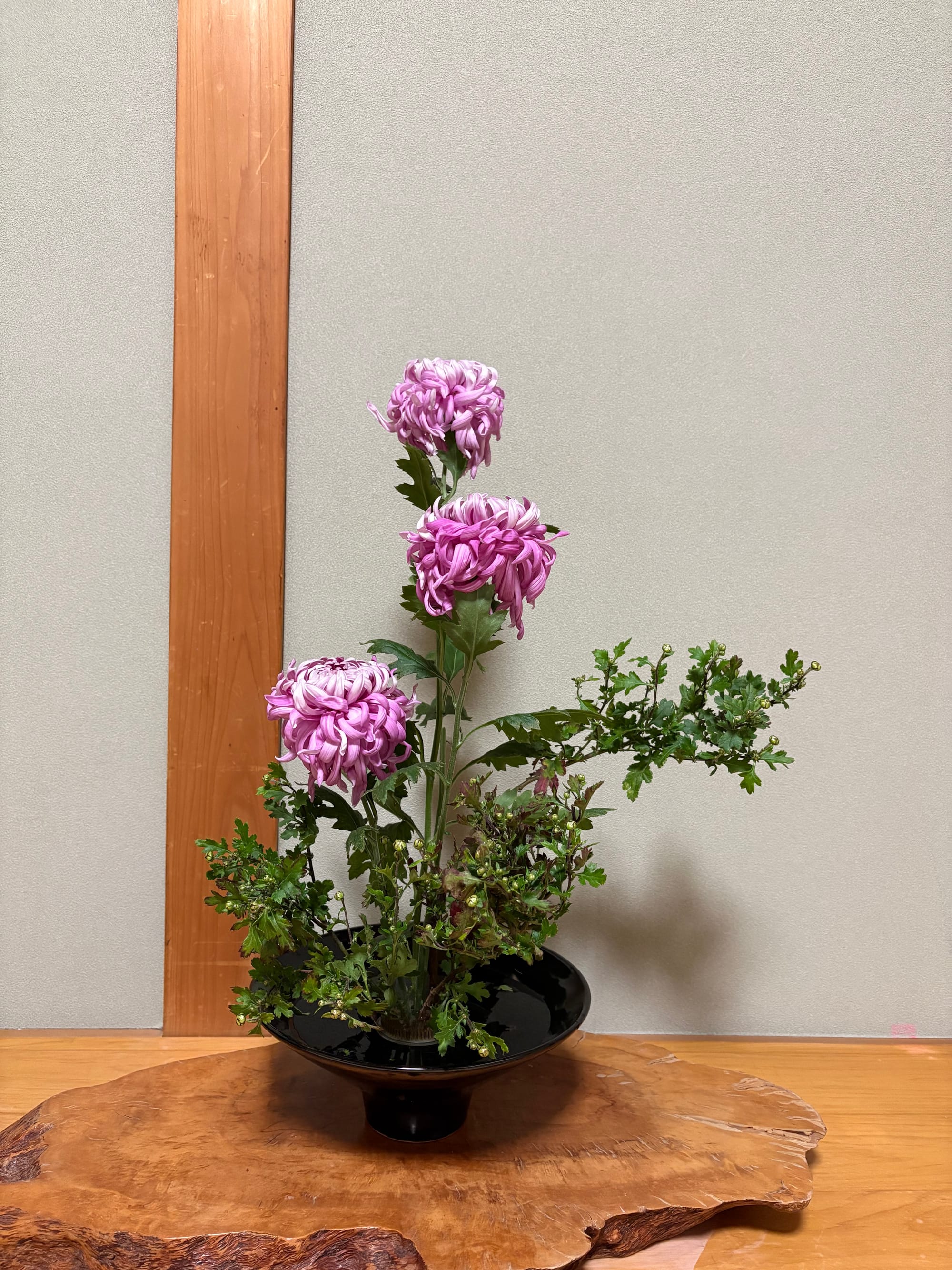
Visually, you can clearly see three main chrysanthemums.
The spray chrysanthemum sits at a lower level and functions as a filler, so the viewer never perceives the arrangement as having “four” equal flowers.
Of course, the simplest path is the one I often recommend: use three or other odd numbers of flowers when creating balance and asymmetry in Ikebana. But now you know there's flexibility even in this guideline if you're mindful about it.
In this week’s video, I created a simple and approachable arrangement to help you practice these ideas. I hope you enjoy it!
If you have any questions, please feel free to reach out.
Wishing you a warm and happy holiday season. 🎄✨
With gratitude,
Ryoko