
Kyoto Ikebana Classes + Tips for Working with Wildflowers
This first edition of the HanaYou Ikebana Journal shares news from Kyoto, reflections by the Kamo River, Ikebana tips, and the story of the Chrysanthemum Festival.
Get the HanaYou Ikebana Journal in your inbox.
Hello flower lovers,
This is the first edition of the HanaYou Ikebana Journal, and I'm so excited to share it with you. Please be sure to share your feedback with me so I can make this journal a spot of joy in your week.
HanaYou News
✨ Kyoto Ikebana classes are now open!
Our new Kyoto Studio opens this coming weekend. We plan to welcome students throughout each week, currently with three time slots each day the studio is open. We'll keep adjusting the times and capacity as we learn what best suits our guests.
I’m so excited to share the joy of Ikebana here in Kyoto and to welcome new students in this historic city. Visit the HanaYou Kyoto Studio page to learn more and book your session.
Inspiration from Kyoto
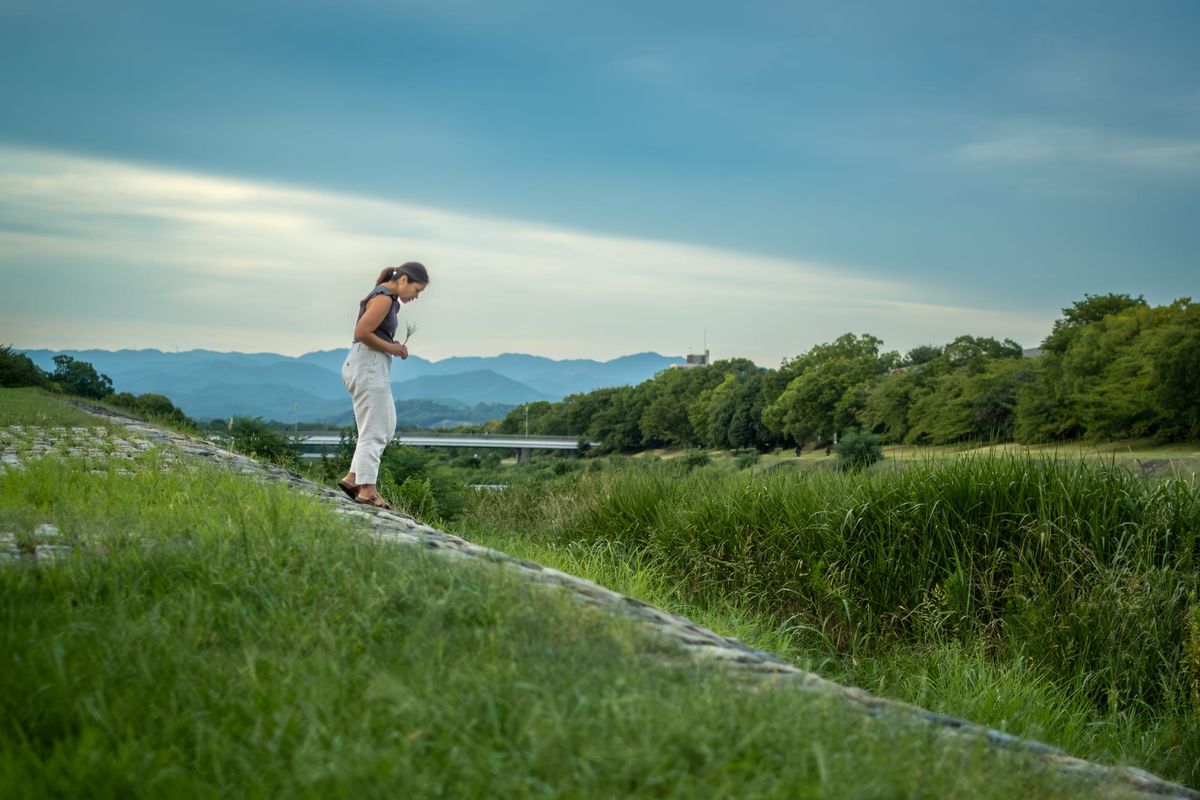
🌿 As I settle into Kyoto, I find that I often walk to the Kamo River, just steps from the studio, after busy days. The air is filled with late-summer cicadas, the water runs steadily past, and in the evenings families gather on the riverbanks to enjoy the cooler breeze.
What I love most is how the river always changes. Some days it feels calm and reflective; other days, after the rain, it rushes with energy. The grasses and wildflowers along the banks bend and recover, reminding me that nature teaches resilience as much as beauty.
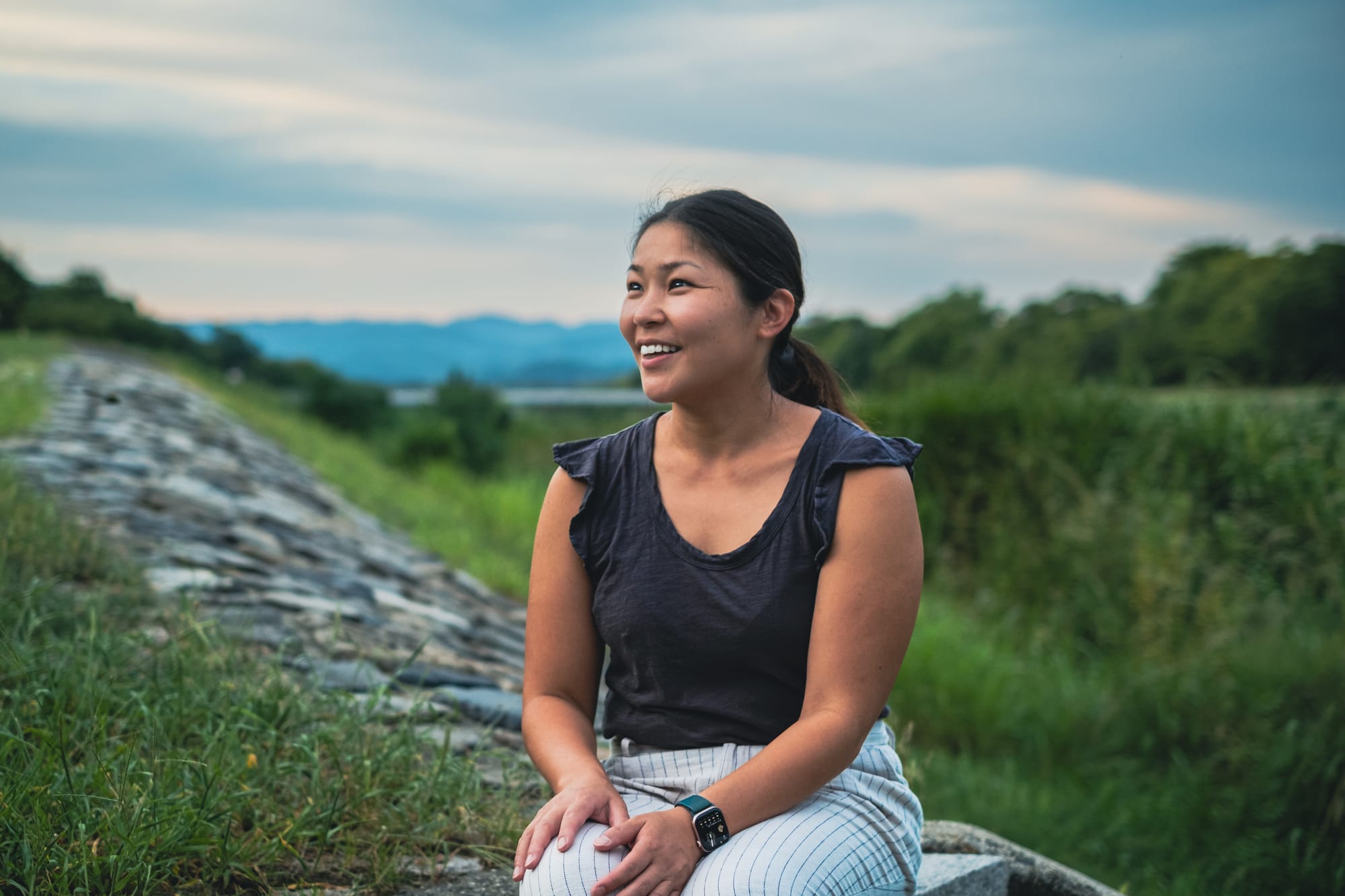
If you can, find a small “river” of your own nearby: a place that shifts with the seasons and gives you a chance to pause. Bring a single flower or branch with you, hold it for a moment, and notice how it looks against its natural surroundings. This simple act can be a quiet practice of ikebana, even outside the vase.
🌸 Want to see more?
Continue on to read about:
- My first Ikebana arrangement in Kyoto, created with wildflowers and grasses from the Kamo River with:
- Step-by-step notes and tool tips for arranging with delicate stems
- A video you can follow along with
- A look at the Chōyō no Sekku (Chrysanthemum Festival) and its connection to Ikebana traditions
My First Ikebana Arrangement in Kyoto
For my very first Kyoto arrangement, I gathered wild flowers and greenery from around the Kamo River and near my house. At first glance, they may look like ordinary weeds, but they hold quiet elegance and strong vitality.
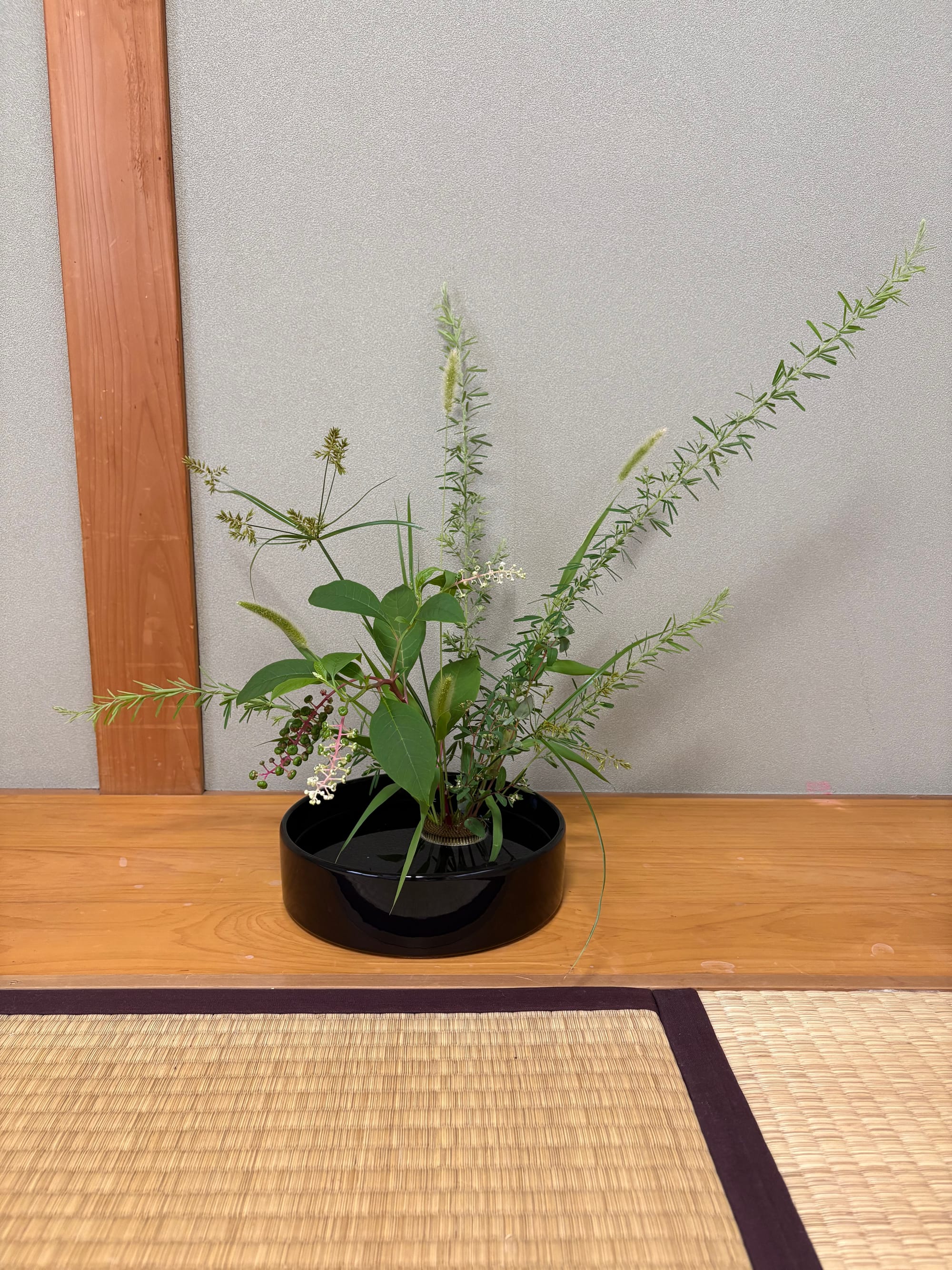
🌿 Wild plants grow freely into unique shapes and lengths. Unlike farmed flowers, they keep their individuality, and that uniqueness can bring something special to your ikebana.
See how I put this arrangement together with this video:
🌟 Key Points for This Arrangement
Tools
- Kenzan: Choose one with close-set needles for soft-stemmed flowers and grasses.
- No kenzan handy? Use a thick leftover stem: cut a short piece, poke a hole with a toothpick, and slide the skinny stem inside.
- Always cut stems diagonally with sharp scissors so they can drink water easily.
Let’s Create Your Ikebana Garden
- Begin with one striking branch or flower as your backbone.
- Add one or two heavier flowers you want to highlight. Together they form an asymmetrical triangle—the foundation of Ikebana.
Adding More Flowers (the Tricky Part!)
- Fill your “garden,” but don’t pack it. Plants, like people, need breathing room.
- Play with lengths—some shorter, some longer—to create rhythm.
- Keep structural stems visible by placing smaller flowers around them.
Extra Tips
- Every stem has a “best face”—present it.
- Follow the natural line of the stem for movement.
- Trim away heavy leaves that block the view.
- Let nature guide you: observe how plants grow outdoors and recreate that feeling in your vase.
Seasonal Highlight in Kyoto
重陽の節句 – Chōyō no Sekku (The Chrysanthemum Festival)
September 9th marks Chōyō no Sekku, the Chrysanthemum Festival. While less celebrated today, it holds deep meaning in Japanese tradition and Ikebana.
In East Asian numerology, odd numbers are lucky, and 9 is the largest single-digit odd number. The “double nine” (9/9) was believed to hold powerful energy—both auspicious and dangerous. To balance it, people celebrated with chrysanthemums and sake, wishing for health, longevity, and protection from misfortune.
🍶 One poetic custom was to float chrysanthemum petals in sake, combining beauty with celebration of the season.
With gratitude 🌸
Thank you for reading this first edition of the HanaYou Ikebana Journal. I’d love to hear what you think. What did you enjoy? What would you like to see more of? Do you have any floral or ikebana stories you want to share?
Your feedback will help me shape this journal into a place of inspiration and joy for our whole community.
With love,
Ryoko