
Kyoto Ikebana in Autumn with Chrysanthemums, Ginkakuji and Bonsai
Explore Kyoto ikebana through chrysanthemums, an autumn visit to Ginkakuji, and a surprising bonsai lesson that reveals how creativity grows with courage.
Get the HanaYou Ikebana Journal in your inbox.
Hello flower lovers,
This week in Kyoto ikebana, my days have been filled with chrysanthemums, autumn colors at Ginkakuji, and an unexpected lesson in courage from a bonsai master. Kyoto feels especially alive in late November, and each of these moments showed me a different side of how beauty changes with time.
I hope this issue brings you into the season with me, from the quiet strength of chrysanthemums to the vivid gardens of Ginkakuji to the bold spirit of bonsai shaping.
Chrysanthemums in Kyoto
This autumn I fell in love with chrysanthemums. I found so many unique chrysanthemum varieties for my HanaYou classes, like thread petals, unusual colors, and even ones that customers mistook for dahlias! Chrysanthemums last a long time, and breeders continue to improve their forms every year.
In Japan, chrysanthemums are often associated with funerals and memorials, so many people hesitate to use them for joyful occasions. Yet, when you look in front of a flower shop today, you’ll find dyed colors, rare shapes, and beautiful varieties that feel entirely new.
Recently, I bought a delicate variety called thread chrysanthemum. The shop owner told me that traditional Japanese farm-grown chrysanthemums are becoming hard to find because many growers are retiring without someone to inherit their business (not dissimilar to the same phenomenon with ikebana happening now). More chrysanthemums are now imported and they are cheaper than the ones grown in Japan.
Knowing this, I feel there is something we can do as designers and flower lovers: choose traditional farm-grown flowers, use them, appreciate them, and talk about their value. The quality is truly exceptional and worth investing in.
Below are two photos of the same chrysanthemum from my studio on different dates:
📅 November 12 → 📅 November 26
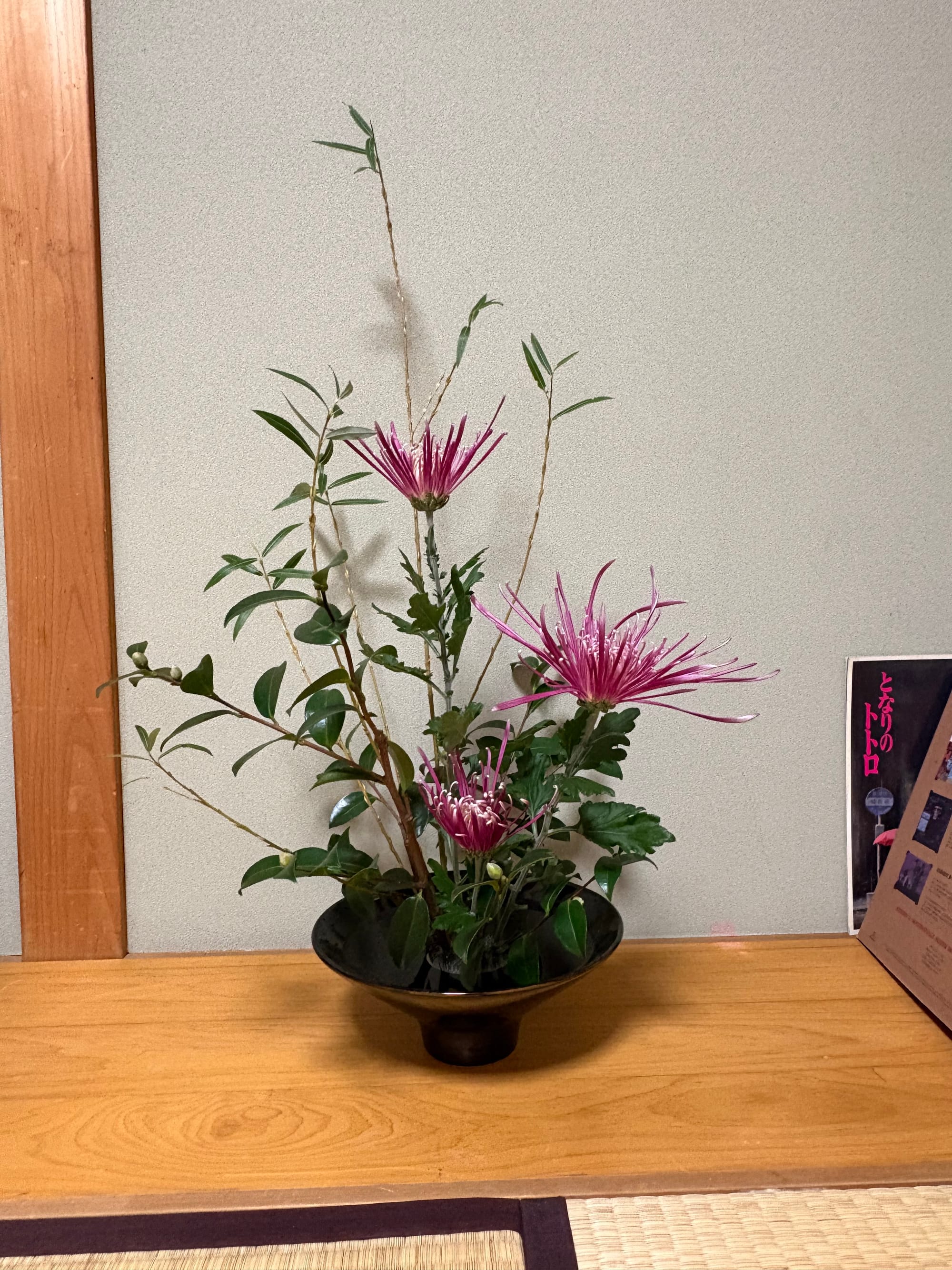
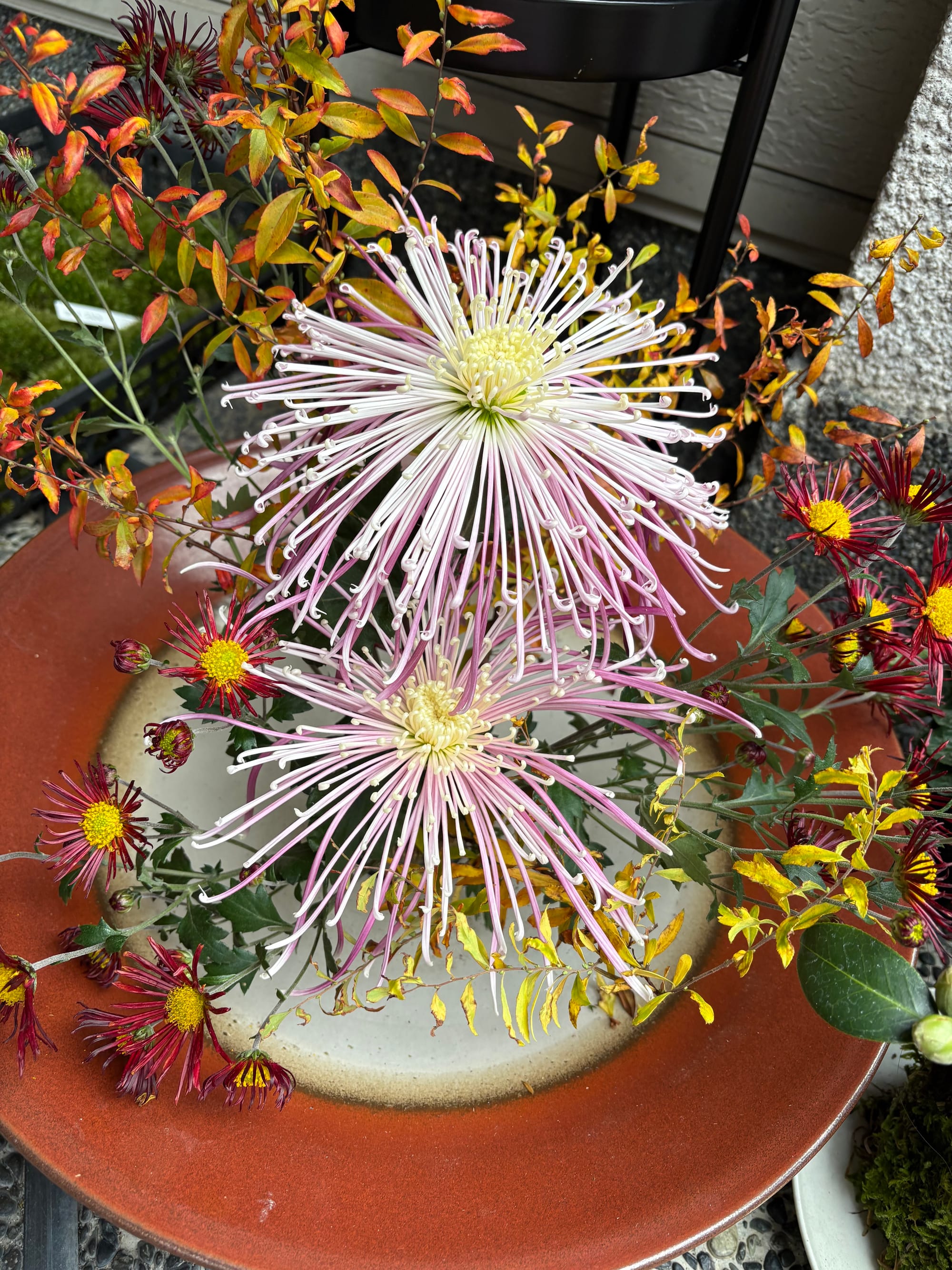
Japanese chrysanthemums in ikebana: long-lasting beauties
Still stunning after two weeks.
Visiting Ginkaku-ji in Autumn
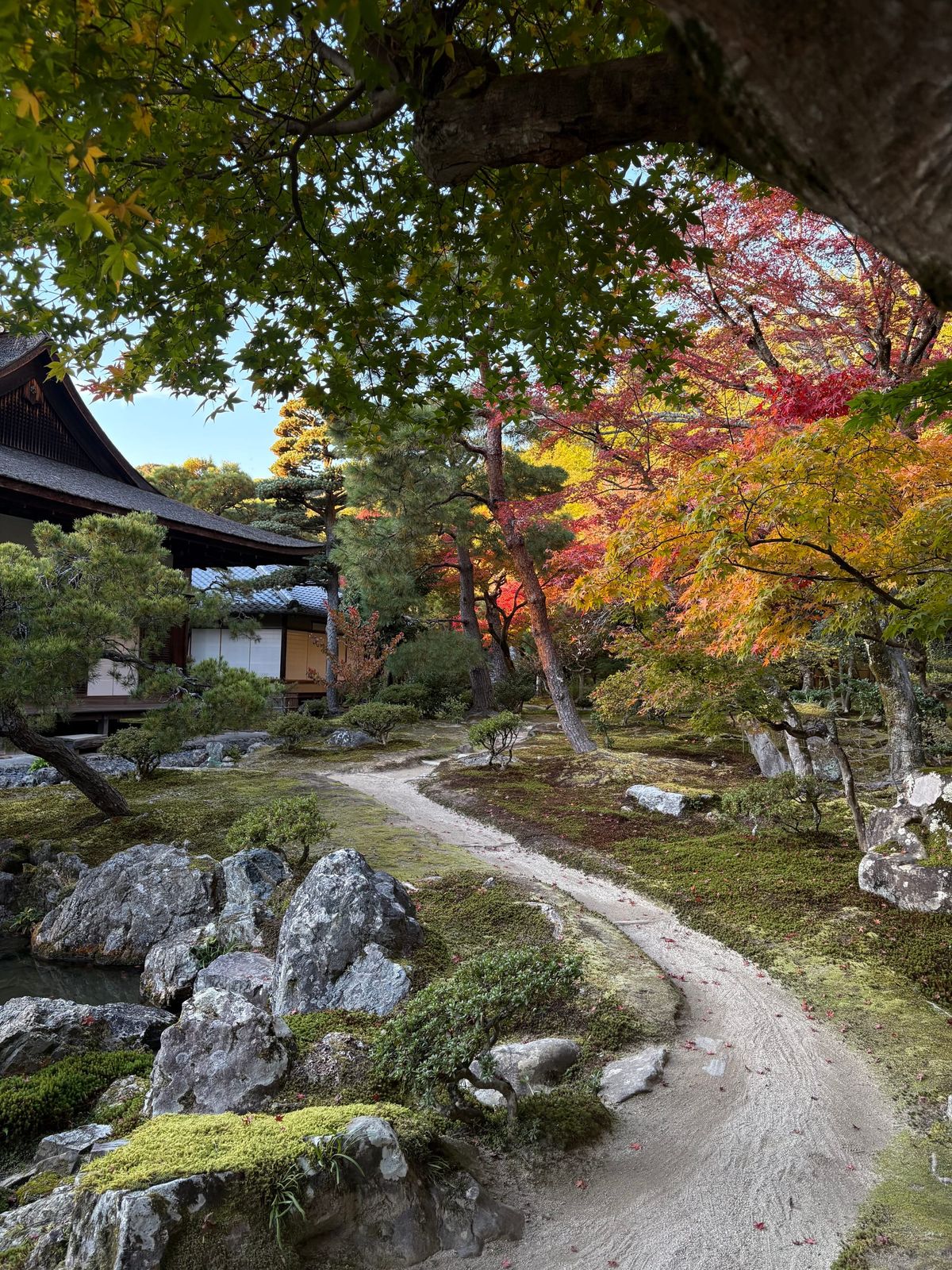
November is the peak of autumn foliage in Kyoto, when the city feels dressed in its most elegant colors. On a quiet Sunday, my family and I visited Ginkaku-ji (the Silver Pavilion). The last time we came was in summer, when everything was lush and green. But this visit felt like seeing a completely different temple.
Although there were many people outside the gates, once we stepped inside, a calm stillness welcomed us. The garden glowed with rich layers of color, deep reds, golden yellows, warm oranges, soft browns, and pockets of fresh green that hinted at summer’s memory. The contrast was breathtaking.
Red maple leaves rested gently on moss like scattered confetti. Mirror-clear water reflected fiery trees, turning the pond into another world. Bright crimson leaves peeked through evergreen pine, as if the season were whispering its final secrets. The harmony of these colors made the temple feel transformed, as if we were visiting a place we already knew, yet had never seen before.
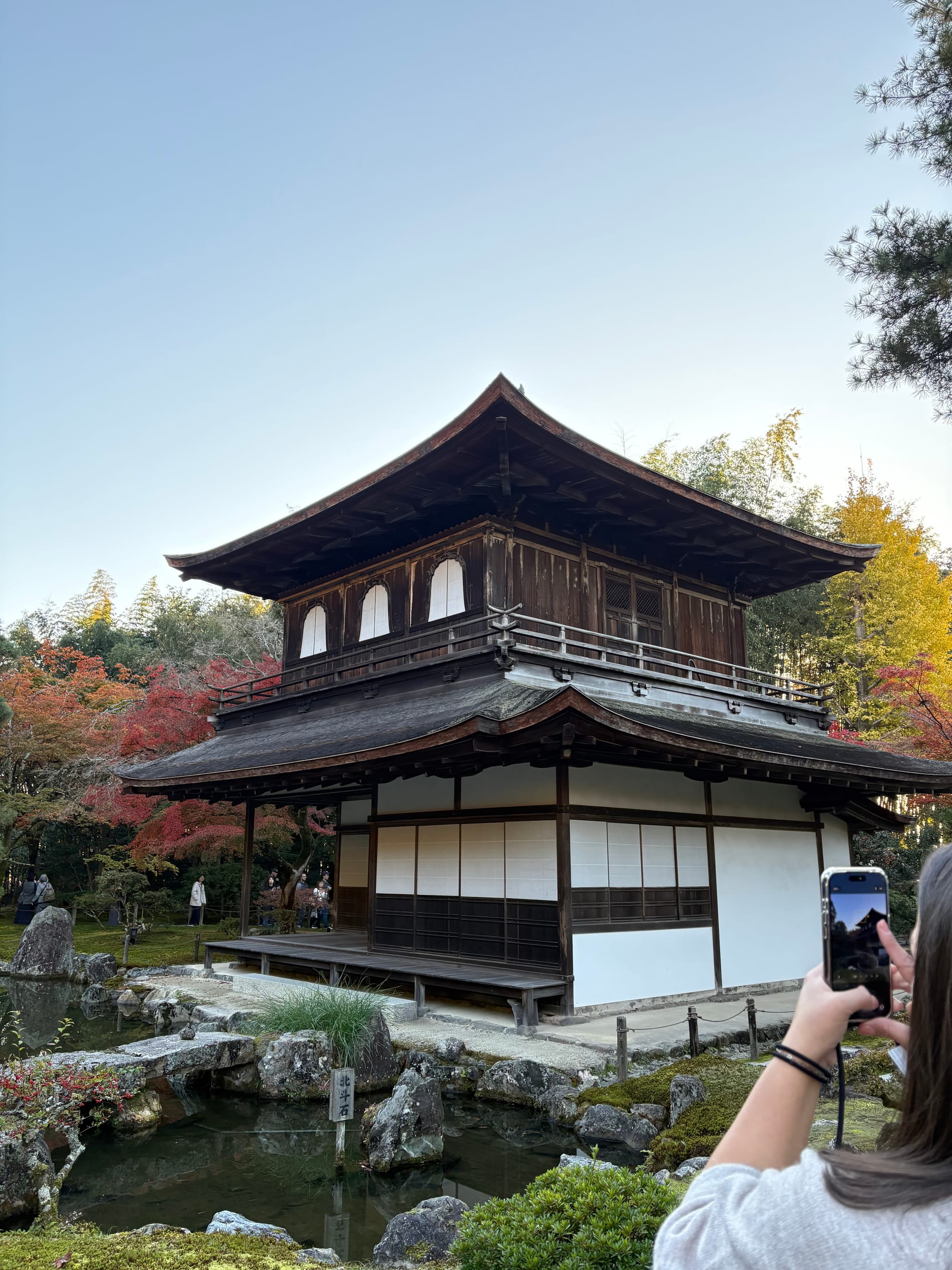
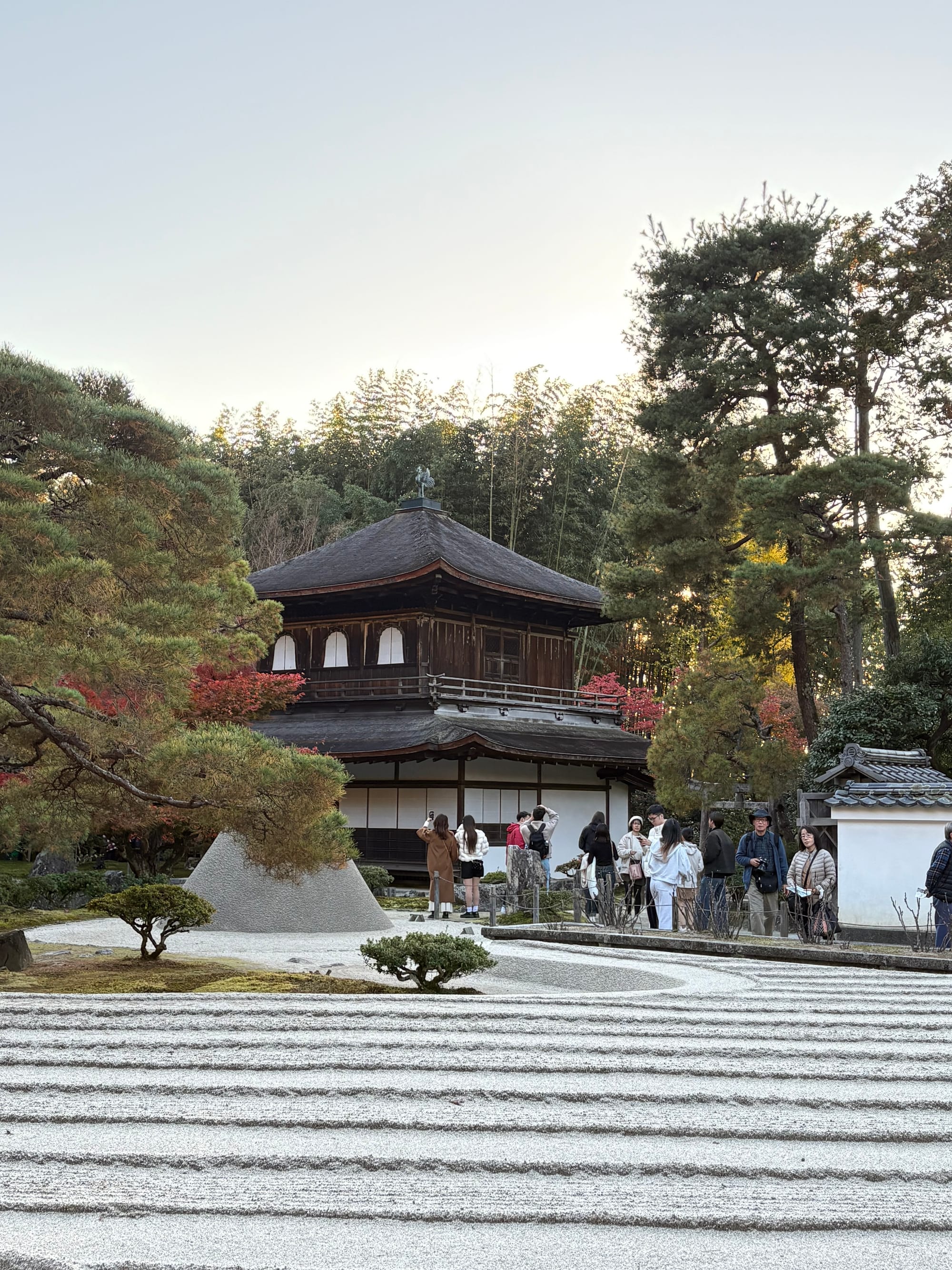
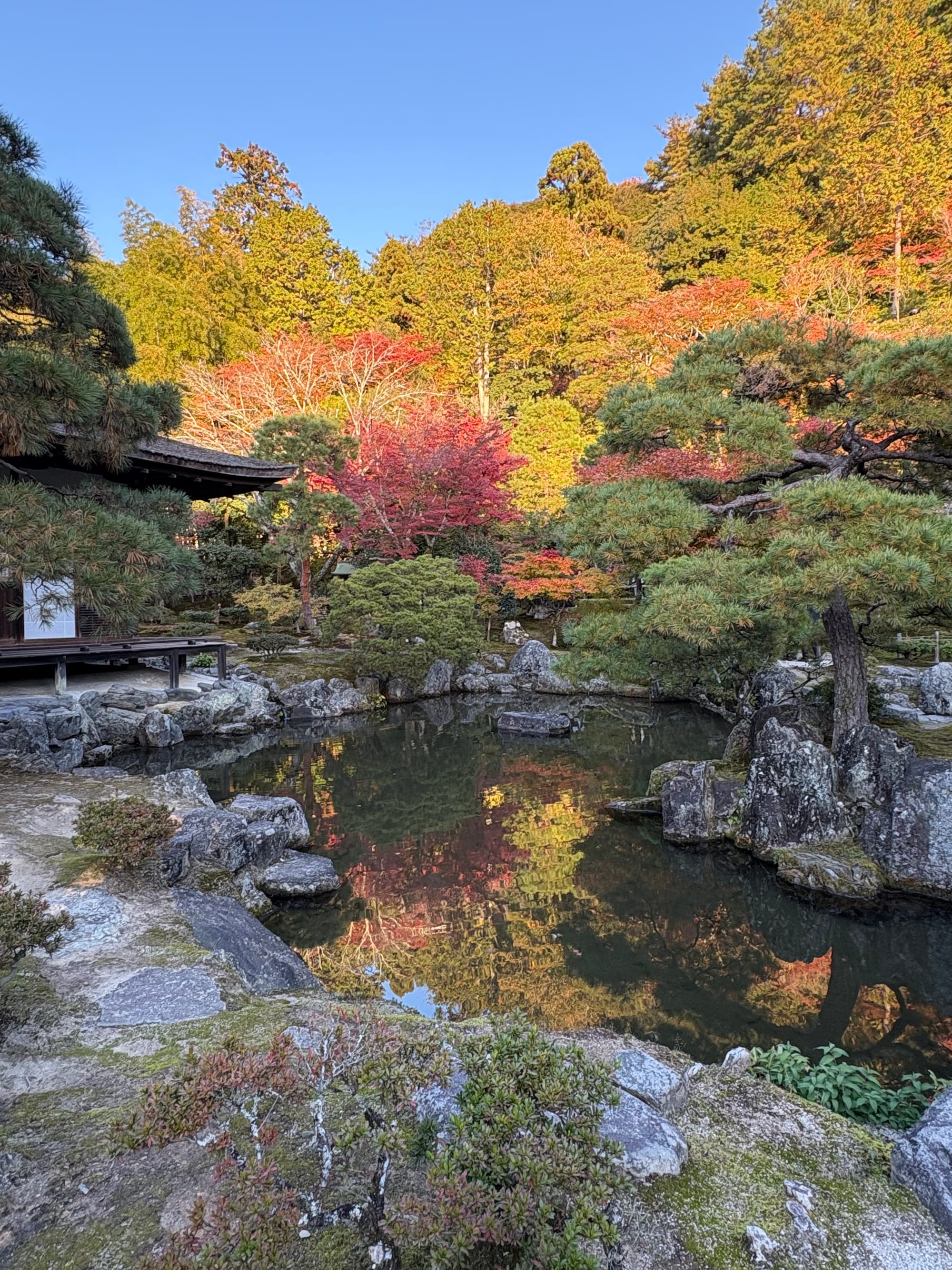
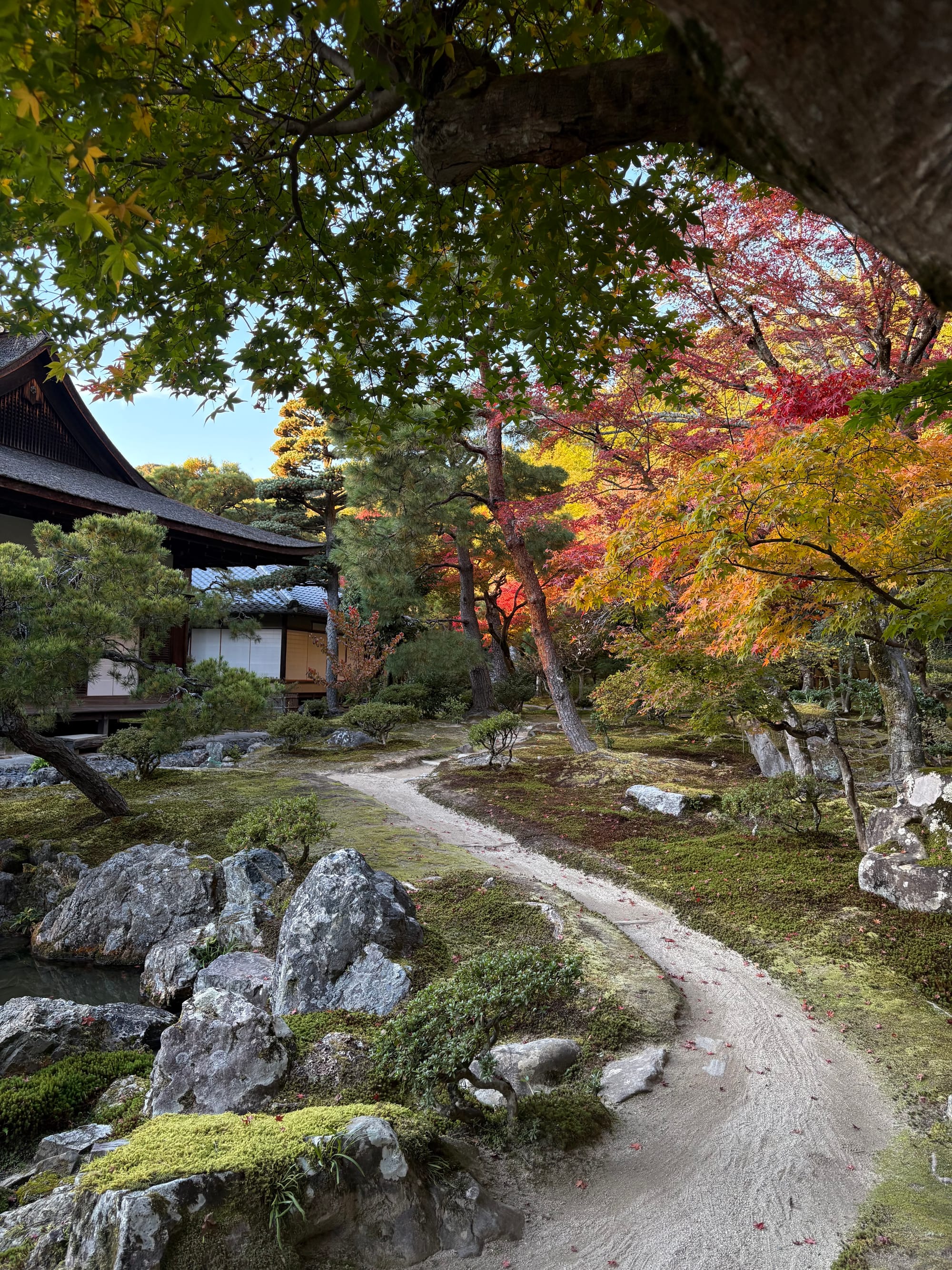
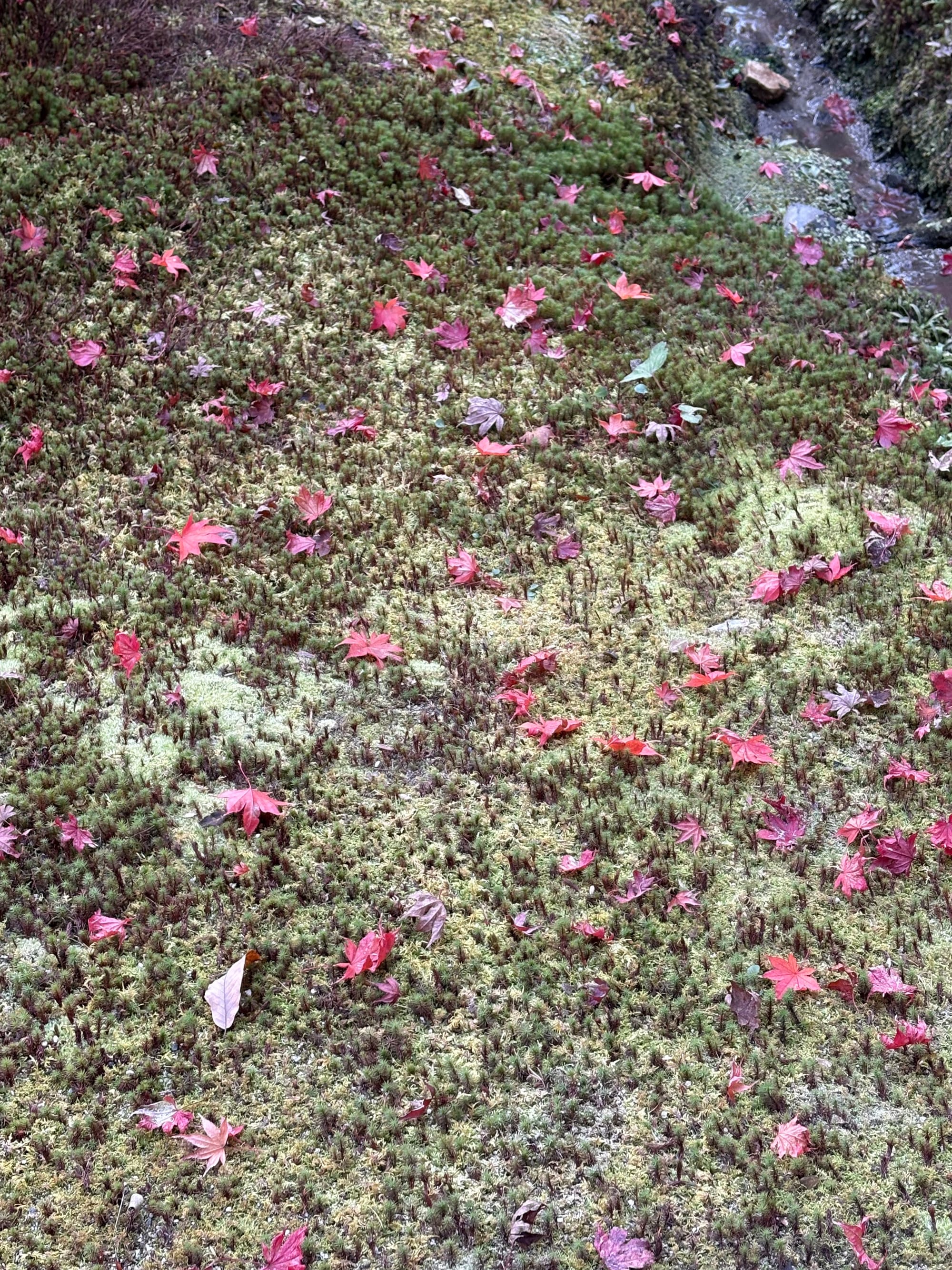
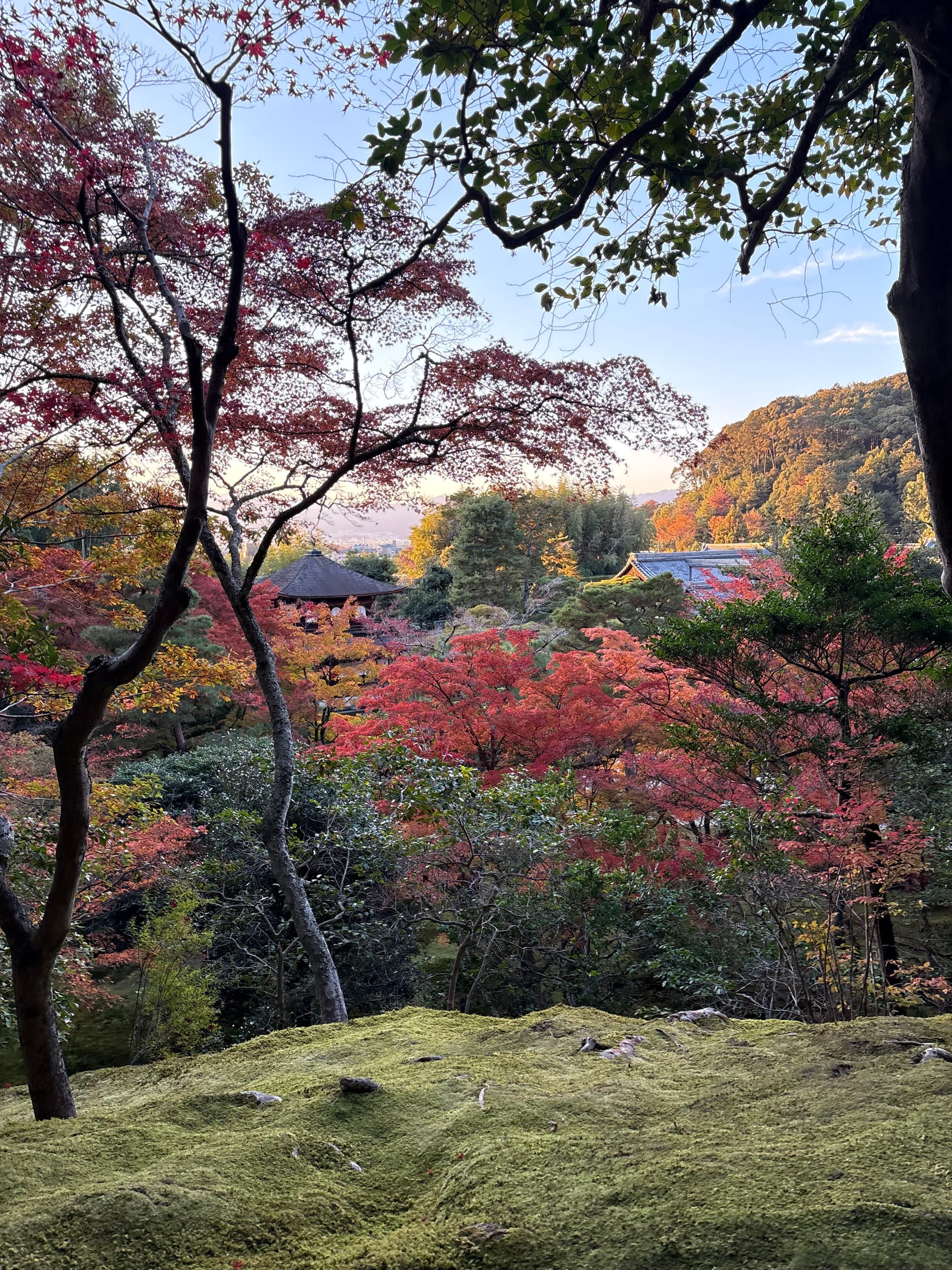
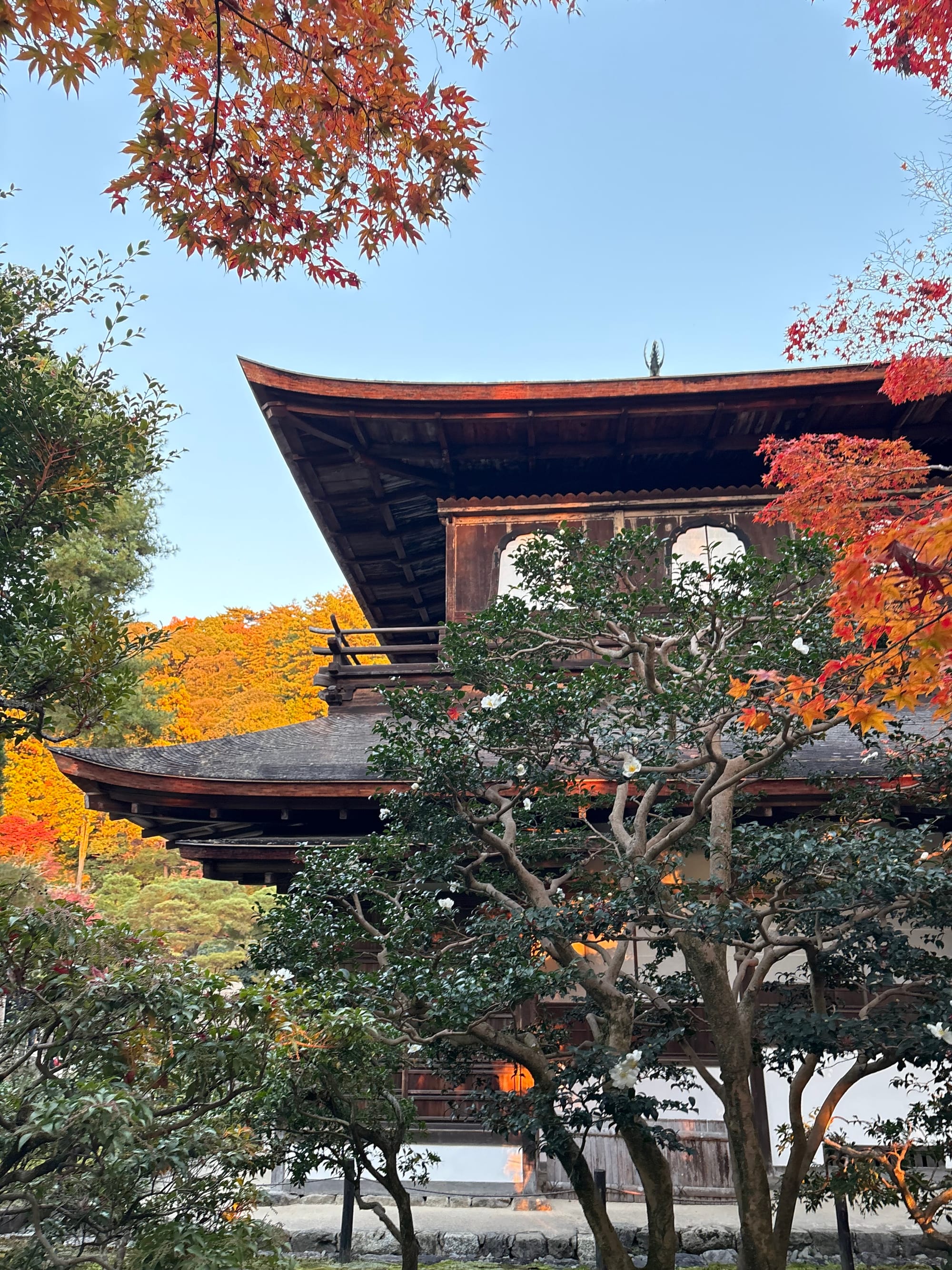
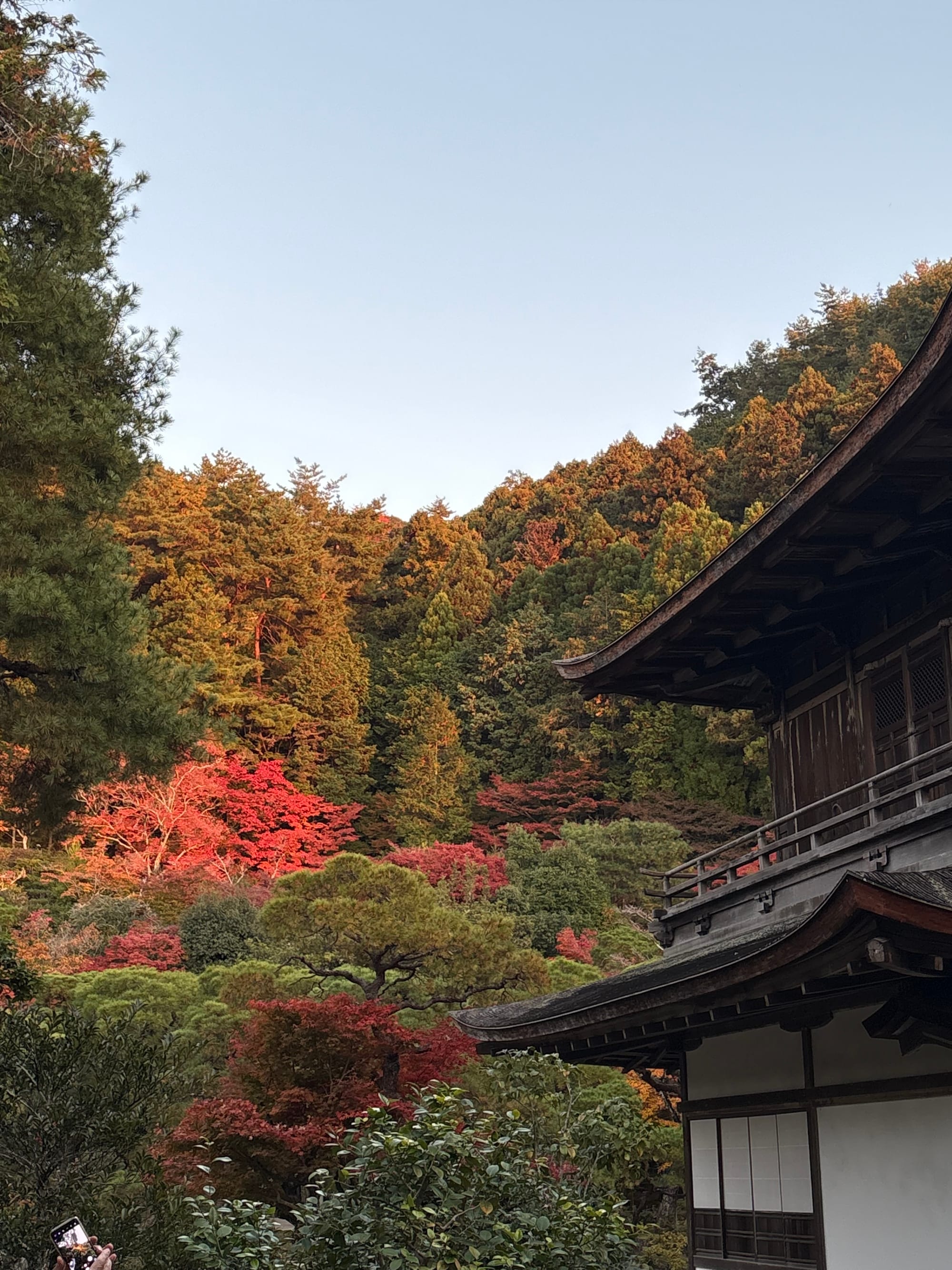
Kyoto's Ginkakuji in autumn
Autumn at Ginkaku-ji is not only beautiful and it is quiet, reflective, and full of small moments that make you pause. I’ll share many photos in this newsletter so you can wander through the garden with us, step by step.
Bonsai Exhibition – A Lesson in Courage
Do you like bonsai? Or do you know much about it?
To be honest, I knew almost nothing. But recently I discovered a bonsai exhibition near my home, and invited a friend to join me. We bought tickets for a live bonsai demonstration. We expected it to last maybe 30 minutes, but it ended up being 90 minutes of pure inspiration.
On stage stood a large, stunning pine tree. I assumed the bonsai master would speak about it calmly, perhaps pointing out its branches and shape. Instead, he picked up a chainsaw and began cutting it apart with his apprentice. We were shocked!
During the demonstration, the master explained the essential principles of bonsai. They reminded me so much of Ikebana:
- Character – Preserve the tree’s original form and natural habits
- Harmony – Balance the whole: trunk, branches, and leaves
- Elegance – Reveal the inherent beauty of the tree
- Essence – Express how it grows in nature
Listening to his philosophy, I realized how deeply bonsai is connected not only to Ikebana, but also to Buddhist thought. He spoke about courage: “If you are afraid to touch the tree, you can never create good work.” He said that throughout his life, he had killed many trees. “And that’s okay,” he said, “as long as you learn from them and respect each one.”
That honesty felt powerful, beautiful, and also a little frightening. Creativity asks us to be fearless.
I could talk about this experience all day, but I think it’s easier to show you. I recorded about 30 minutes of the demonstration, with English explanation from the apprentice. It’s long, but truly exciting. Especially the small, precise movements they make with the tree.
If you’re curious about the world of bonsai (and how it connects to Ikebana), I hope you’ll watch it.
Thank you for reading. If you have any questions or would like to share your own arrangement, I would love to see it.
With gratitude,
Ryoko