
Ikebana for Autumn in Kyoto’s Peak Foliage
Learn ikebana with simple step-by-step autumn ideas from Kyoto, including using Willow and Chrysanthemum in your arrangements.
Get the HanaYou Ikebana Journal in your inbox.
Hello flower lovers,
Autumn has arrived in Kyoto, and everywhere I walk I feel the season settling in. The colors are deep and warm, and it is the perfect moment to enjoy simple ikebana at home.
Last weekend, a customer asked for something easy to display in her living room. She was not sure how to arrange flowers by herself, so I suggested two tall autumn willow branches. They express the season beautifully, and even beginners can create something elegant with them.
We found a clear cylinder vase since she did not have a tall one at home. I showed her how to place one branch a little taller and one slightly shorter. The shape looked modern, calm, and effortless. She went home excited to try it for herself.
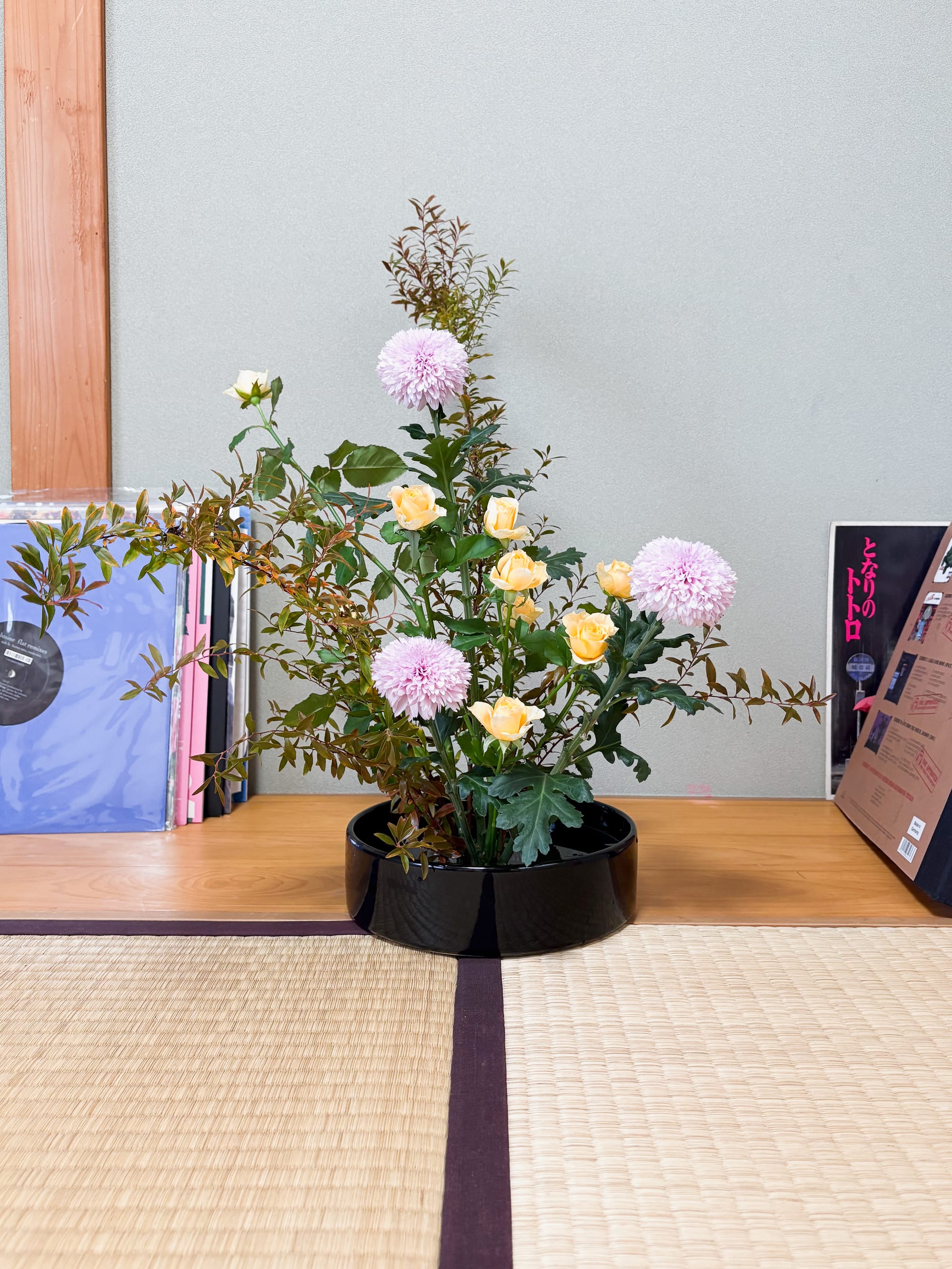
Displaying flowers does not need to feel complicated. If you ask your florist, they can guide you toward simple seasonal branches that look beautiful with very little adjustment. Even a small arrangement can refresh your space and bring a gentle moment of calm.
A Sunday Morning Conversation at Kyoto’s Oldest Flower Shop
Kyoto is at its most vivid in autumn. The deep reds of momiji (Japanese maple) trees brighten the quiet streets. When I walk through my neighborhood, I see shops decorating their entrances with seasonal branches. These small details bring a warm feeling to everyday life.
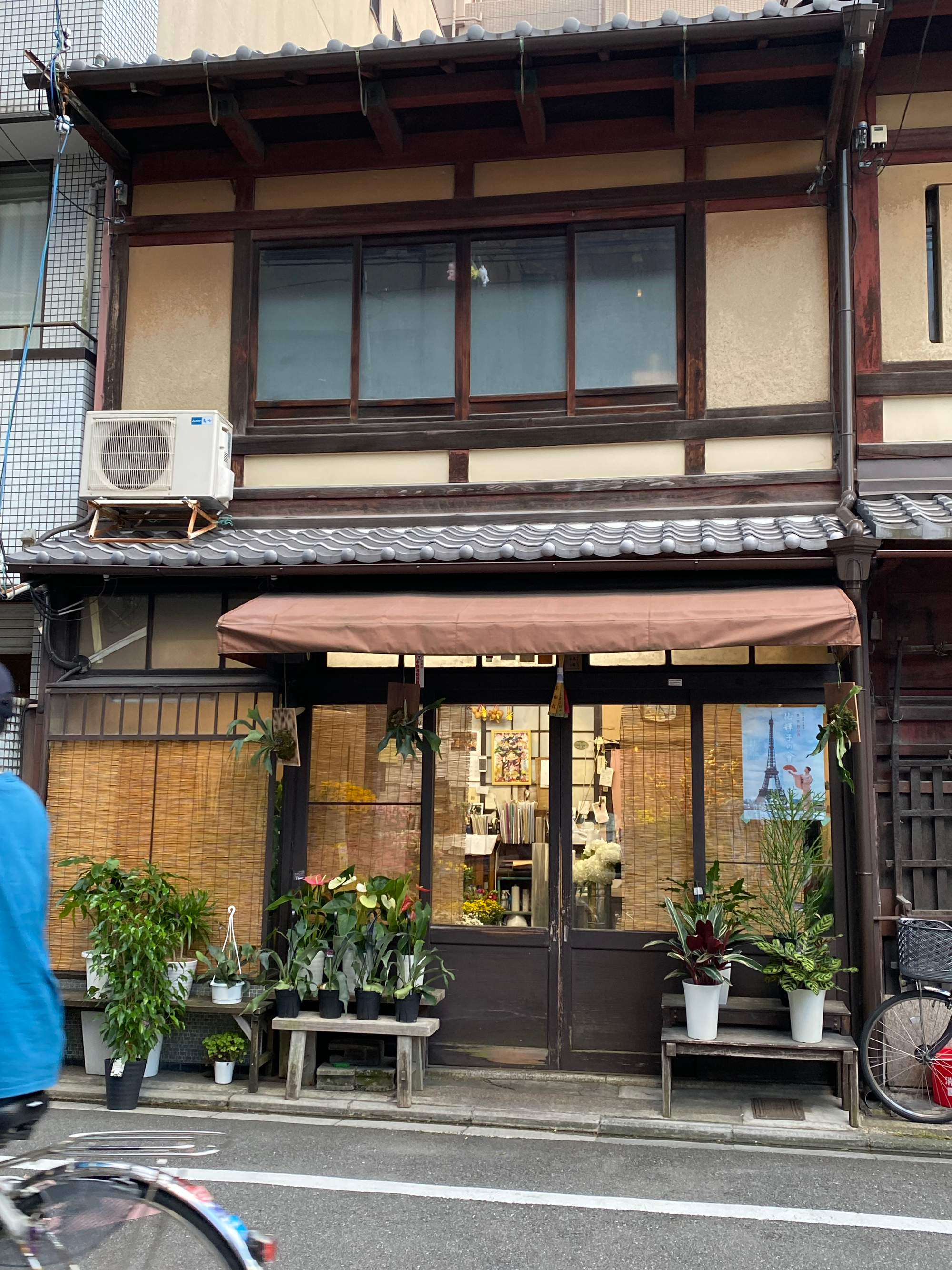
On a recent Sunday morning, I visited a flower shop established in 1861. It was already lively when I arrived. Staff members were preparing flowers for local ikebana classes, and the refrigerators were full of year-end florals. In a corner, a tall pile of autumn branches reminded me of the flower markets I used to visit in New York.
Most staff were heading out for deliveries, so only one woman remained at the counter. She was in her 60s, calm and friendly. As she prepared my order, she asked if I was joining an exhibition. I told her that the flowers were for my own ikebana practice.
She shared something that stayed with me. She told me that fewer young people in Japan learn ikebana now. When she was growing up, ikebana and tea ceremony were taught in school, especially to girls. Many women became housewives and learned sewing, cooking, and traditional arts as part of everyday life. Today, she said, young people work long hours and rarely have time to learn these traditions.
Her voice carried both sadness and hope. She said she felt happy knowing I practice and teach ikebana. Her words made me realize that what I had sensed in my own school is happening everywhere in Japan. The number of practitioners is slowly decreasing.
In New York, ikebana felt so alive. Workshops were full of curiosity and excitement. Here in Japan, the birthplace of ikebana, the art is quietly aging. This conversation made me reflect on what it means to continue learning deeply and to share this beauty with others. Tradition survives only when someone chooses to care for it.
The Aesthetic of Ma
The concept of ma (間), or intentional space, is at the heart of Japanese design. Many imagine it as emptiness, but it is not empty at all. It is the space that gives shape to everything around it.
In ikebana, Ma appears in the distance between flowers, the gap between branches, and the way the vase holds the arrangement. Space becomes meaningful when it supports movement, form, and the feeling of the season.
To create Ma, you must learn when to stop. It is easy to keep adding, cutting, and adjusting, but beauty often appears when you trust the moment and leave room for breath. When students tell me they want to keep their work simple, I ask why. If their intention is clear, simplicity becomes strength. If the work feels empty, we explore how to enrich it without losing the original idea.
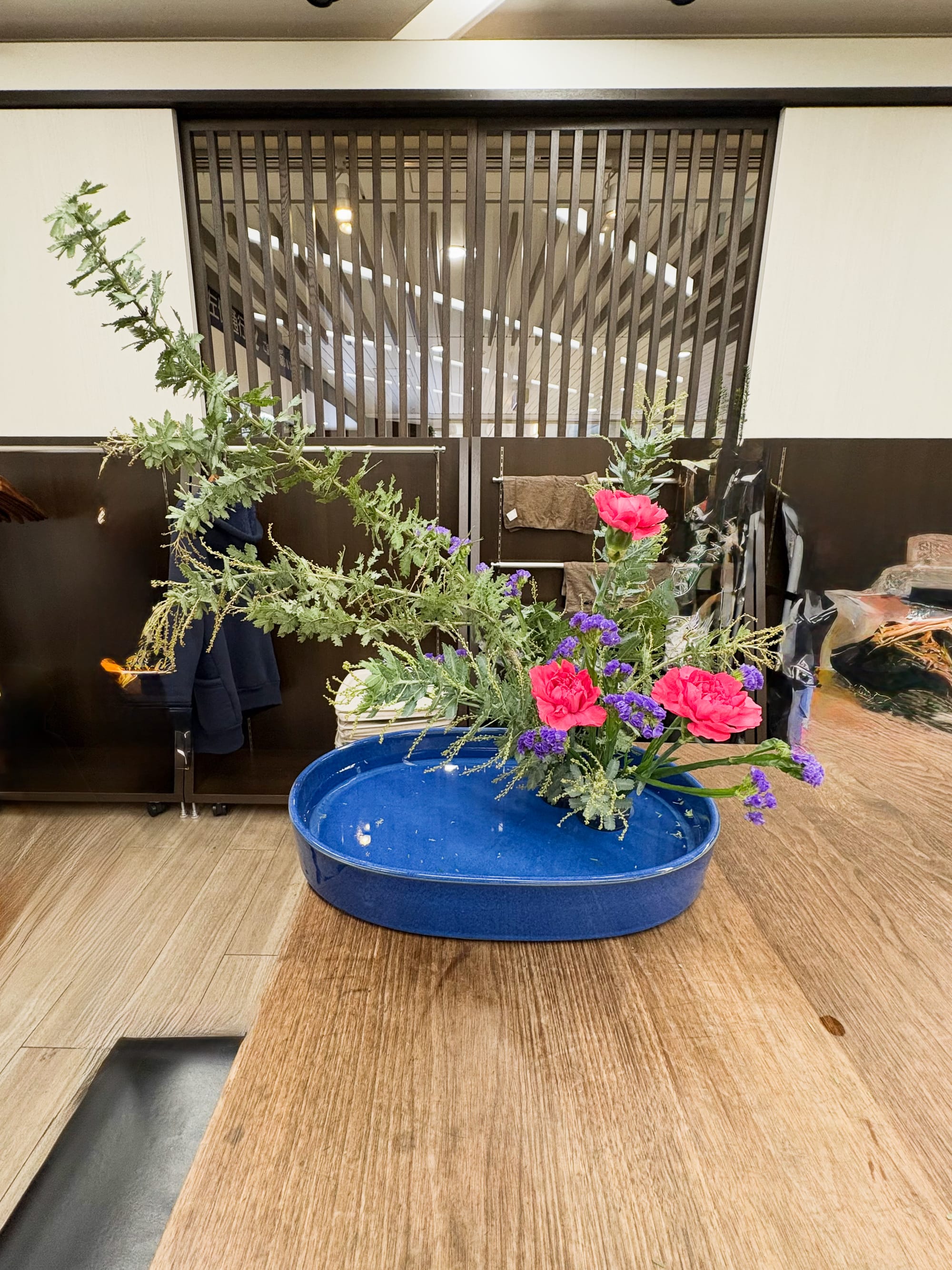
Ma is subtle and personal. With practice, you begin to feel when the space holds its own quiet life.
This Week’s Ikebana: Creating Space With Willow and Chrysanthemum
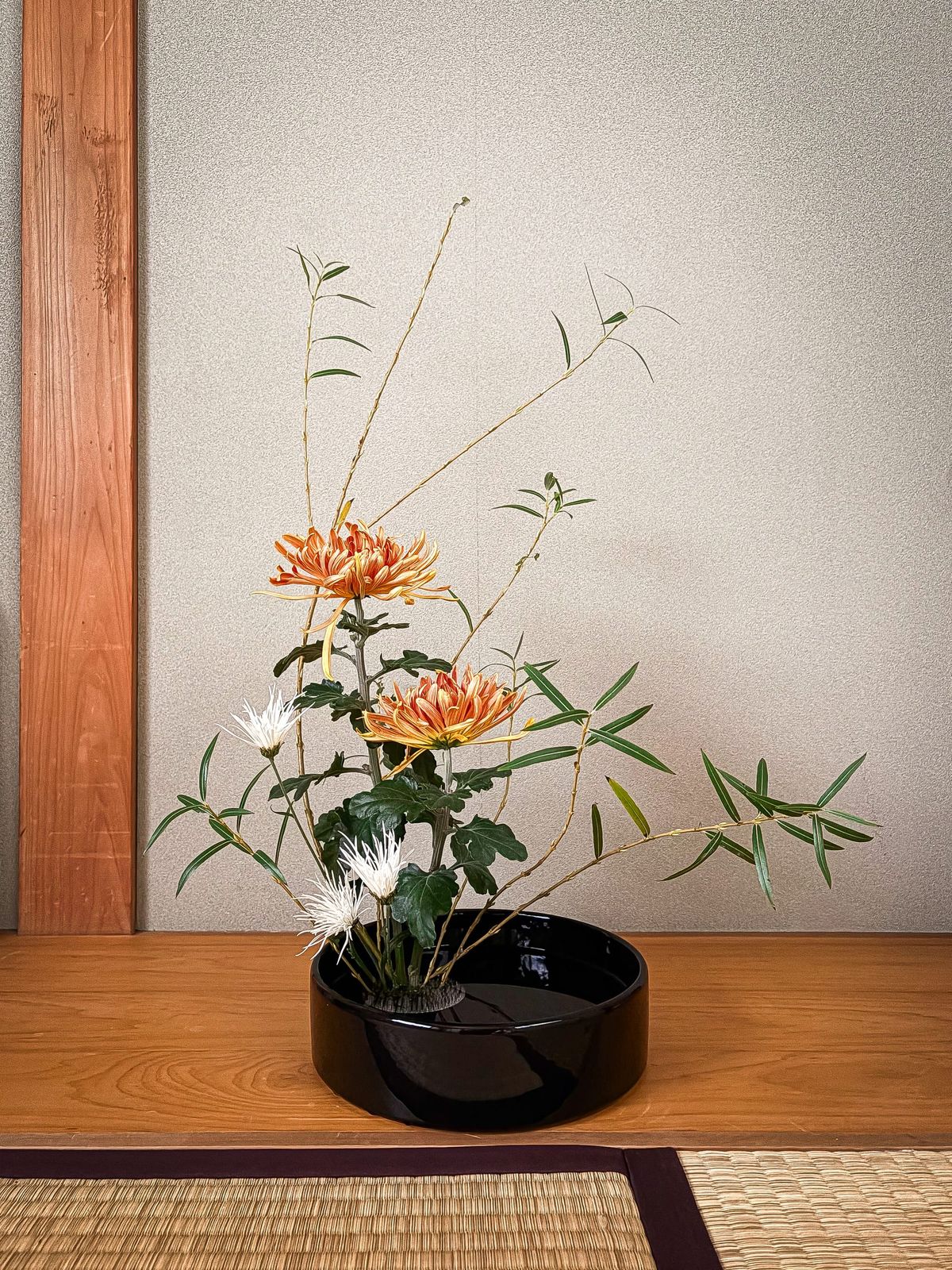
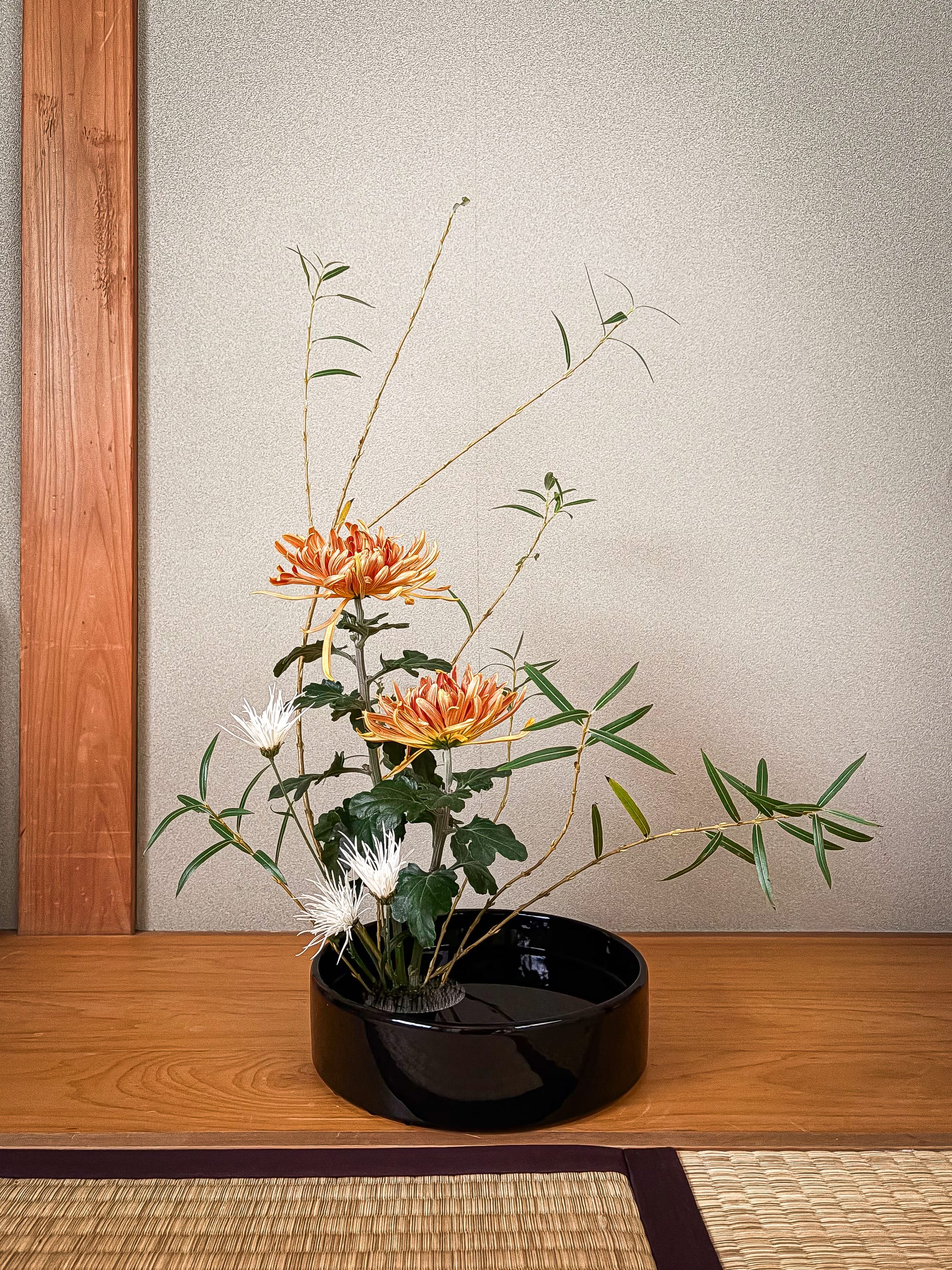
This week’s arrangement explores Ma inside the vase. Willow branches create airy movement, while chrysanthemums bring warmth and color.
Flower Recipe
- Willow
- Chrysanthemum (orange)
- Spray chrysanthemum (white)
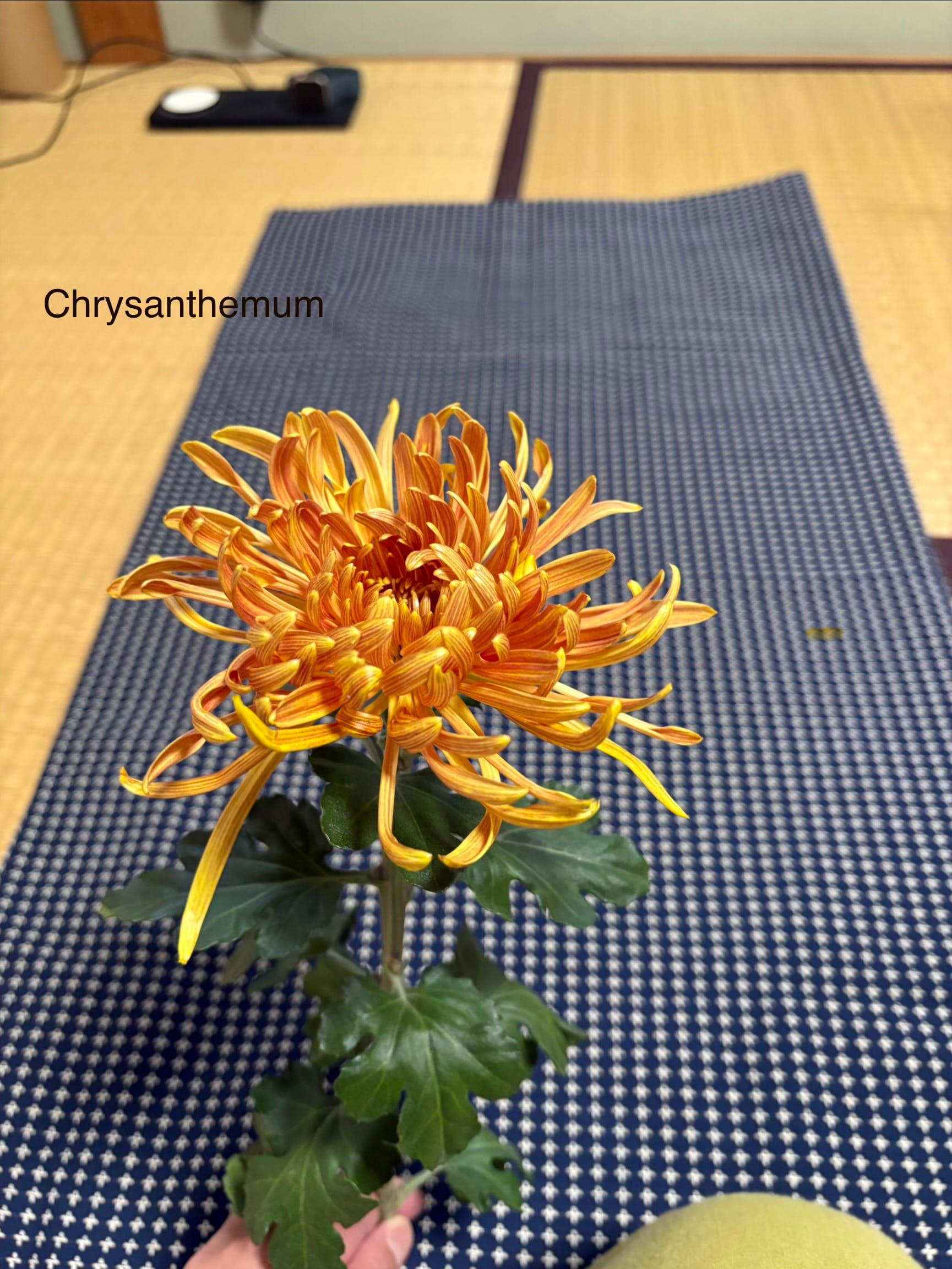
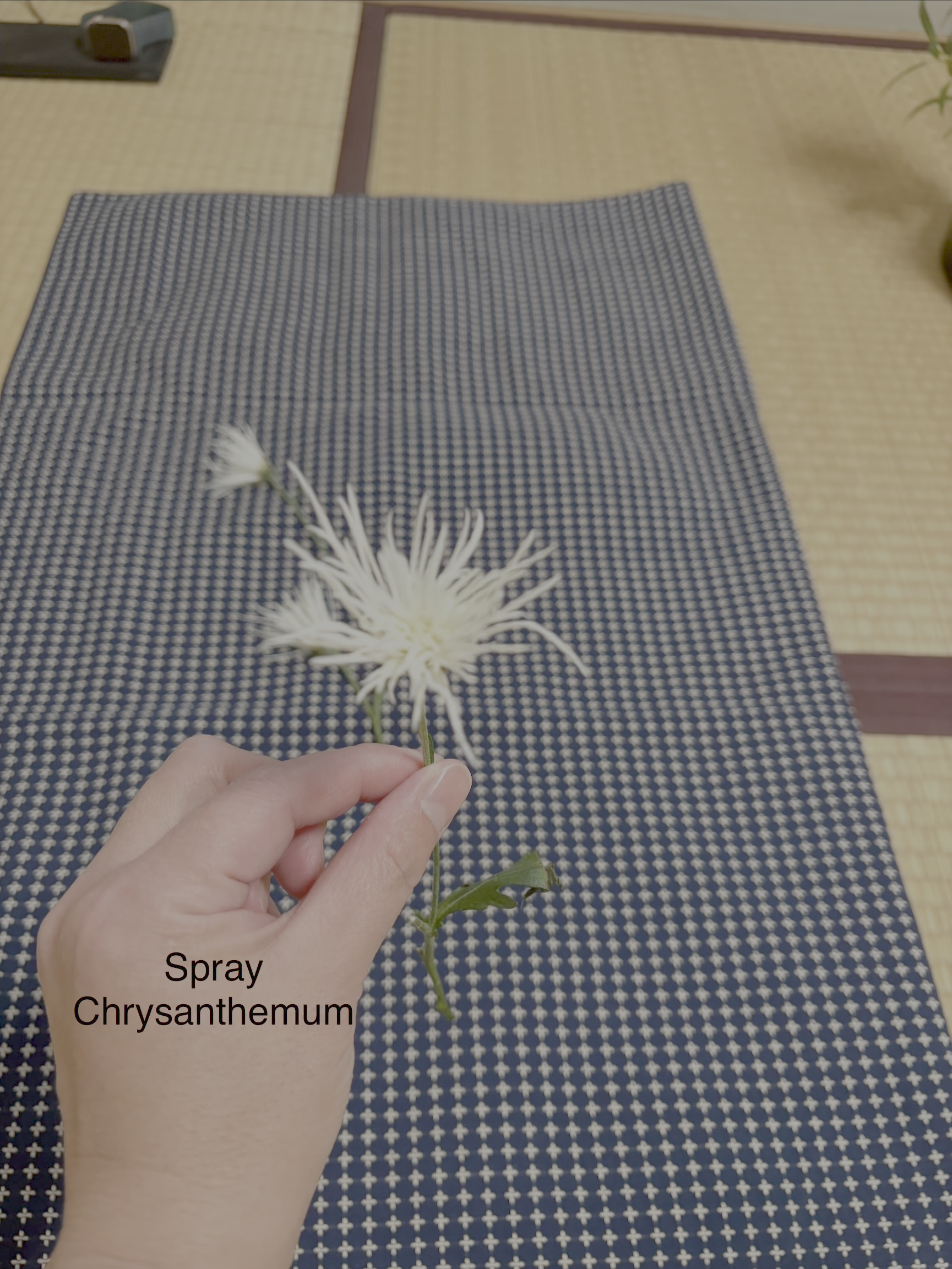
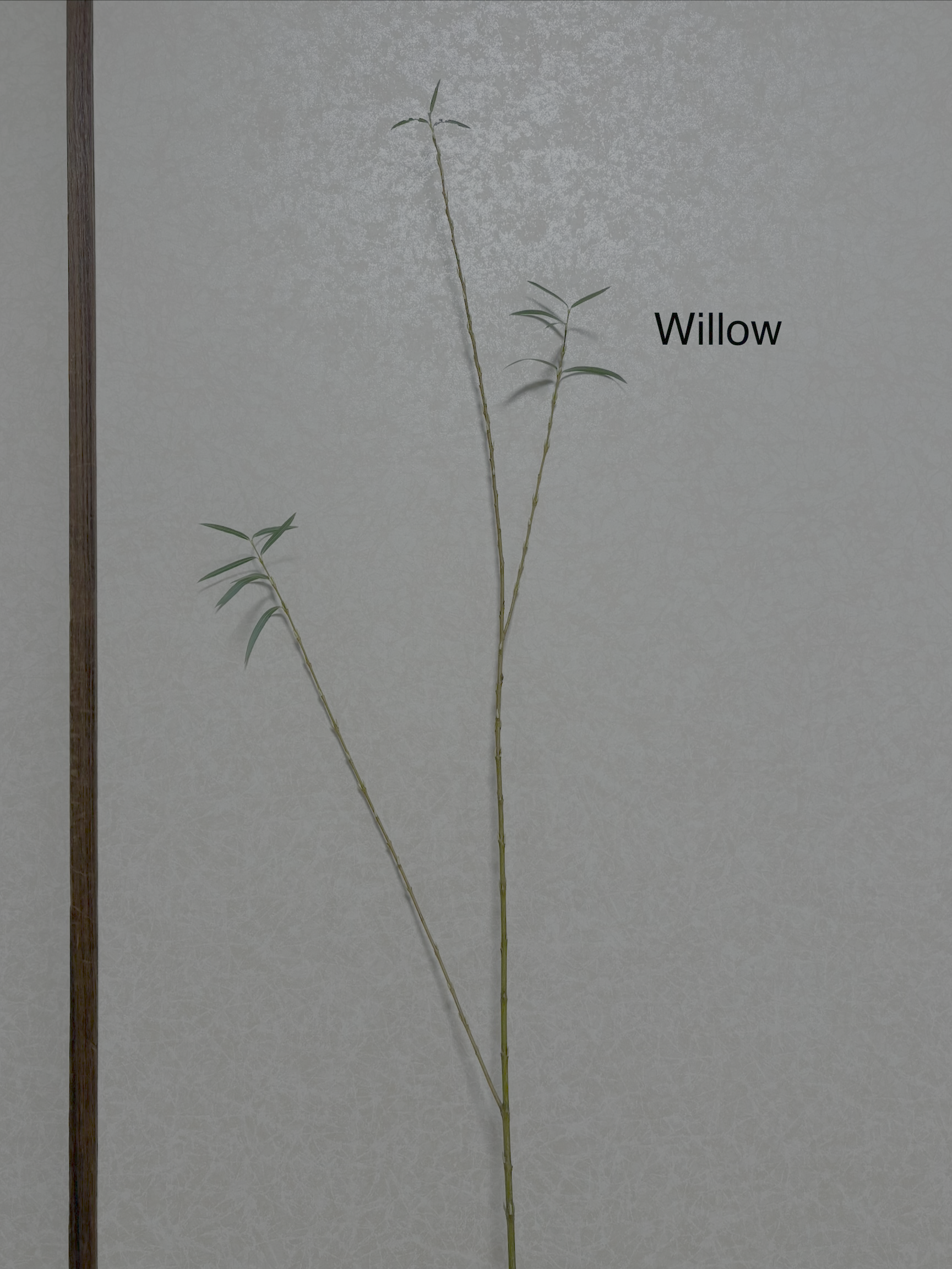
Tools
- Kenzan: 4 inch (8 cm)
- Round shallow vase
Step-by-Step
You can follow along with this video, and I outlined the steps below.
Step 1: Add the backbone stem
Choose a strong willow branch for height. This sets the tone and scale. Add a supporting willow behind it for stability.
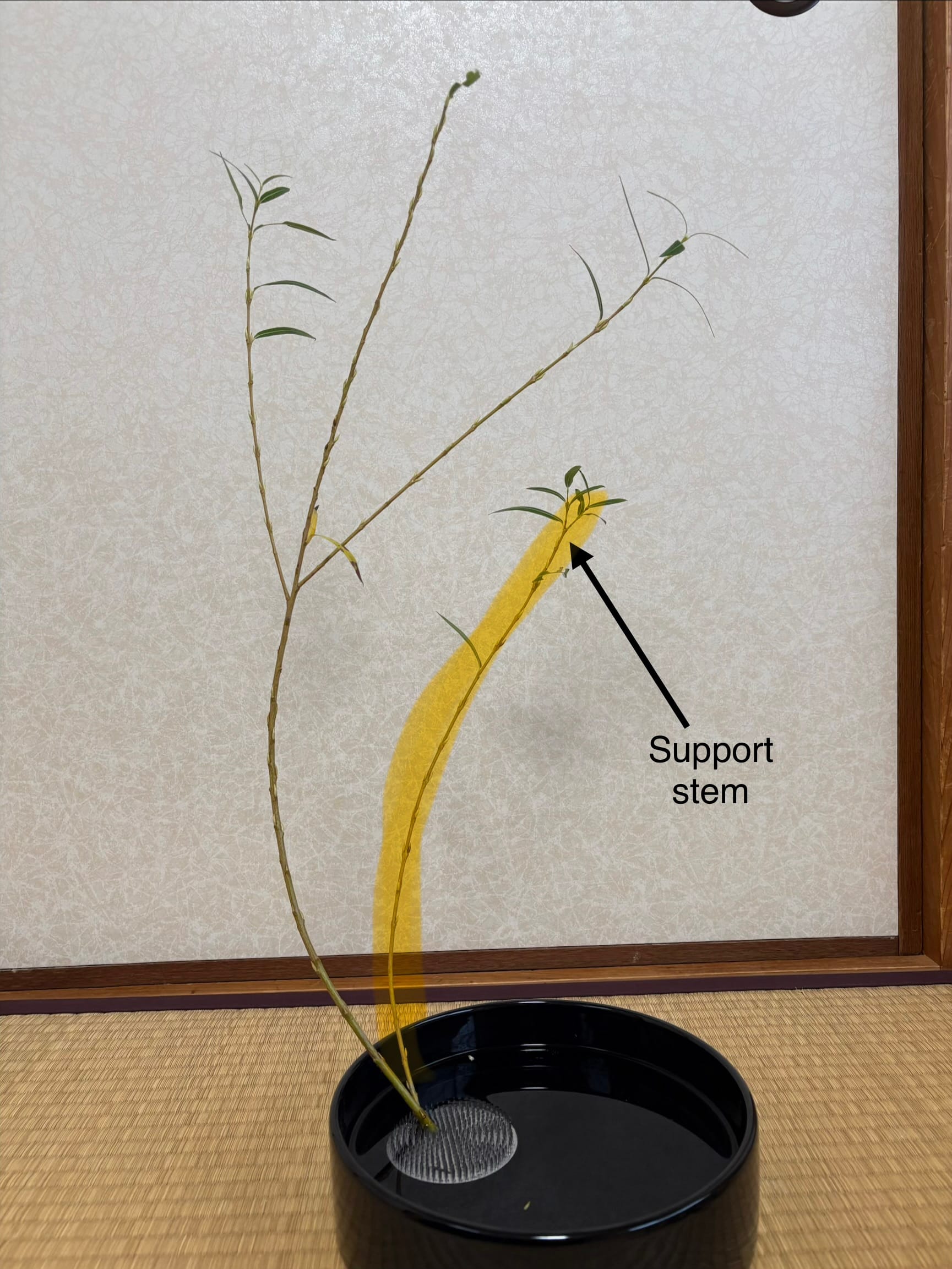
Step 2: Add the tall flower
Place the orange chrysanthemum slightly forward. This becomes the arrangement’s focal height.
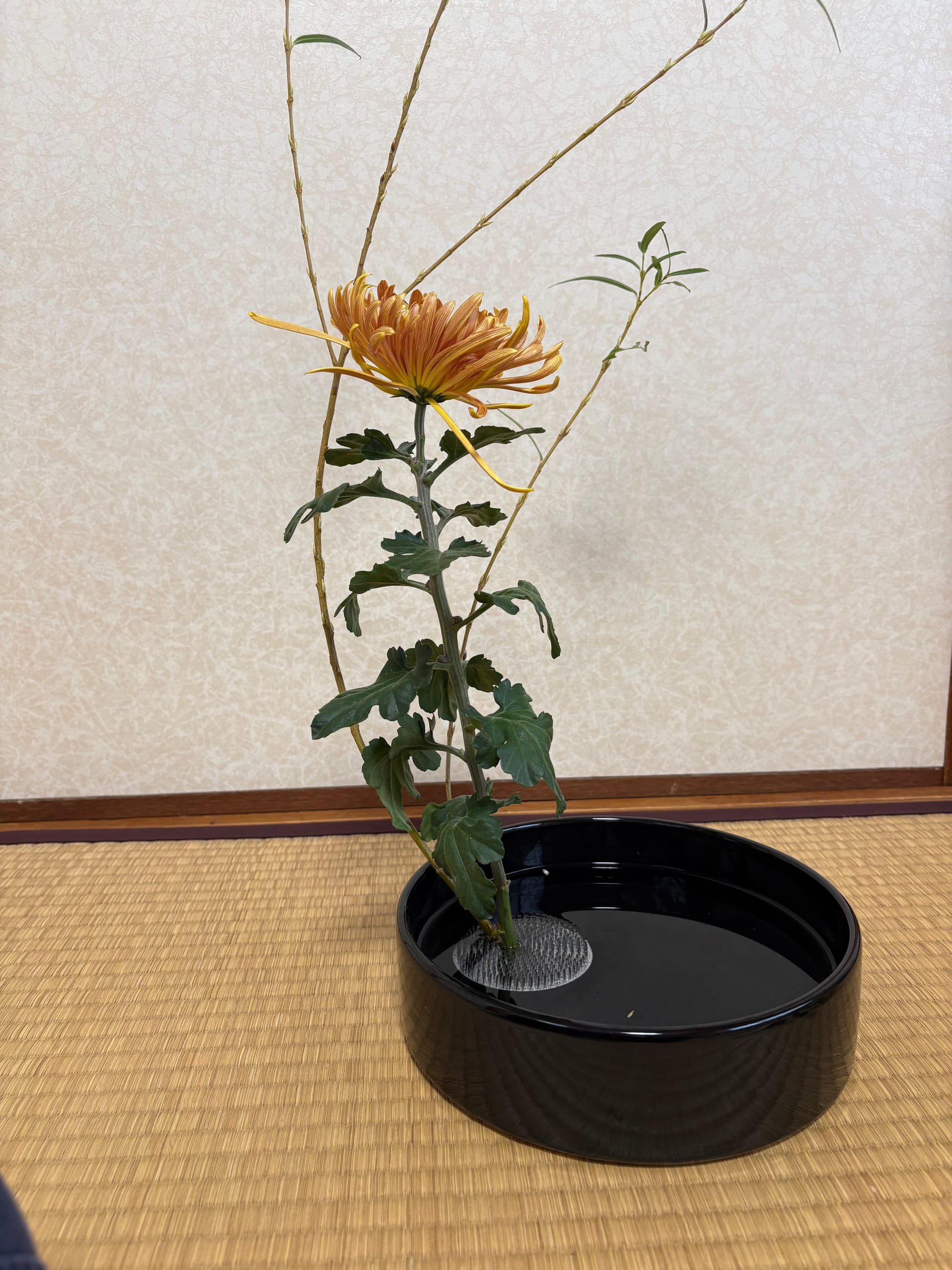
Step 3: Add the shorter flower
Place a second chrysanthemum lower. When the two flowers gently face each other, they create harmony and a natural sense of growth.
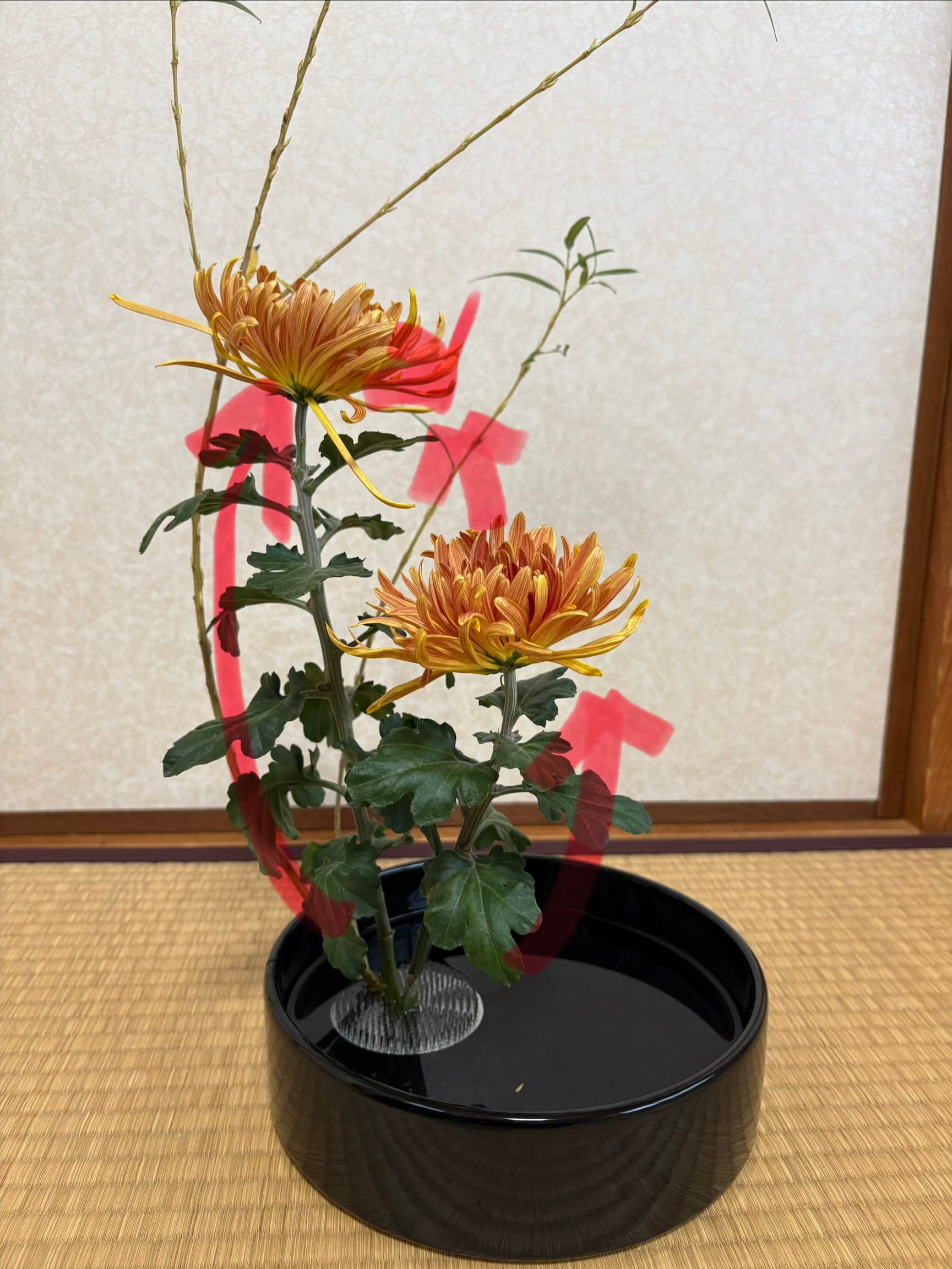
Step 4: Add more willow branches
Gently flex the willow to create movement, almost like air flowing over water. Warm the branch with your hands before bending.
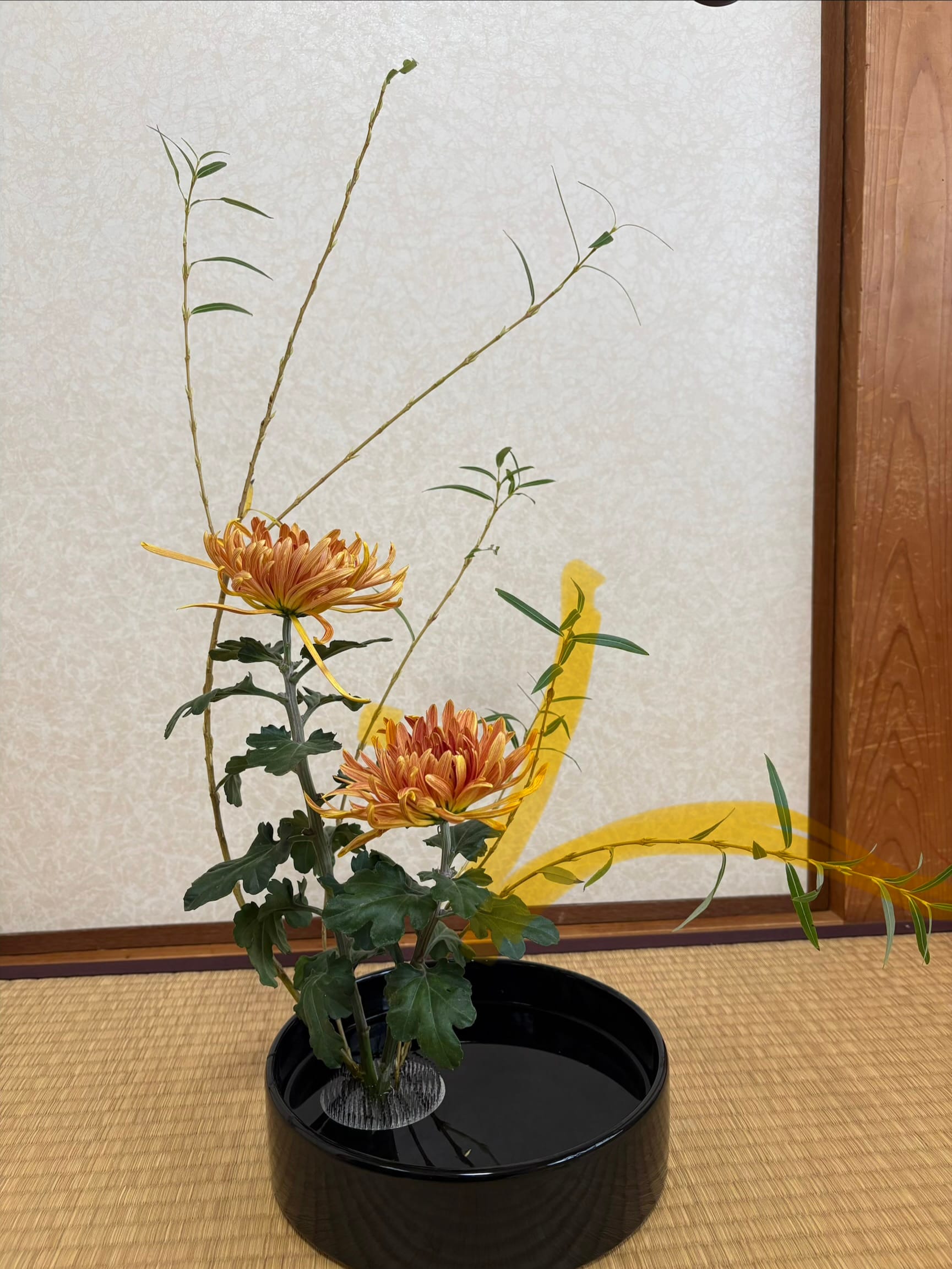
Step 5: Add flowers to the left
Cluster the white spray chrysanthemums together. They brighten the composition without overpowering it.
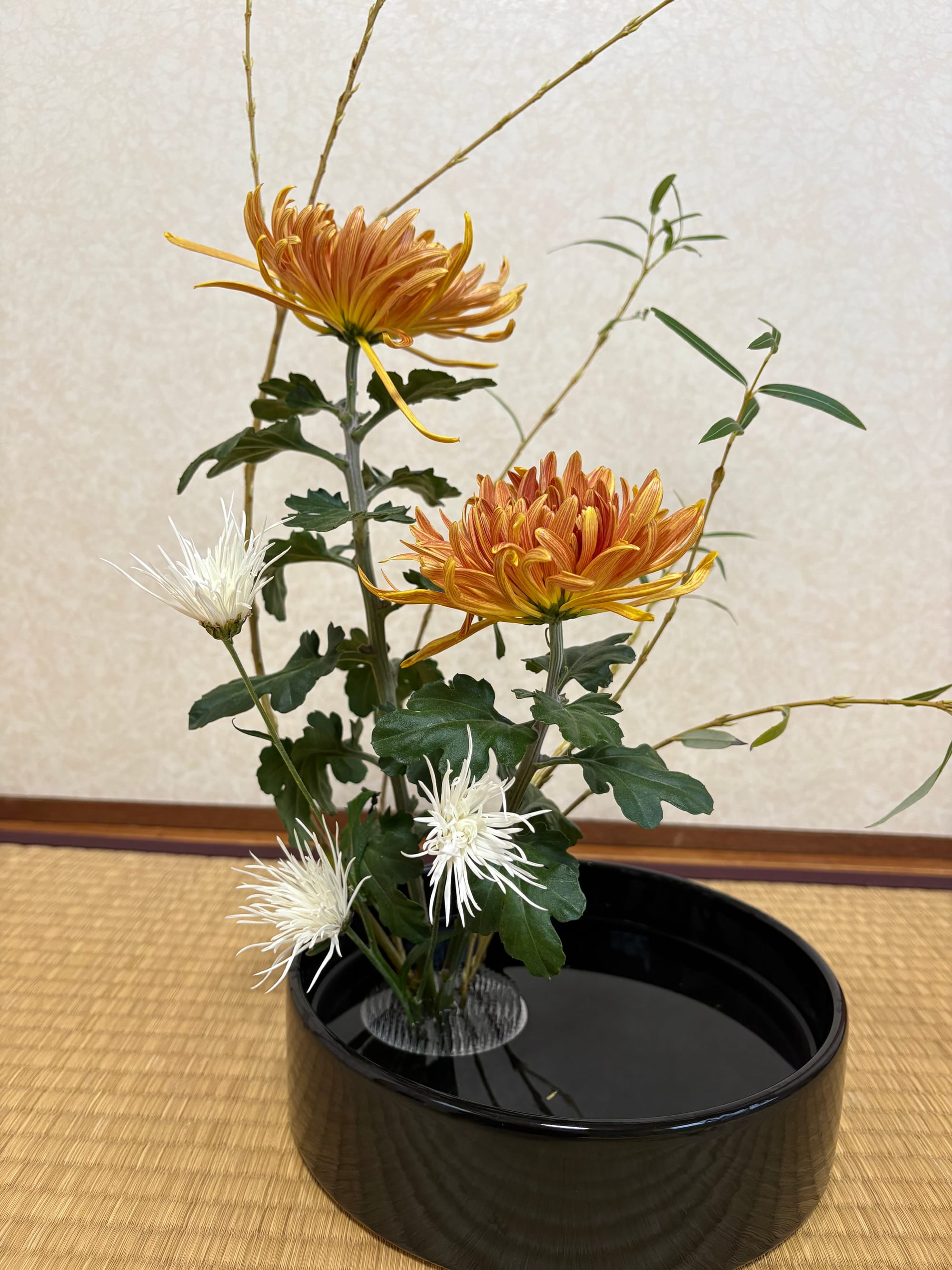
Step 6: Add more willow
Follow the natural growth of willow. Let the lines reach and curve as they would outdoors.
Final Touch
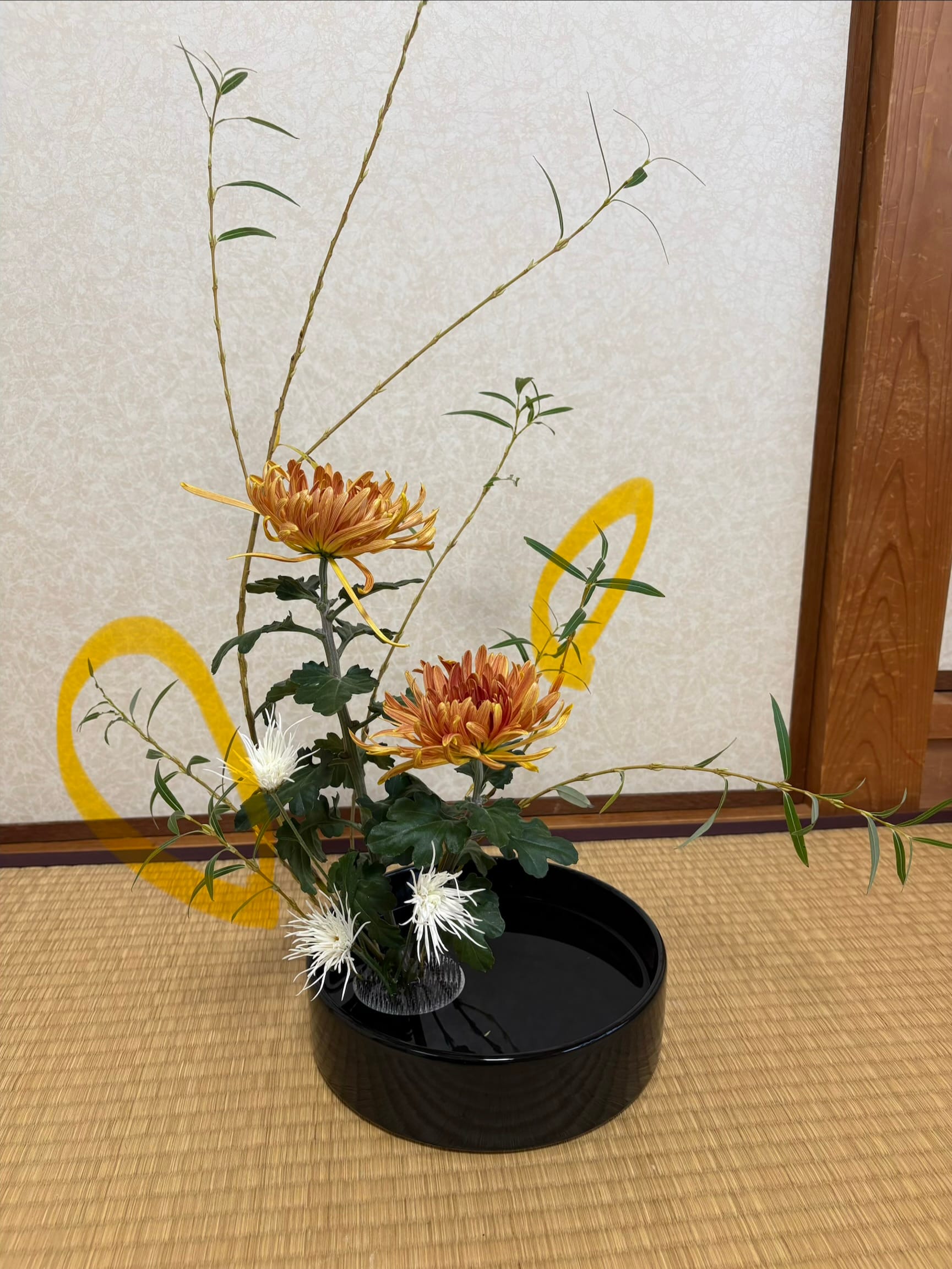
Look at the right side of the vase. The open space there is intentional. I shifted the kenzan to the left to create a river-like feeling. The willow moves like wind over water, and the chrysanthemums bloom along the bank.
Thank you for reading. If you have any questions or would like to share your own arrangement, I would love to see it.
With gratitude,
Ryoko