
The Beauty of the Creative Process
Not every ikebana arrangement comes together effortlessly. Sometimes the real beauty lies in the process of creating, questioning, and starting over.
Get the HanaYou Ikebana Journal in your inbox.
Florists and ikebana artists create beautiful works that we see at exhibitions, in books, in storefronts, and on social media.
But before getting there, they often spend time researching, gathering inspiration, and imagining what their final creations might look like. Sometimes we are satisfied with our finished work, and sometimes we aren’t.This time, I really struggled with my ikebana arrangements.
So, I’d like to share the works that didn’t quite turn out the way I wanted. LOL.(Because I believe all florists and ikebana artists go through this kind of thing, but they rarely share it!)
The First Attempt
First, I picked this vase. My idea was to create a simple Nageire arrangement using seasonal flowers and branches. I wanted to highlight the beautiful lines and unique characteristics of the branches.
I bought some long curly willow branches and thought I would create a tall ikebana arrangement.
To hold the branches in place, I needed to think about Hanadome (a technique used to secure and stabilize stems inside a vase). I decided to use a technique called Matagi.
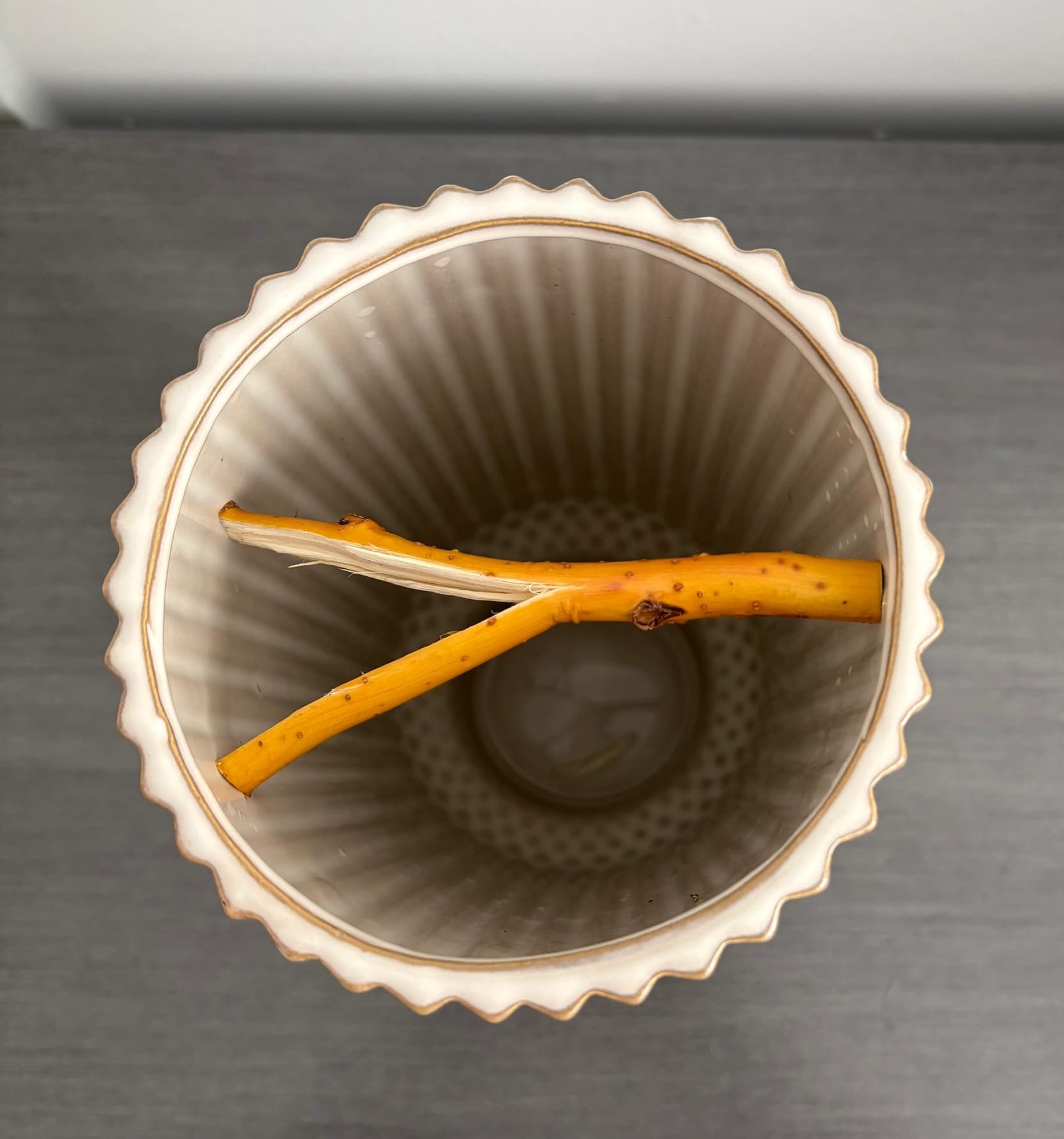
And then… tada!
I added more branches and chrysanthemums, and here is the result of my first attempt.
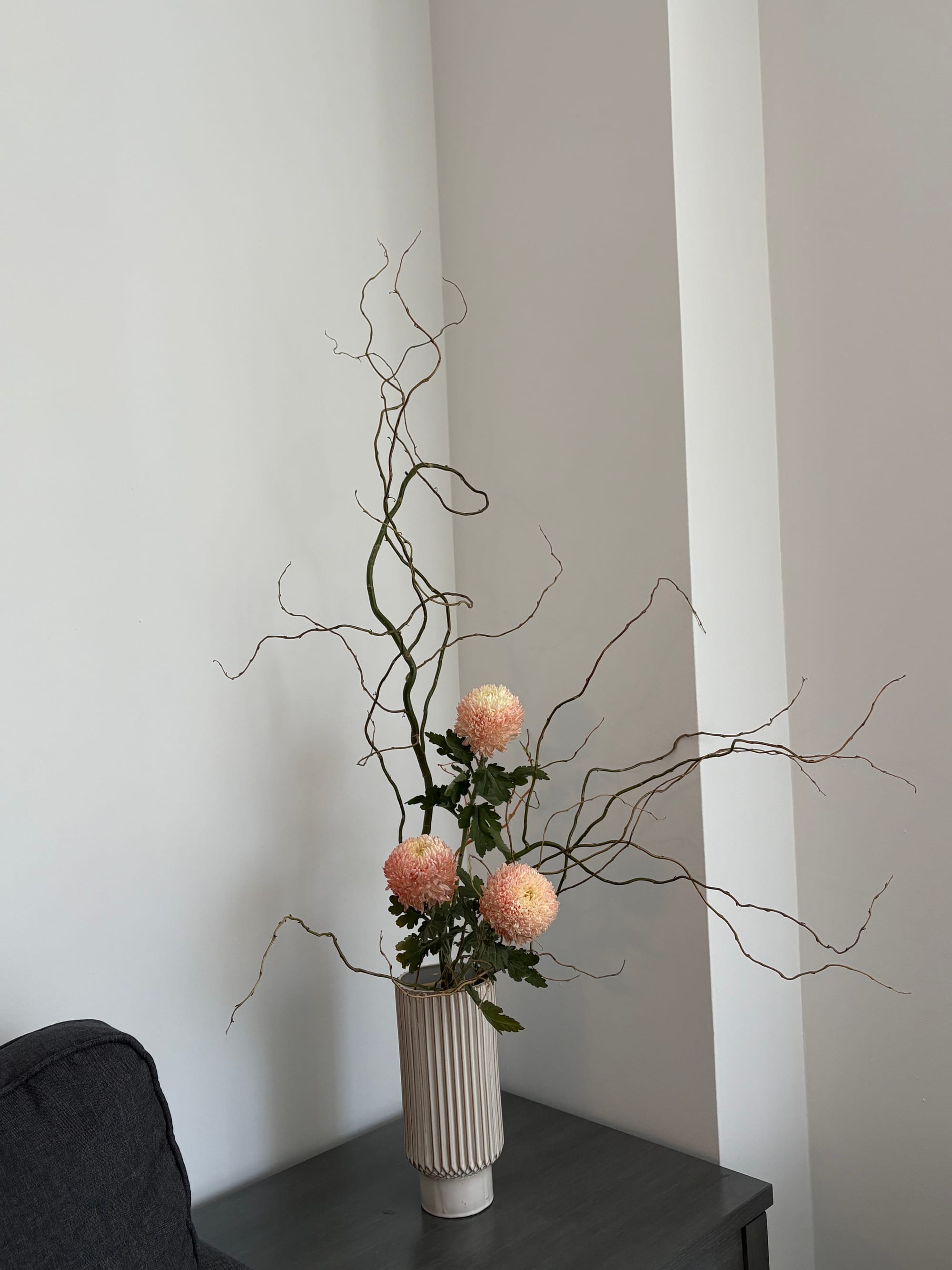
I thought it was okay, but it wasn’t quite what I was looking for.
I wondered what other ikebana practitioners would think about it, so I shared it on Reddit. Most of them liked it, and some members gave me wonderful feedback that helped me rethink the structure of my arrangement.I was really grateful for their comments.
It reminded me of how important triangles can be in ikebana composition. Once you start noticing these triangles, you can begin to understand how they contribute to the beauty and balance of an arrangement.
The Second Attempt again!
This time, I used Matagi again, but I wanted the curly willow branches to extend diagonally outward.
I placed the first willow branch in the vase, and it created a beautiful line. Then I added more willow branches and chrysanthemums (or mums, for short).Almost all the branches and flowers followed diagonal lines. However, I realized that what I really wanted to highlight was the unique curly shape at the top of the willow branches.
There were also small branches going in every direction, which made the arrangement look too busy.One thing I did love about this second arrangement was the chrysanthemum I placed toward the back. It created a lovely sense of depth.
I looked at the arrangement both in person and through my camera, and… I didn’t like it. LOL.
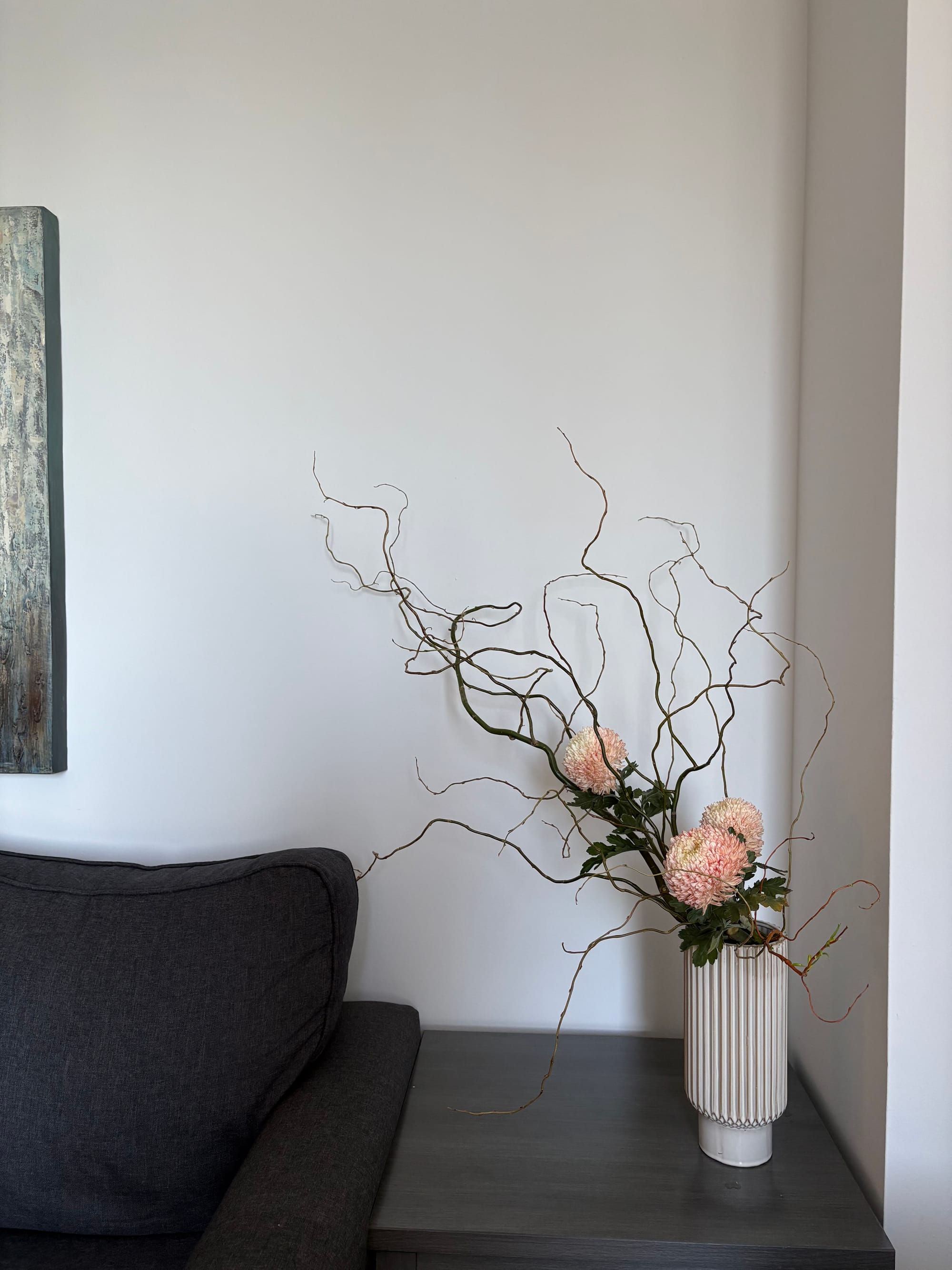
As soon as I finished the second arrangement, I took it apart and moved on to the third one.
The Third Attempt
For my third arrangement, I wanted to create a more dynamic, sweeping line than in the previous one.I changed the angle of the main willow branch because I wanted to highlight its curly tip. Then I arranged the chrysanthemums and smaller willow branches on either side, creating a fuller composition of curls and flowers.
This third arrangement looked like something straight out of an ikebana textbook. It was a beautiful Nageire arrangement. Beautiful! But it needed a little something extra.
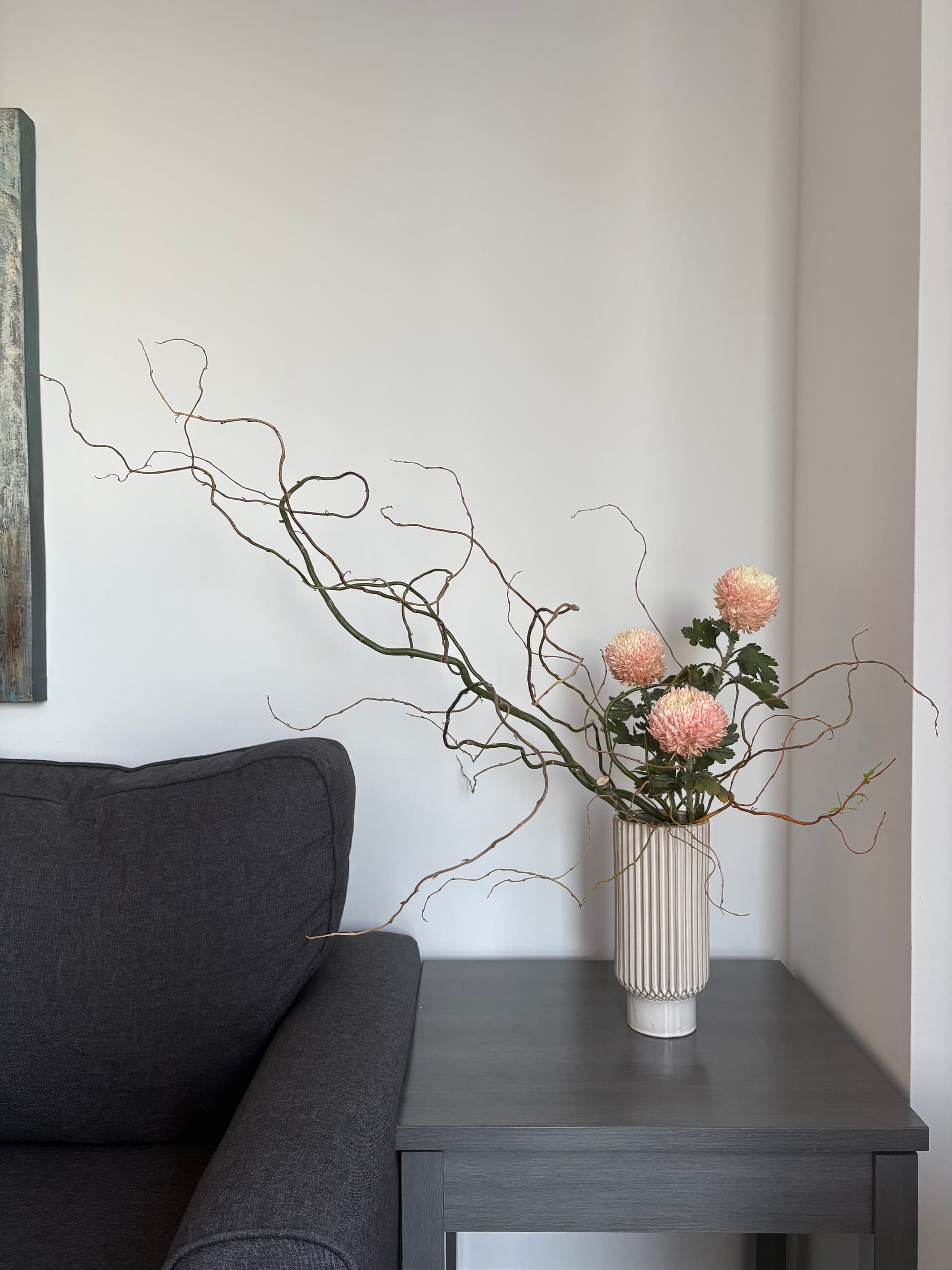
Honestly, I loved this third arrangement, but I still had a different vision in my mind.
I imagined curly willow branches intertwining with one another, with chrysanthemums growing among them, almost as if they were growing naturally in the wild.
So, I decided to create the Nageire arrangement I had been imagining.
The Fourth Attempt
First, I wanted to highlight the unique curls at the top of the branches. Instead of creating a dramatic sweeping line, I positioned the main branch at a slight angle. I added more willow branches alongside the main one to create a stronger, more defined line.
On the left side, I focused on the willow branches, while on the right side, I highlighted the beauty of the chrysanthemums.
I finished my fourth arrangement and thought:
“Ah, yes! This is what I wanted to create. Buuut… something still isn’t quite right.” I had been so focused on the curly tips that I hadn’t paid enough attention to the smaller details.
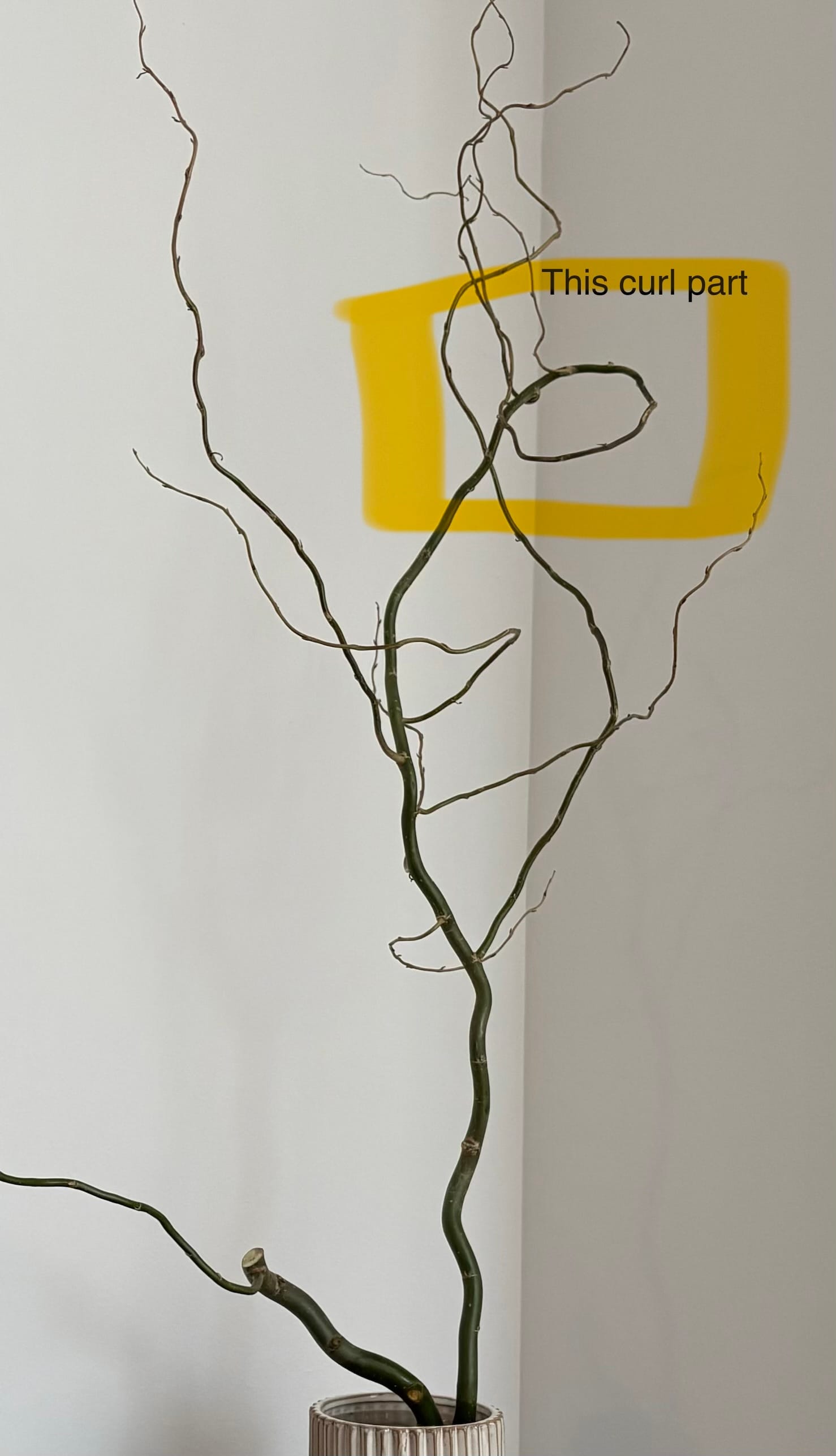
Look at this part.
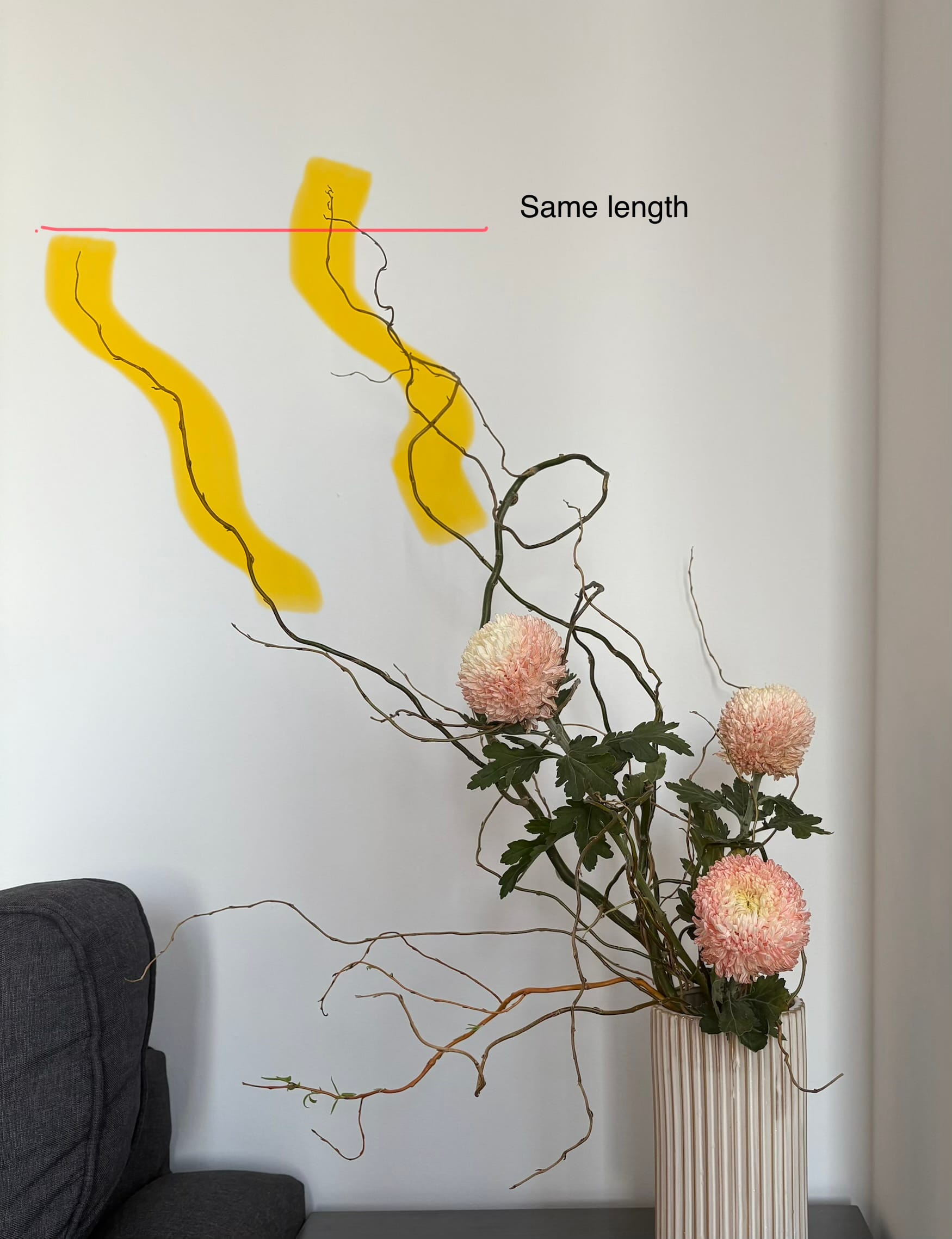
These two branches are the same length.
I need to trim one of them. But which one? Should I really remove it? If I remove one of these branches (although I still don’t know which one!), will the arrangement lose some of its character?
Think, think, think…
Okay! I wanted to show how the curly willow branches intertwine, so why don’t I simply weave this smaller branch into the main willow branches?
And then… tada!
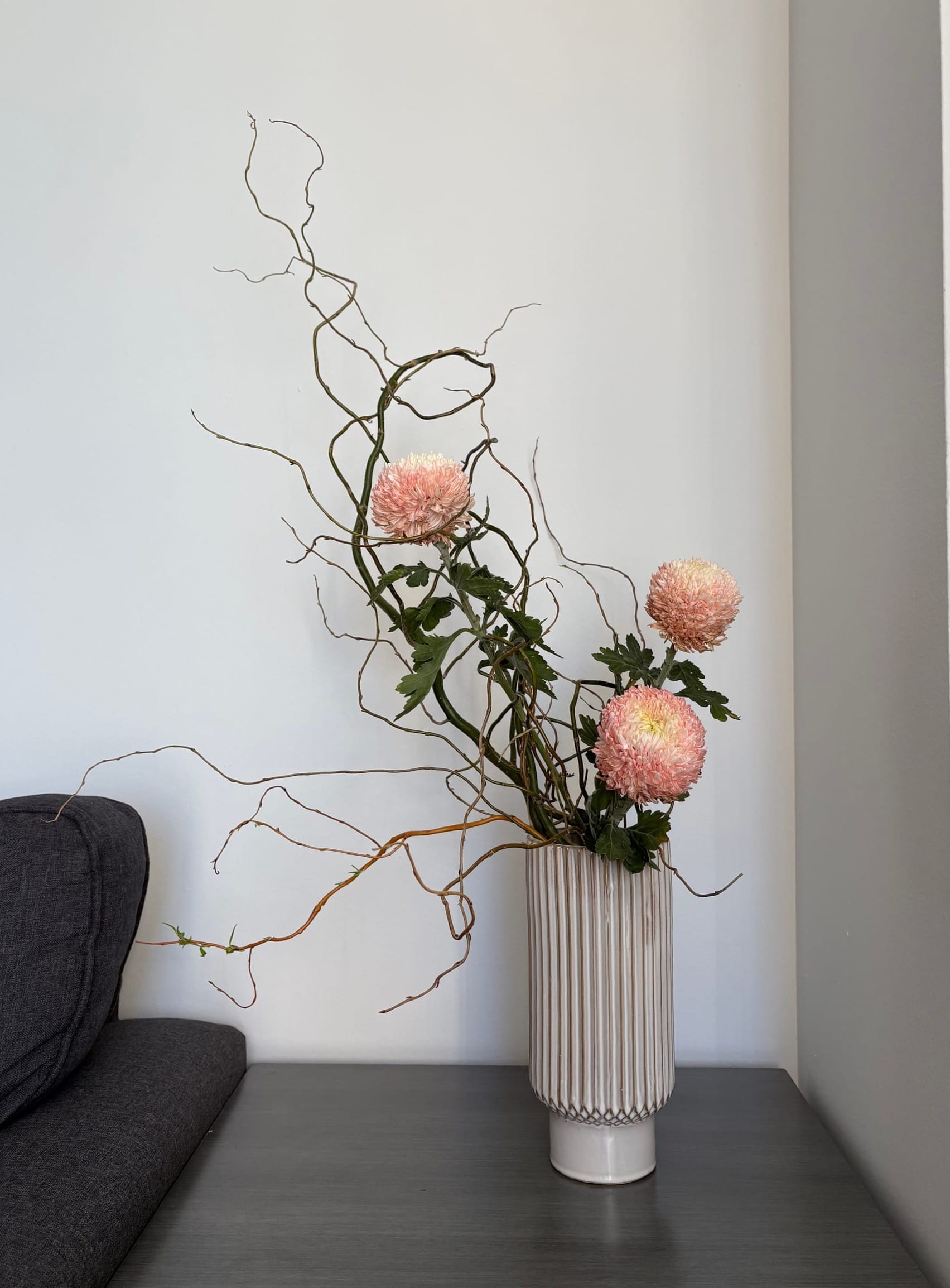
I think this is it!
I’m pretty satisfied with this fourth arrangement. Some people might not like it, but I love it. It’s what I had imagined.
When you love your own creation, you can spend a long time simply looking at it and enjoying it. When I don’t like my work, I usually end up changing it or just ignoring it. LOL.
The Beauty of the Creative Process
I’ve been studying ikebana for many years, and I’ve seen countless arrangements at exhibitions, in shops, and in classes. I used to think that other students and artists created their beautiful arrangements so effortlessly, as if it were a piece of cake. But I’m sure they have gone through similar experiences. At least, I hope so!
I believe that these creative struggles are valuable lessons that we can carry into our future designs.
There have been many times when I’ve felt creatively stuck. Every time, I felt like I was the only one struggling while everyone else seemed to create beautiful arrangements without any difficulty.
Maybe that’s because we rarely talk about it!
I believe we all experience these feelings, and there’s no need to be afraid to share them. Struggling, experimenting, and starting over are all part of the creative process. Looking back, I’m happy I went through this entire process, not just because I love the final arrangement, but because of everything I learned along the way.
Now it’s the holiday season, and some of you may have a little extra time off. Let’s create something this holiday season and share it with each other — not just our beautiful finished pieces, but perhaps a little of the struggle behind them, too!
Happy creating and happy holidays!
Ryoko
HanaYou