
New Year Ikebana in Kyoto: Pine, Bamboo, Plum
A year-end ikebana journal from Kyoto exploring Japanese New Year traditions, pine-bamboo-plum symbolism, and a seasonal arrangement how-to.
2025 has been such a journey and adventure for HanaYou. As this year comes to a close, I want to say thank you for being here.
The end of the year in Japan is famously busy. December is called Shiwasu, which literally means “the month when even Buddhist monks run.” It reflects how hectic this season can be.
This December, I truly felt that meaning again. I never experienced this level of busyness in the U.S., but being back in Japan, I’m slowly remembering just how intense and meaningful this season can be.
Looking back, this year was full of movement, change, and learning for me and for HanaYou. Through it all, flowers reminded me to slow down, observe, and appreciate what’s already in front of us. Some parts of this year were truly challenging, but I believe those moments help make us stronger and create growth.
I’m especially grateful for the wonderful people around us, including readers of this newsletter. Your kindness and encouragement have meant more than you know.
Thank you for reading, supporting, and sharing this space with me. I’m quietly preparing new ikebana how-tos and stories for the coming year, and I look forward to welcoming you then.
Wishing you a calm and beautiful end of the year.
HanaYou featured by Kyoto, in Sound
I want to give a special shoutout to Kyoto, in Sound for including HanaYou in "The Kyoto List: A Living Map of Creative Corners and Kind Humans". It's exciting to be included alongside some fascinating small businesses in Kyoto, including our neighborhood coffee roaster.
Kyoto, in Sound is a podcast and local experience run by our friend Simon James French. Simon takes guests on "sound tours" of Kyoto and he publishes a podcast of sounds and stories based on those tours.
It's a truly unique listening experience unlike any other podcast I've heard. You can find out where to get the podcast or even book your own sound tour with Simon on the Kyoto, in Sound website.
Pine, Bamboo, and Plum: Symbols of Celebration
In Japan, we have long-standing customs to celebrate important moments such as weddings, engagements, and birthdays. Among them all, New Year is the most significant celebration in Japanese culture.
New Year is a time of deep preparation. People prepare special foods, gifts, and decorations well in advance. Before welcoming the New Year, we thoroughly clean our homes. This cleaning is both physical and symbolic: we reset our environment, our work, our clothing, and even our personal mindset, so we can welcome the coming year with clarity and intention.
Once everything is cleaned, we begin preparing for the coming New Year. Traditional New Year dishes (お節料理; osechi ryōri) require specific ingredients, and they are prepared in large quantities to last for several days. At the same time, homes are decorated to welcome both the New Year and the family who will gather, often with flowers and traditional Japanese wreaths.
Because New Year is the biggest celebration of the year, people spend considerable time, energy, and money during this season. For this important occasion, three plants are traditionally used in decorations: pine, bamboo, and plum, together known as Shō-Chiku-Bai (松竹梅).
• Pine represents longevity and resilience. Even in the harsh cold of winter, pine remains green, symbolizing strength and endurance.
• Bamboo grows straight and tall, never bending easily. It represents integrity, growth, and prosperity, and is also associated with blessings for family and future generations.
• Plum trees blossom in early spring, often while snow is still on the ground. It symbolizes the power of life, patience, and quiet nobility.
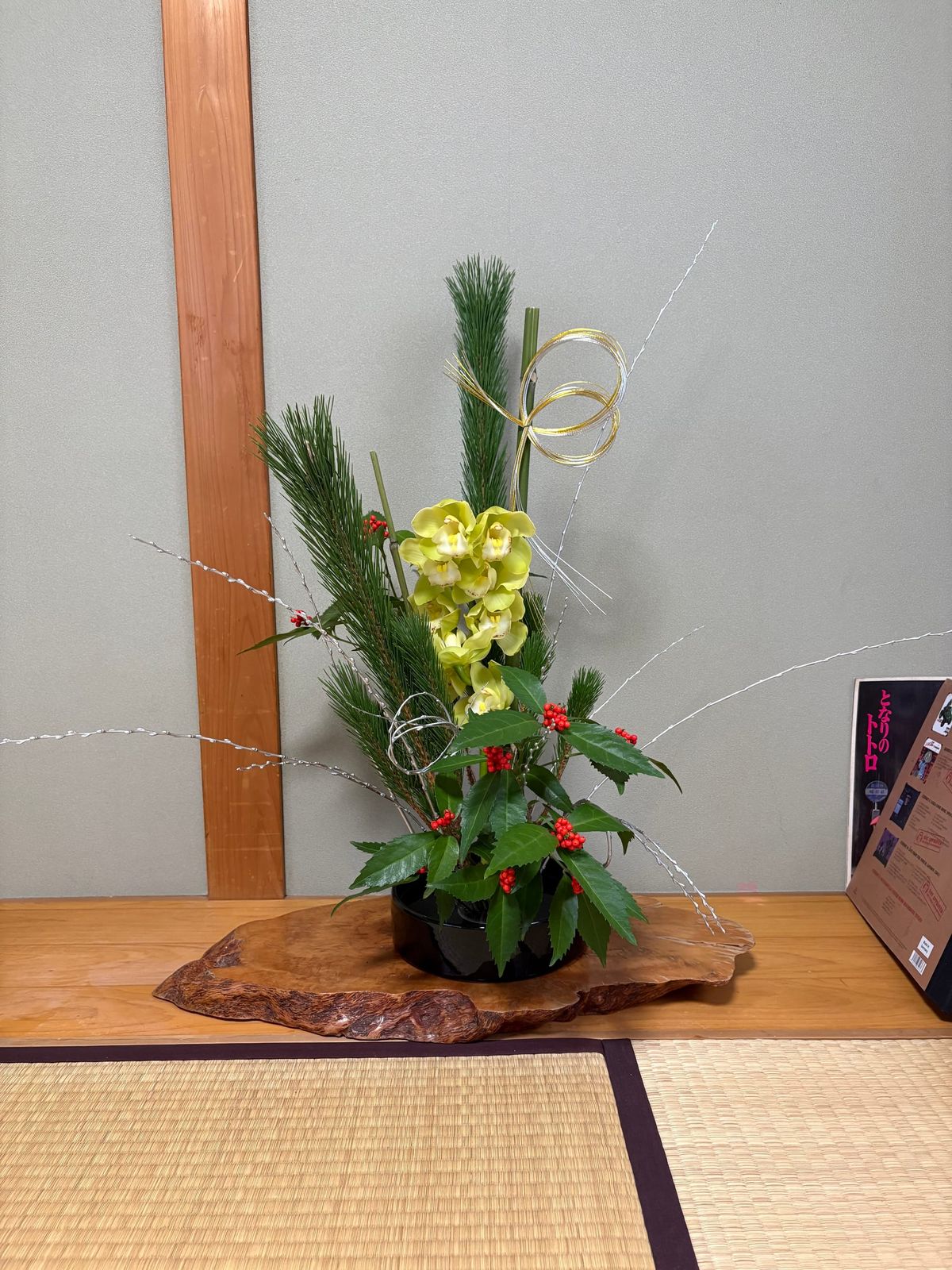
This week, paid members can continue below for an ikebana how-to video that shows how I made my own New Year’s ikebana. In the arrangement, I use pine and bamboo, along with false pepper (Chloranthus), which symbolizes abundance, business growth, and family prosperity.
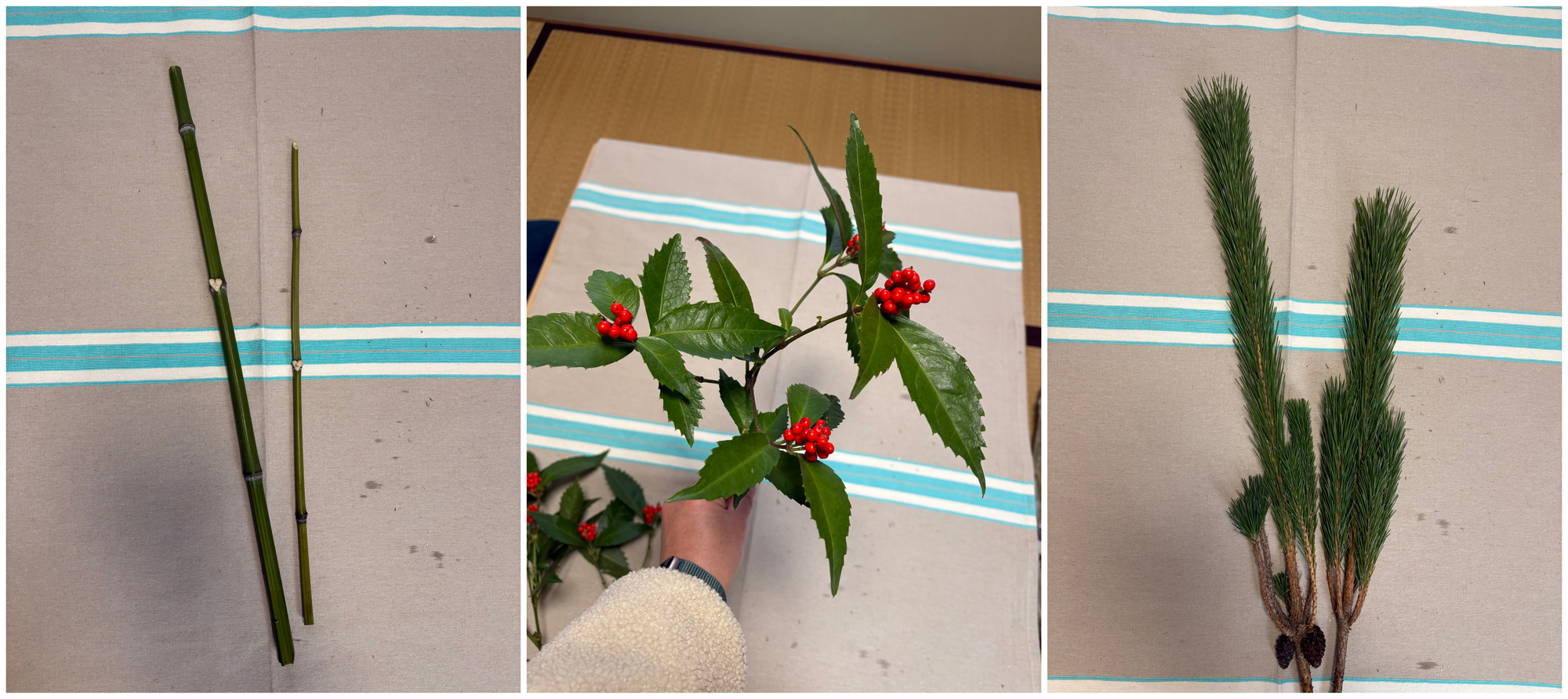
I also included mizuhiki, a decorative cord that represents protection from evil and a connection to good fortune.
Continue on to watch how I use them together!