
From Soho to Kyoto: Ikebana Transformations, Ginkaku-ji Reflections, and Flower Shop Discoveries
A step-by-step ikebana transformation video and a recent visit to Ginkaku-ji. Plus, reflections on HanaYou’s journey from New York to Kyoto.
Get the HanaYou Ikebana Journal in your inbox.
Hello flower lovers,
I’m so excited to share this edition of the HanaYou Ikebana Journal with you. Please be sure to share your feedback so I can continue making this a place of inspiration and calm in your inbox.
Here’s what’s inside this issue:
- A look back at HanaYou’s New York pop-up installation
- Step-by-step ikebana with repurposed lilies (with video)
- A quiet visit to Ginkaku-ji, Kyoto’s Silver Pavilion
- Lessons from a neighborhood flower shop in Kyoto
Let’s begin!
Looking Back: June & July
When we decided to move to Japan, life quickly became busy with online classes, corporate workshops, street fairs, and regular in-person ikebana classes. It was great to see so many friendly faces in New York before we left.
One of the biggest highlights for me was the Heihdan POP-UP in Soho. It was my very first solo installation, created in collaboration with PIDASAKU. Together, we created a beautiful space that featured artists’ textile works, handmade jewelry, and finely textured clothing from Korea.
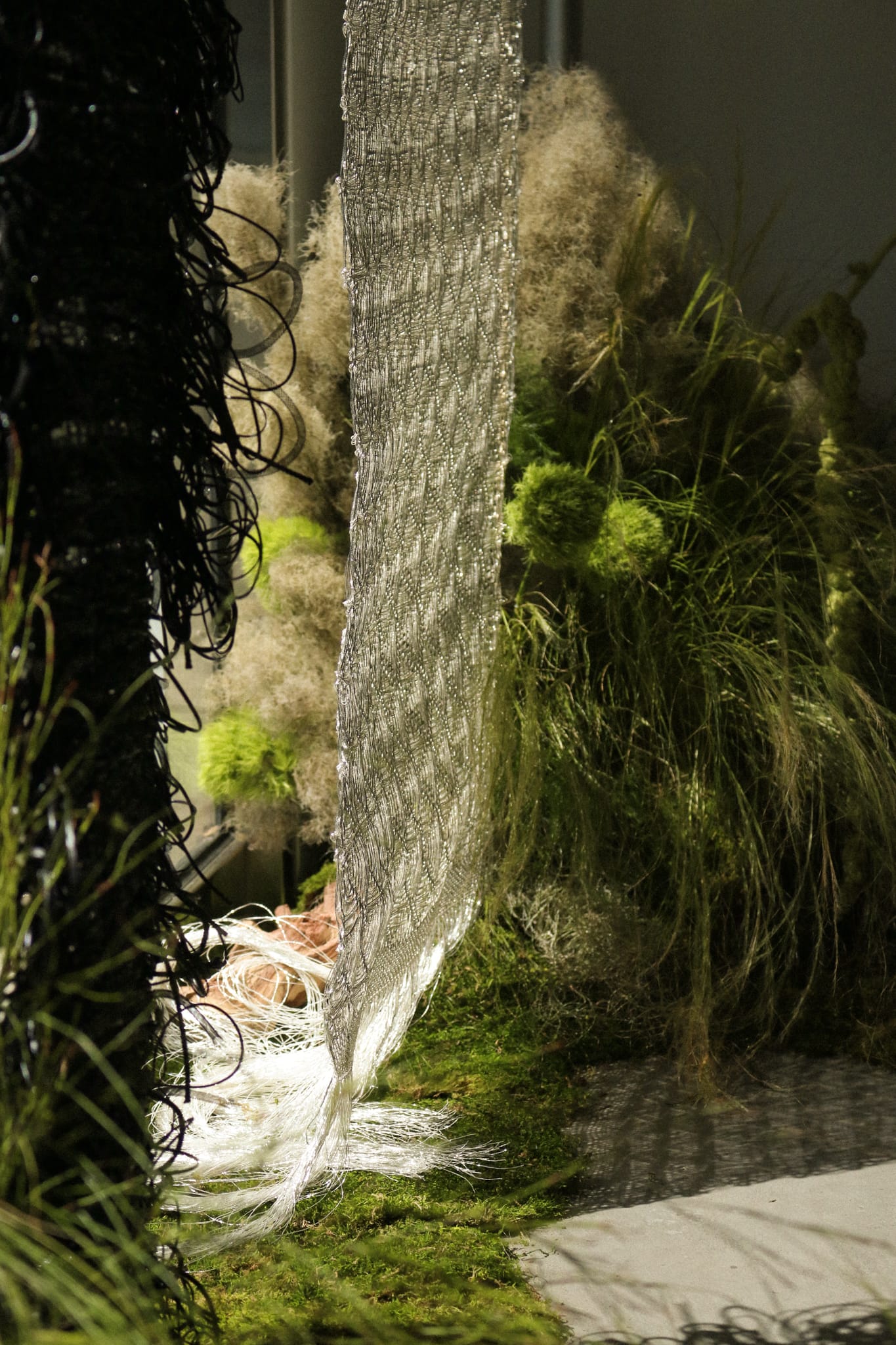
The atmosphere was in perfect balance: greens, textiles, and clothing harmonized so naturally that nothing felt overwhelming. Instead, it was relaxing, inviting you to notice textures and layers as if nature had appeared inside an urban space.
Although HanaYou was based in Astoria, Queens, that week we traveled to Soho in downtown Manhattan every day. It was truly a wonderful and memorable experience as one of my last events as a full-time resident of NYC.
This Week’s Ikebana
Theme: Transformation
This week, I'm showing you how I repurposed flowers from my ikebana class. I reused lilies from a Nagaire (tall vase arrangement) arrangement and later transformed them into Moribana style.
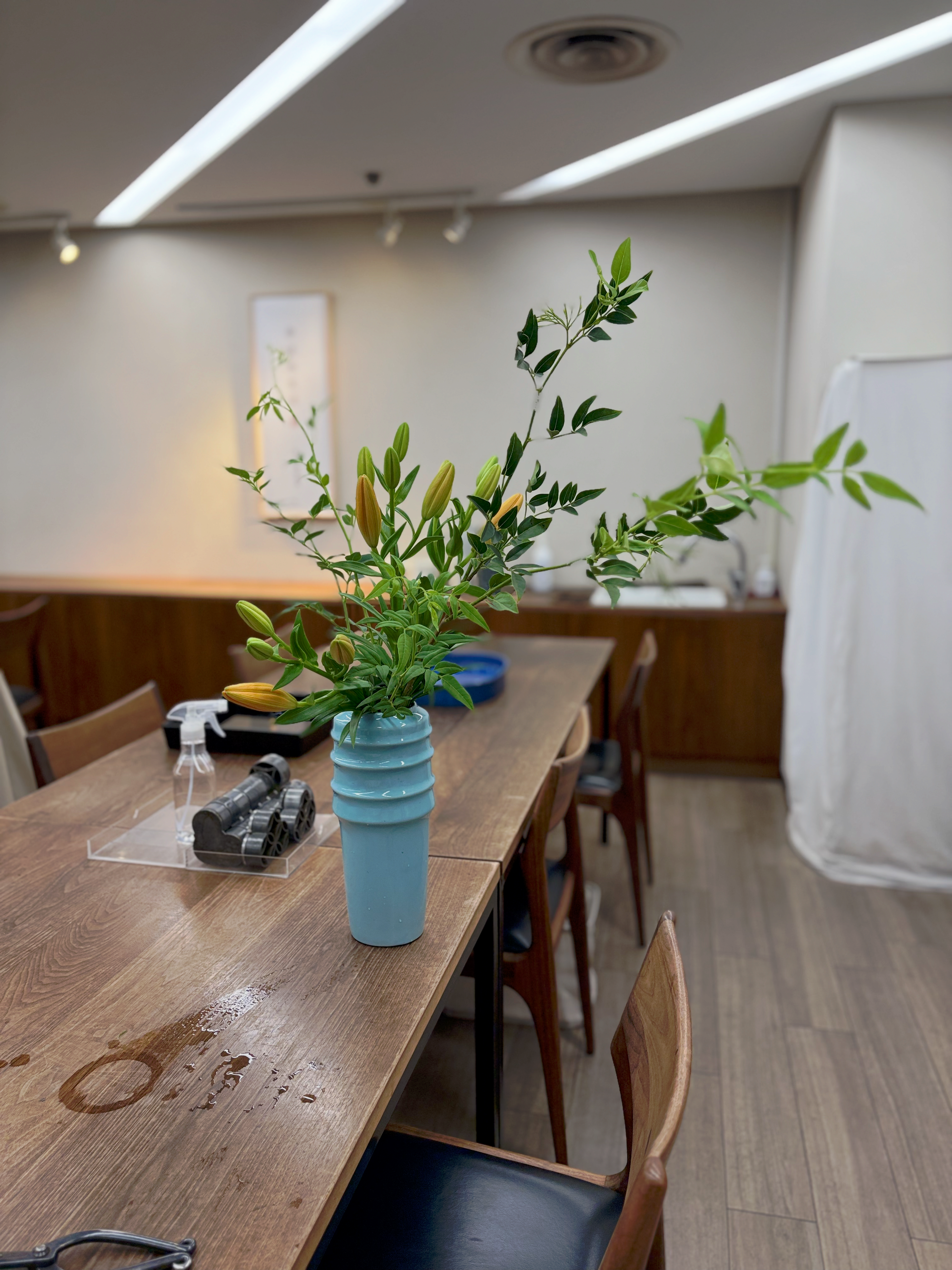
The image above is of the original Nagaire-style arrangement; it's the "before". In the video and written steps below, I'll show you how I transformed these flowers into a Moribana-style arrangement.
Steps
You can follow along with this video as well as the steps below.
Step 1: The First (Longest) Stem
- Longest stem = 1.5–2x vase width
- Ask yourself: Where is the light? Stems should grow toward it like they do in nature.
👉 In my case, sunlight came from the left, so I leaned the longest stem left.
Step 2: Shorter Stems
- Place large blooms shorter than the first stem.
- Choose the biggest flower here—it becomes part of the backbone.
Step 3: Highlight Flower (Seasonal Accent)
- Pick one seasonal or beautiful bloom as your “feature.”
- Not too big, not too small—just eye-catching enough.
Step 4: The Middle Stem
- Place one stem between longest + shortest to connect them.
💡 My mistake: I first used a lily here, but it weakened the main stem and felt heavy.
Step 5: Replace & Rebalance
- I swapped the lily for a leafy branch. It gave stability and the right size for balance.
Step 6: Adding Greenery
- Added extra green branches for freshness in the late summer heat.
- Spread stems slightly apart for airiness.
Step 7: Final Touch
- Last lily leaned opposite the light side, restoring overall balance.
Key Points to Consider
- Where do you place your arrangement? Where does the sunlight come from?
- Is your main (longest) stem facing the light or window, like it would in nature?
- Do the longest, middle, and shortest stems create equal balance in the vase
- Does the arrangement feel cool and airy as a reflection of early autumn?
🌸 Closing Note
This time, I used lilies that were still closed. If you do the same, when your lilies open, the whole balance may shift, so always adjust flexibly as the flowers change.
Keep practicing ikebana with different flowers! Each one teaches something new. And if you make your own arrangement, please share photos—I’d love to see them!
Kyoto Now: Ginkaku-ji in Early Fall
On a recent pleasantly cool late-September day, we visited Ginkaku-ji, the Silver Pavilion. It reminded me of a visit that my husband and I took long ago to Kinkaku-ji, the Golden Pavilion, and how different the characters are of each temple.
⭐️ Kinkaku-ji reflects the Kitayama Bunka period of Japanese history, a time that loved richness, elegance, and vivid designs.
💡 Kin means "gold"
🪙 Ginkaku-ji, by contrast, comes from the Higashiyama Bunka period, when the tea ceremony and ikebana flourished. It carries the quiet beauty of wabi-sabi, valuing simplicity and humility.
💡 Gin means "silver"
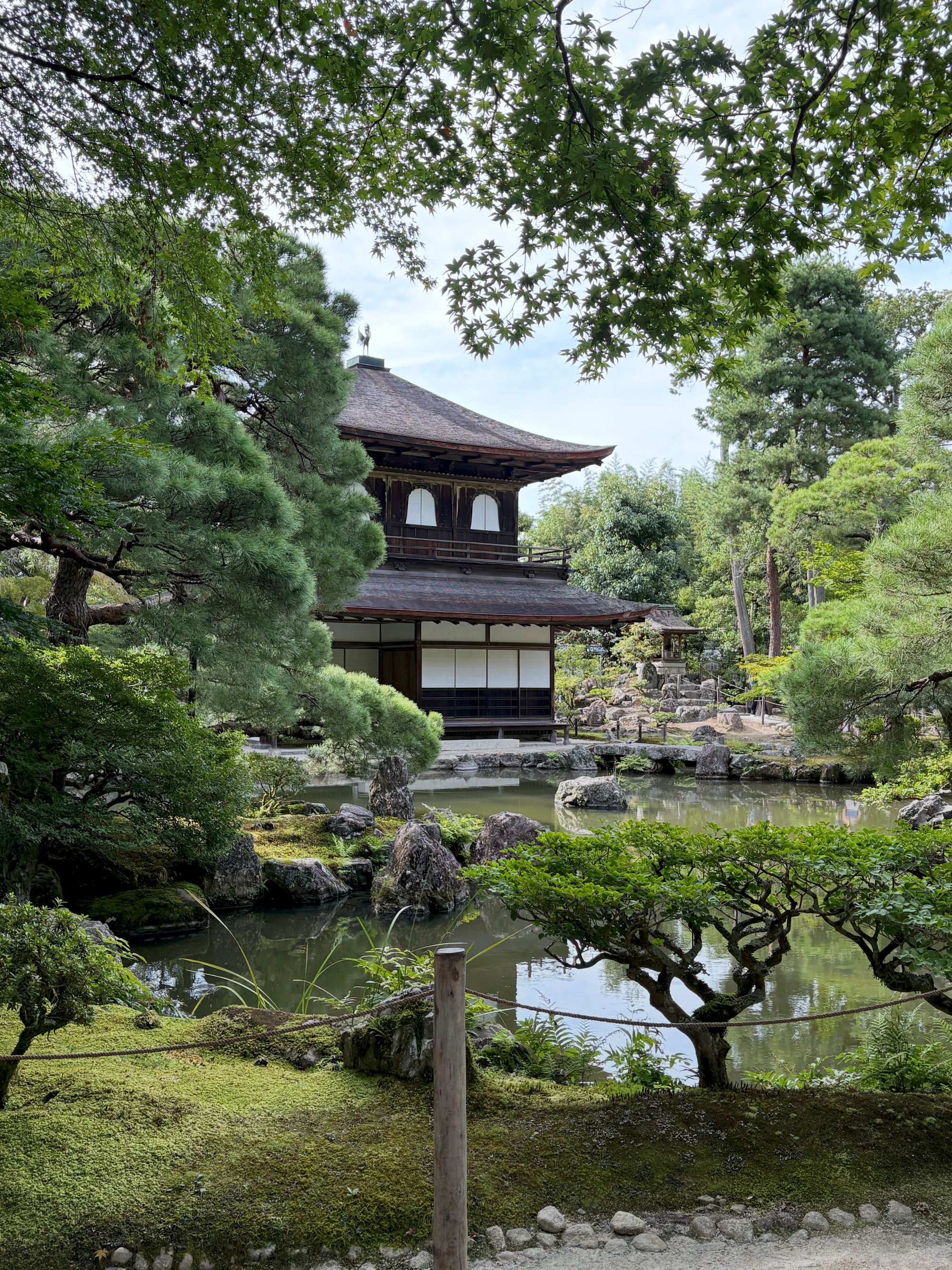
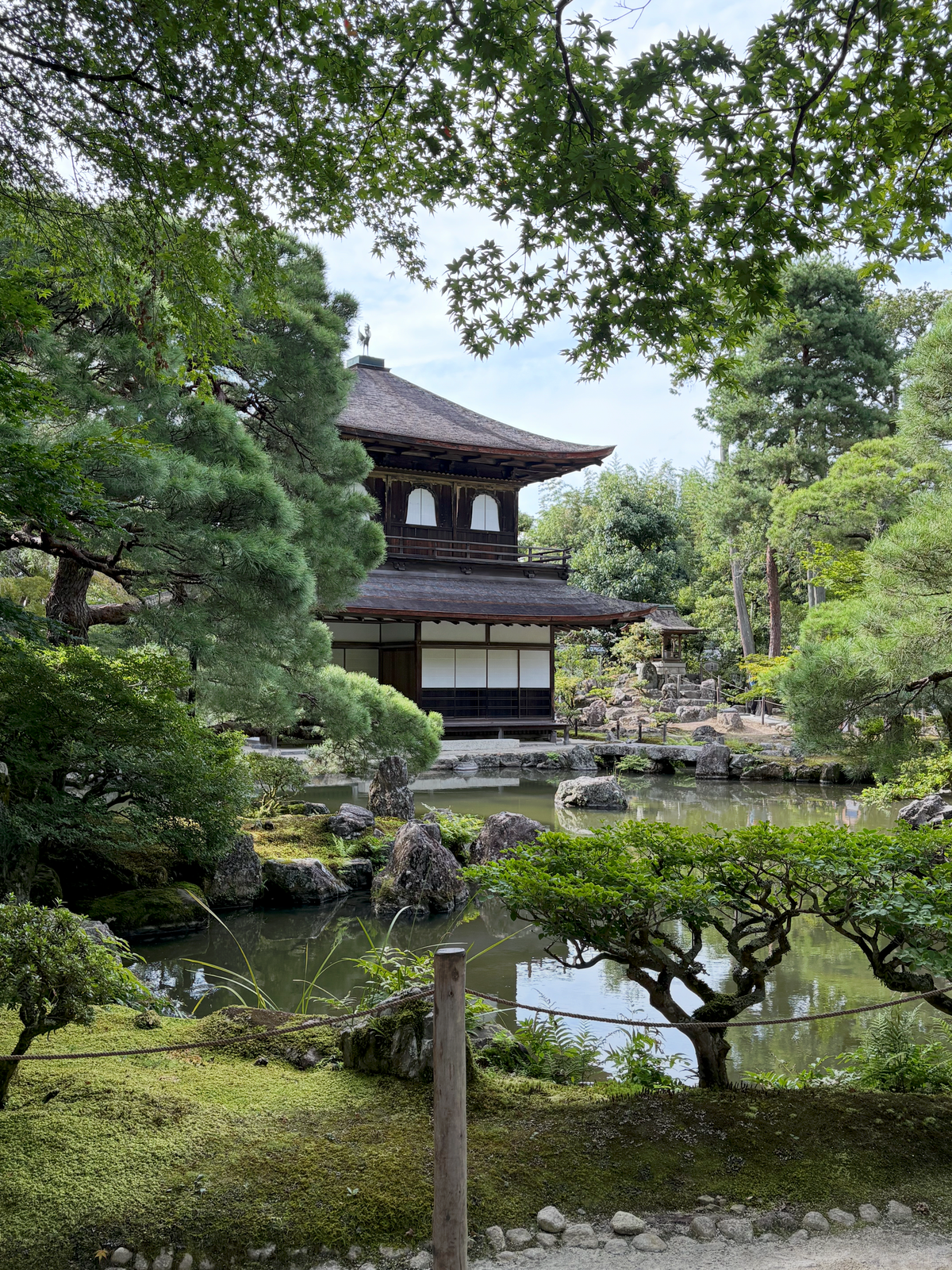
Visiting Ginkaku-ji feels very different. It doesn’t overwhelm you with brilliance. Instead, it offers a quiet, breathtaking sense of discovery, like a gentle whisper from nature. The silence is so deep you can hear the waterfall, the rustling of leaves, even the sound of moss underfoot.
It’s difficult to put into words, but that’s part of its beauty. I noticed a few maple leaves beginning to turn orange and red, and I promised myself I’d return in a month to see the full colors of autumn.
If you have the chance to visit, you’ll understand why ikebana asks us to pause, notice the moment, and find beauty in stillness. 🍂
What I Learned This Week
This week, I visited a modest neighborhood shop in Kyoto. Though plain from the outside, it was bustling inside with plants, branches, flowers, and knowledgeable staff everywhere.
The owner showed me silver grass with flawless leaves, explaining why it mattered, and his son offered a tip: “Apply Vaseline to the leaves to keep them fresh.” Later, I learned the owner is also an Ohara-ryu Ikebana teacher.
💡 Flower shopping is as much about people as it is about flowers.
The best flower shops don’t just sell—they teach. They pass down knowledge, share tips, and connect people to flowers in a meaningful way. If you want to grow your Ikebana practice, get to know your local shop.
Closing
Thank you for reading this edition of the HanaYou Ikebana Journal. Your reflections and feedback help shape this journal into a place of inspiration and discovery. I’d love to hear what you thought of today’s issue!
With gratitude,
Ryoko