
Balance in Bloom: Our First Kyoto Ikebana Class, Autumn Traditions, and Everyday Discoveries
See HanaYou’s first ikebana class in Kyoto. Then discover a Japanese autumn festival, wildlife surprises, and lessons on balance in floral art.
Get the HanaYou Ikebana Journal in your inbox.
Hello flower lovers,
There's a lot to share in this newsletter:
- HanaYou's very first ikebana class in Kyoto
- Kyoto wildlife ate our daughter's shoe!
- How to think about building your own living plant in a vase
- What’s Happening in Kyoto Now: Autumnal Equinox celebration
- This week's theme: Balance
As always, I hope these notes bring you a little calm and inspiration. Let’s begin.
HanaYou Kyoto's first studio session
After years of teaching ikebana in Manhattan, Brooklyn, and Queens, it was the first time I taught ikebana in a space with tatami floors and traditional shoji doors. For me, it was such a meaningful moment. These details may seem simple, but they instantly transformed the atmosphere of the class, making it feel like a true Japanese cultural experience at HanaYou Kyoto Studio.
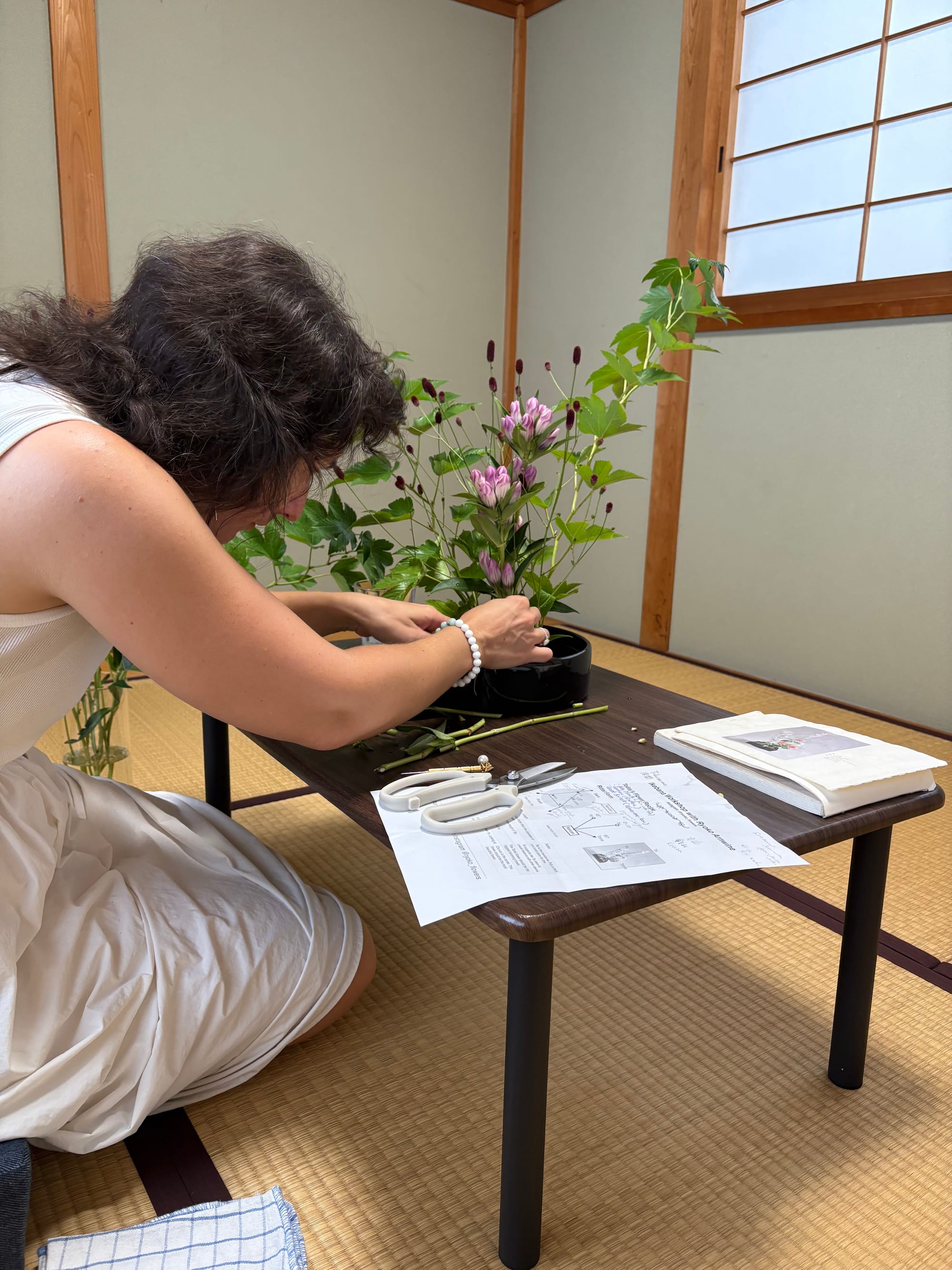
Of course, our studio isn’t perfect yet. The interior is still a work in progress, but our dream is to create a space that feels comfortable, warm, and welcoming for everyone. Even without the final touches, I felt the spirit of ikebana come alive in this setting, and I hope my first students in Kyoto felt that, too.
(Wild) Life in Kyoto
Life in Kyoto keeps surprising us in funny and unexpected ways. Since our apartment is close to the river, we often encounter wild animals: fish, herons, geckos, turtles.
Last night, we left our daughter's sneakers outside to dry. This morning, my husband asked our daughter why there was only one shoe outside. To our shock, one shoe had completely disappeared! At first, I thought someone must have taken them.
But then, out of the corner of my eye, I saw a brown animal dash down the street. It was a raccoon. Now we know: we really shouldn’t leave anything outside! For me, it turned into a funny story to tell, but for our daughter, it was not funny at all.

Moments like this remind me that we’re still discovering new sides of Kyoto every single day, from the bustling city to the quiet beauty of nature to the mischievous wildlife.
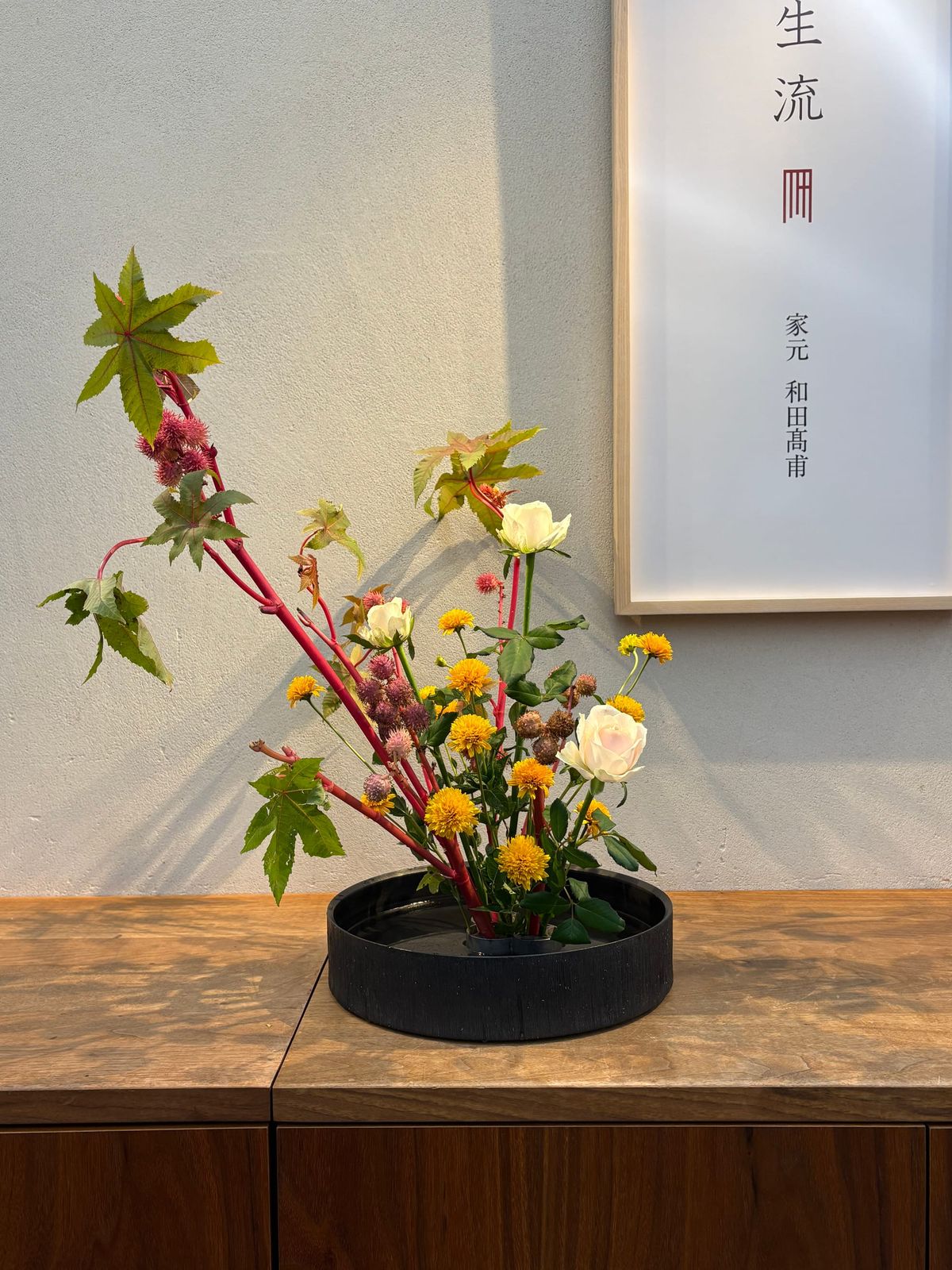
How I Made This Arrangement
When you work with just one type of flower—or only a couple—you need to place the stems closely together in the kenzan. This way, the whole arrangement takes on the appearance of a single tree or plant.
Think of it as building your own living plant in a vase. Place larger flowers and leaves near the bottom for a solid base, and position smaller flowers and leaves higher up. This creates a sense of natural growth and balance.
In the wild, trees grow with the same principle. The top parts are lighter and thinner, while the bottom trunk is thick and strong to support everything above. Lower branches often grow longer, reaching for sunlight.
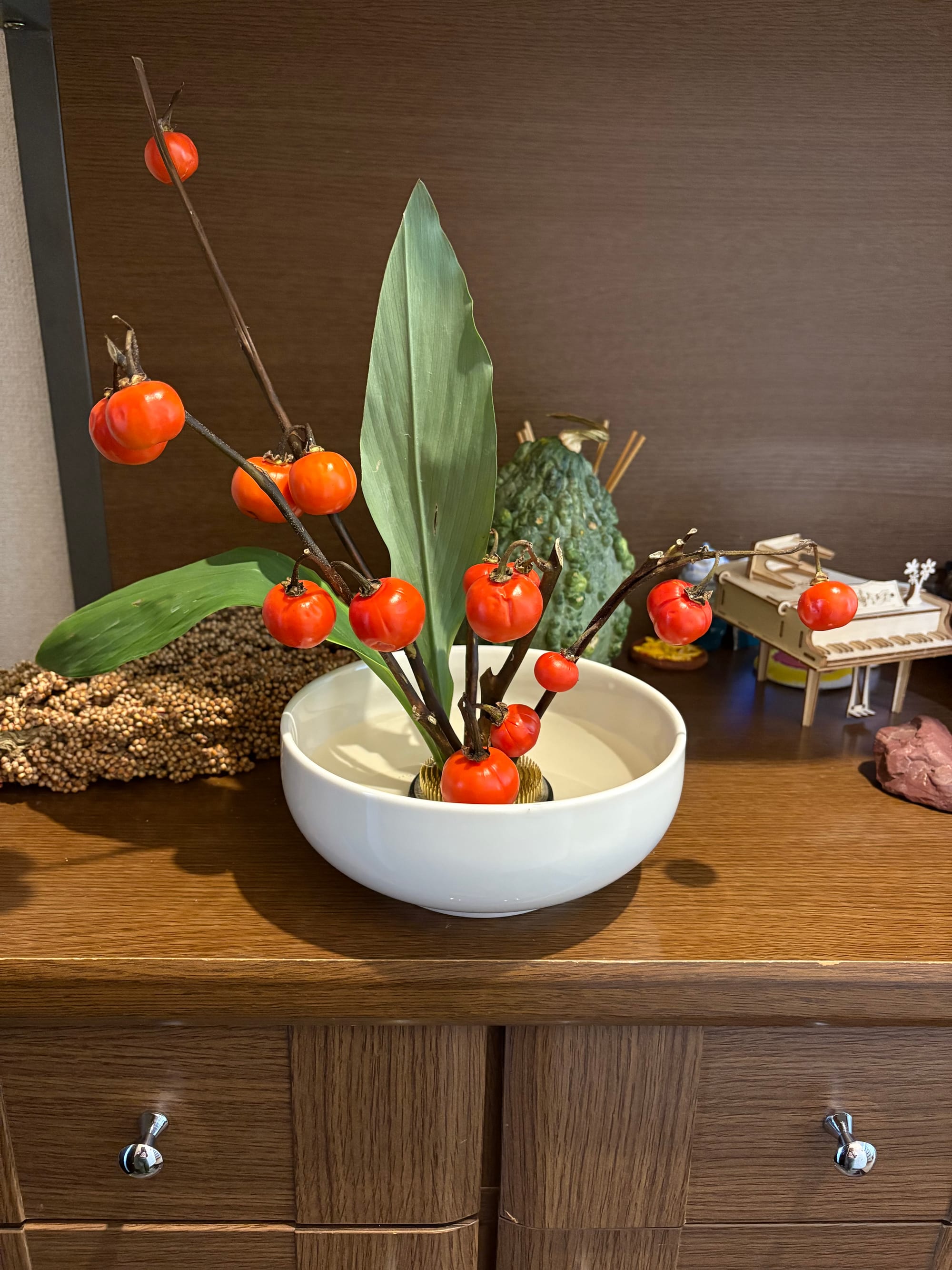
When you use many different types of flowers, it’s easier to find balance and create an appealing shape. But when you limit yourself to just one or two, it becomes much clearer whether the balance works—or not.
That’s what makes this style so interesting. Through this kind of arrangement, you can really see the true character of a plant. It’s a simple creation, but also a wonderful exercise in observation and appreciation.
What’s Happening in Kyoto Now
Near my daughter’s school is Seimei Shrine, a place many people in Japan know through history—or even manga. I remember first learning about it in middle school when I read a story that featured Abe no Seimei, the legendary onmyoji (yin-yang master).
Seimei Shrine was built in 1007 by order of Emperor Ichijo, soon after Seimei’s death. It is famous for its protective pentagram symbol, which, unlike in Western culture, is believed to ward off evil, and for the Seimei Well, whose water is thought to bring good fortune.
This year, on September 23rd, Autumnal Equinox Day, the shrine will hold special ceremonies: a welcoming ritual the evening before, children carrying a mikoshi (portable shrine), and even tea and Ikebana ceremonies.
Seeing Ikebana included in such an important community event touched me deeply. It made me realize again that Ikebana is not just an art form, but an essential part of Kyoto’s culture and spiritual life. Living here makes me want to keep learning and digging deeper into Ikebana’s meaning and history. Every time I see it in this cultural context, I feel more love for this city.
Autumn in Kyoto is overflowing with things to see and experience—the colors, the festivals, the traditions. If you ever visit Japan, I truly hope you spend plenty of time here. Kyoto will give you countless memories.
You can see a bit more about Seimei Shrine on their website:
https://www.seimeijinja.jp
Learning from Ikebana Class This Week
Not only do I teach ikebana, but I continue my studies as well. In my own learning, this week’s theme was Balance.
When I created an arrangement in my teacher's studio, I placed several short stems in the front. At first, I thought it was fine, but my teacher reminded me:
“Don’t just think about covering the bottom—think about the whole balance.”
Gathering only short stems at the front made the arrangement look heavy, almost like something had dropped there. But when I pivoted to using one longer stem, suddenly everything changed. The balance shifted, the “hole” disappeared, and the whole piece looked harmonious again.
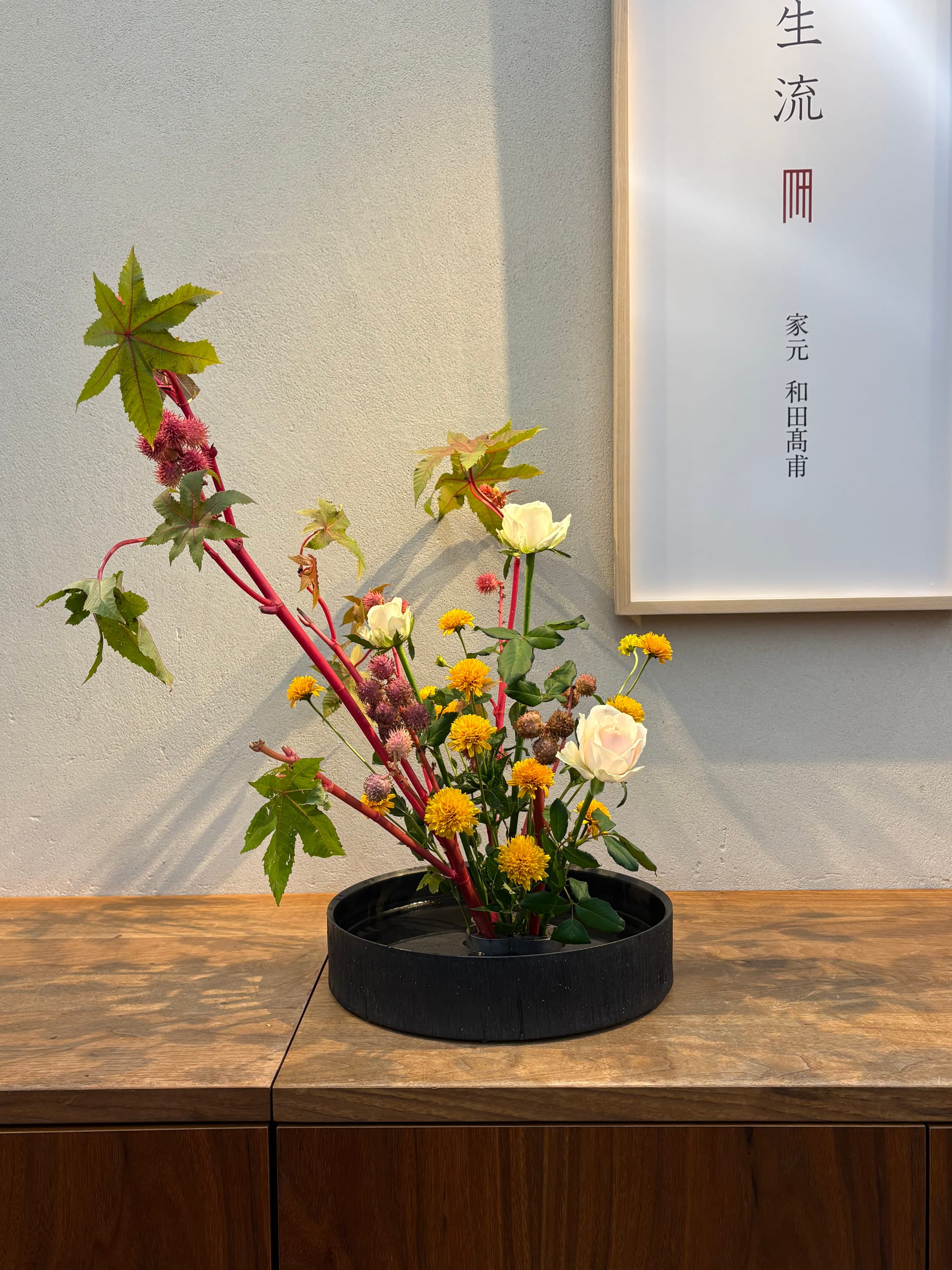
That one adjustment taught me a powerful lesson: balance is not about perfection or filling every gap, but about creating harmony through contrast and proportion.
This kind of knowledge can only be gained through experience, trial, and discovery.
Closing
Thank you so much for reading my journal to the end. Every week, I feel I’m learning ikebana more deeply, step by step. I’d love for us to keep learning together.
I will continue to share the knowledge I gain here in Kyoto, and I would also love to see your arrangements. Please feel free to share your Ikebana pictures with me. I can give feedback, or simply celebrate your creativity.
Let’s continue this creative journey side-by-side. 🌸
I post many pictures, thoughts, and ideas on Instagram, so please join me there as well.
Ryoko